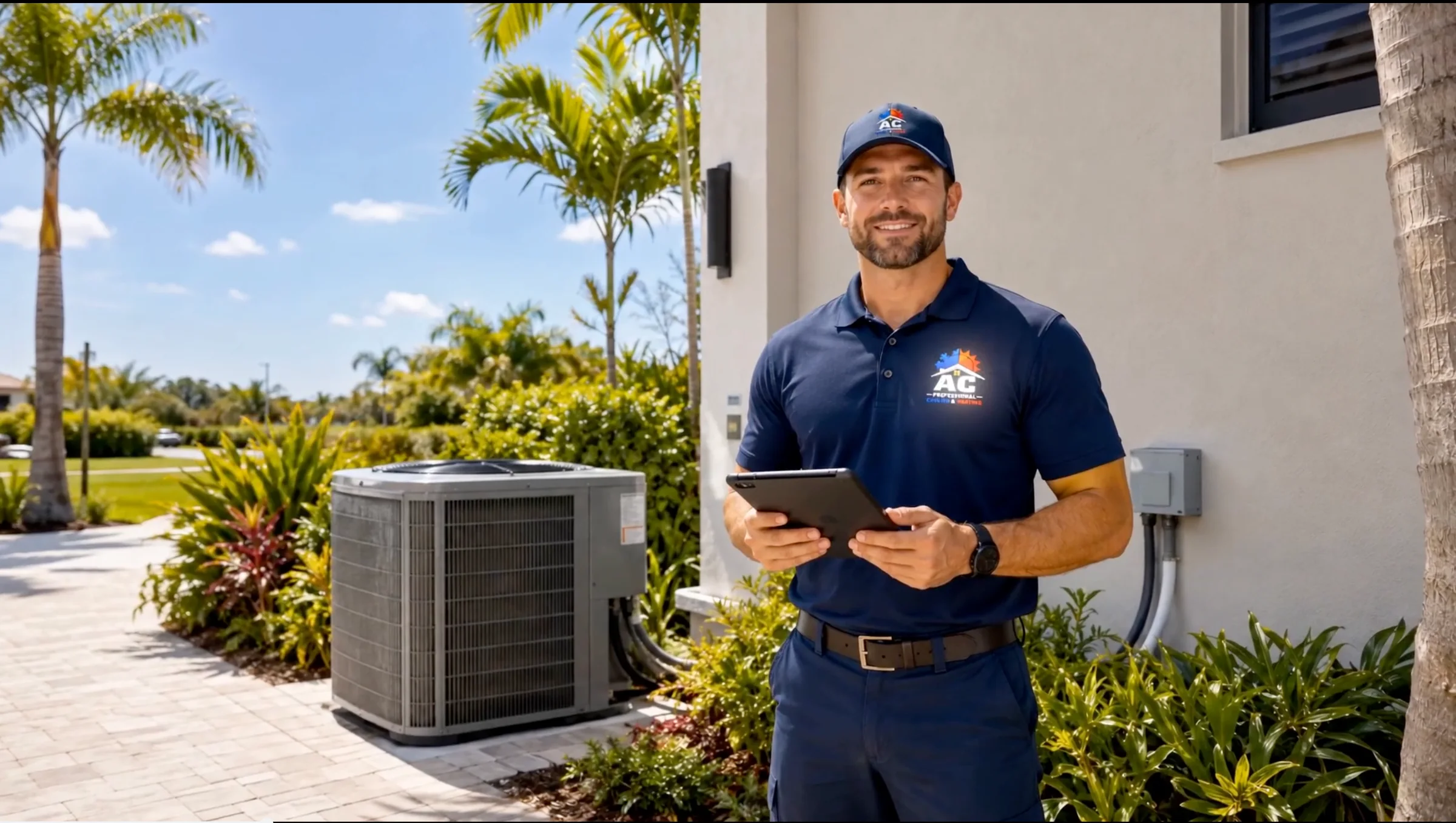
Before you decide, compare the total project cost, the payment terms, whether the new system is properly sized, and what is included in the installation. A professional evaluation can help you determine whether repair or replacement makes more sense. If you want help reviewing your options for AC replacement Cape Coral FL homeowners can call AC Professional for a free estimate.
Why homeowners start looking at AC replacement financing
In Cape Coral, an AC system works hard for much of the year. When it starts falling behind, homeowners often notice longer run times, warmer rooms, higher electric bills, or repeated service calls. At that point, financing can become part of the conversation because replacement may be the more practical long-term step.
Financing is not only for major breakdowns. Some homeowners use it when an older system is still running but no longer cooling reliably. Others want to replace a system before it fails completely so they can plan the project instead of reacting to an emergency.
Signs your system may be nearing replacement
A few symptoms can point toward replacement, but they do not automatically mean you need a new unit. The age of the system, repair history, and overall condition all matter.
Common signs include:
- Frequent repairs or repeated breakdowns
- Rooms that never seem to cool evenly
- Weak airflow from vents
- Loud or unusual noises during operation
- Short cycling, where the system turns on and off too often
- Moisture issues around the indoor unit
- Rising utility bills without a clear reason
If you notice one or more of these issues, the next step is to have the system inspected. Some problems are repairable. Others may indicate that replacement is the better option, especially if major components are failing or the system is no longer performing well for the home.
Safe checks a homeowner can do before calling
There are a few simple checks you can do without opening equipment panels or handling electrical parts. These steps can help you describe the problem more clearly when you call for service.
Homeowner checklist
- Check the thermostat settings and make sure the system is set to cool.
- Replace or inspect the air filter if it is dirty.
- Make sure supply vents are open and not blocked by furniture or rugs.
- Look at the outdoor unit and clear away leaves, grass, or debris around it.
- Listen for unusual sounds and note when they happen.
- Check whether the problem affects one room or the whole house.
- Write down any recent repairs or changes in performance.
Do not remove panels, touch wiring, or try to inspect refrigerant lines yourself. Those tasks can involve electricity, moving parts, and refrigerant, which should be handled by a trained technician.
Common causes that can make replacement the better option
Not every cooling problem means the system is done. But some issues can make replacement more sensible than putting more money into repairs.
A technician may find:
- A compressor or blower issue that would be costly to correct
- A system that is no longer matched well to the home’s cooling needs
- Ductwork problems that are affecting comfort and efficiency
- Evidence of repeated wear that suggests the system is nearing the end of its useful life
- An installation issue from a previous job that is limiting performance
In some cases, the system may still be repairable, but the repair may only solve part of the problem. That is why a full diagnosis matters before you compare financing options.
What a technician should evaluate before recommending a new AC system
A proper replacement recommendation should be based on the condition of the equipment and the needs of the home, not just on age alone. A technician should look at the system’s performance, the source of the problem, and whether repair would be a reasonable alternative.
A professional evaluation may include checking airflow, electrical components, refrigerant-related symptoms, thermostat operation, and visible signs of wear. The technician may also consider the size and layout of the home, insulation, duct condition, and how the current system has been performing.
That evaluation helps answer an important question: is the issue a fixable repair, or is it time to plan for a new AC system?
How to compare AC replacement financing options
When financing is available, it can be tempting to focus only on the monthly payment. That is understandable, but it is not the whole picture. A lower payment can sometimes mean a longer term or a higher overall cost.
Here is what to compare:
1. Monthly payment and total project cost
Make sure you understand the full cost of the replacement, including installation. Then compare how different financing terms affect the payment. A payment that looks manageable at first should still fit your budget over time.
2. Length of the financing term
Longer terms may reduce the monthly payment, but they can also keep the project on your books longer. Shorter terms may cost more per month but can be easier to finish sooner.
3. What is included in the quote
Ask what the estimate covers. The details matter because a replacement project can involve more than the equipment itself. Installation scope, removal of the old system, and any needed adjustments should be clearly explained.
4. Whether the system is correctly sized
A new AC system should be selected for the home, not just swapped in as a like-for-like replacement without review. If the system is too large or too small, comfort and performance can suffer. Proper sizing depends on the home and the installation, so it should be evaluated by a professional.
5. Repair versus replacement comparison
Ask the technician to explain both paths. If a repair can reasonably restore performance, that may be the better short-term choice. If the system is likely to need more work soon, replacement may be the more practical investment.
6. Timing and comfort needs
If your current system is struggling during hot weather, waiting too long can make the home uncomfortable and may increase the chance of a complete failure. Financing can help you move ahead when replacement is the right call.
Questions to ask before you choose financing
A good financing conversation should help you understand the project, not just the payment. Ask direct questions so you can compare offers clearly.
Useful questions include:
- What does the estimate include?
- Is this recommendation based on repair history, performance, or both?
- What makes replacement a better option than repair in my case?
- How will the new system be selected for my home?
- Are there different financing terms available?
- What should I expect during installation?
If you are comparing multiple options, keep the focus on the same details each time. That makes it easier to compare apples to apples.
How to decide between repair, replacement, and financing
The right choice depends on the system’s condition and your goals. A repair may make sense if the issue is isolated and the rest of the system is in good shape. Replacement may make more sense if the system is failing repeatedly, cooling poorly, or requiring major work.
Financing becomes useful when replacement is the right decision but paying all at once is not ideal. In that case, the goal is to choose a project that solves the comfort problem and fits your budget.
If you are unsure, ask for a professional diagnosis first. That way, you can compare the cost of repair against the cost of a new AC system with a clearer understanding of what you are paying for.
Why Cape Coral homeowners should think about prevention too
Once a new system is installed, regular maintenance helps protect your investment and can reduce surprise problems later. In Southwest Florida, AC systems face heavy use, humidity, and long cooling seasons, so staying ahead of small issues matters.
Routine maintenance can help a technician catch airflow problems, dirty components, or wear before they turn into bigger repairs. It also gives you a chance to keep the system operating as intended after replacement.
For ongoing care, you can review our AC Maintenance service and see how regular service supports long-term performance.
Local help for AC replacement in Cape Coral
If you are comparing AC replacement financing and want a clear recommendation based on your home’s actual condition, AC Professional can help. We serve Cape Coral and nearby Southwest Florida communities, and we can evaluate whether repair or replacement is the better next step.
You can also learn more about our AC Replacement and HVAC Installation services, or see our AC services in Cape Coral.
Conclusion
AC replacement financing can make a major home comfort project easier to manage, but the financing itself should not drive the decision. Start with the condition of your current system, what a technician finds during inspection, and whether a new AC system is truly the best solution for your home.
If you are seeing repeated repairs, uneven cooling, or a system that can no longer keep up, compare your options carefully and choose the path that gives you reliable comfort. For a free estimate in Cape Coral, call AC Professional at (239) 293-9373.