
Southwest Florida homeowners often look at Rheem when it is time to replace an aging air conditioner. That makes sense, because the right system choice is not just about the brand name. It is about whether the equipment, the installation, and the home itself all line up with the cooling demands of Cape Coral, Fort Myers, Naples, Bonita Springs, and Estero.
If you are comparing Rheem AC systems Southwest Florida homes may need, the most important question is not “Is Rheem good?” It is “Which exact Rheem model fits my home, my comfort goals, and the installation scope?” That answer depends on load calculation, duct condition, thermostat compatibility, humidity needs, and how much work the replacement will require.
A careful replacement should include a proper evaluation, not just a swap of the old unit for a new one. If you want help comparing options for Rheem AC Cape Coral homes or nearby areas, AC Professional can review the system and provide a free estimate.
Why Rheem comes up often in Southwest Florida replacements
Homes in this region run air conditioning for long stretches of the year, so homeowners tend to focus on comfort, reliability, and how well a system handles humidity. Rheem is one of several brands people compare when they want a replacement that can fit different budgets, home sizes, and feature preferences.
The brand alone does not determine the result. A well-chosen system can still underperform if it is oversized, undersized, paired with the wrong thermostat, or installed with duct problems left unresolved. That is why the installation scope matters as much as the equipment label.
Start with the home, not the brand
Before comparing specific Rheem models, the home should be evaluated first. A proper replacement starts with the cooling load, the condition of the ducts, the insulation and window exposure, and the way the home is used day to day.
In Southwest Florida, two homes on the same street can need very different solutions. A shaded home with updated ductwork may need a different setup than a sun-exposed home with older ducts and humidity issues. That is why a correct load calculation is central to the decision.
What a homeowner may notice when the system is not matched well
If the current system is not a good fit, you may notice uneven temperatures, frequent cycling, rooms that feel sticky, or a system that seems to run too long without making the home comfortable. Those symptoms do not always mean the equipment itself is failing. They can also point to sizing, airflow, duct leakage, or control issues.
A replacement is the right time to address those problems instead of carrying them into the new system.
How to compare exact Rheem models
When comparing Rheem options, look beyond the model name and ask what each version is designed to do. Some models may emphasize efficiency features, some may focus on quieter operation, and others may be a simpler fit for a straightforward replacement.
The right comparison should include:
- Cooling capacity matched to the home’s actual load
- Humidity control features and how they work in real use
- Sound level expectations for the outdoor and indoor components
- Thermostat compatibility with the rest of the system
- Parts and service access for future maintenance and repairs
- Written warranty terms for the exact equipment being installed
A homeowner does not need to memorize technical details. What matters is whether the quoted model supports the comfort goals you actually have.
Humidity control matters as much as temperature
In Southwest Florida, a home can feel uncomfortable even when the thermostat says the temperature is where it should be. That is often a humidity issue. If a system cools quickly but does not run long enough to remove moisture, the home may feel damp or clammy.
That is why the right Rheem AC replacement should be evaluated for how it manages both temperature and moisture. A technician should explain whether the proposed setup is likely to run in a way that supports better indoor comfort, not just lower temperature.
If your current system has a humidity complaint, mention it during the estimate. That detail can affect the model choice, airflow setup, and thermostat recommendations.
Sound, placement, and daily livability
Noise is another factor that becomes more noticeable when a system runs often. A quieter unit can make a difference near bedrooms, patios, or neighboring homes. But sound should be considered alongside placement and installation details, not in isolation.
The outdoor unit location, pad condition, line set routing, and nearby surfaces can all affect how sound is perceived. A careful installer will look at the full setup instead of assuming the equipment alone solves the issue.
Thermostat compatibility and control features
A new system should work smoothly with the thermostat and controls that fit the home. Some homeowners want simple operation, while others want more detailed scheduling or system feedback. The key is making sure the thermostat is compatible with the equipment and appropriate for the installation.
If the thermostat is not matched correctly, the system may not perform as intended. That can affect comfort, humidity control, and how often the system cycles. During a quote, ask what controls are included and whether any existing thermostat can be reused safely and effectively.
Installation quality can make or break the result
Even a strong brand choice can disappoint if the installation is rushed. For Rheem HVAC installation, the details matter: refrigerant line condition, electrical connections, drain setup, airflow balance, duct sealing, and startup testing all affect how the system performs.
A good installation should not be treated like a simple equipment swap. In many homes, the replacement scope may also include duct corrections, thermostat updates, or changes to airflow components. Those items can change the final recommendation.
What a technician should evaluate before recommending replacement
A thorough estimate should include:
- The home’s cooling load and layout
- Existing duct condition and airflow concerns
- Electrical compatibility with the new equipment
- Drainage and condensate management
- Thermostat and control compatibility
- Access for service and future maintenance
- Any signs that the current system has hidden issues beyond the equipment itself
If a contractor skips these steps, the quote may not reflect the real scope of the job.
How to compare total installed scope, not just equipment
When homeowners compare a Rheem AC replacement, the biggest mistake is focusing only on the box itself. The total installed scope is what determines whether the project is straightforward or more involved.
For example, two quotes may both mention Rheem, but one may include only basic replacement while another includes duct corrections, electrical updates, or thermostat changes. Those differences matter because they affect how the system will operate after installation.
Ask each contractor to explain what is included in writing. That makes it easier to compare apples to apples and avoid surprises later.
Safe homeowner checklist before you request an estimate
You can gather useful information before a professional visit, but keep safety first. Do not open electrical panels, remove equipment covers, or handle refrigerant lines. Those tasks should be left to a licensed HVAC technician.
Here is a safe checklist:
- Note the rooms that feel too warm, too humid, or uneven.
- Write down when the system seems to struggle most during the day.
- Check whether the thermostat settings are changing the way you expect.
- Look for obvious signs of blocked airflow, such as closed vents or dirty return grilles.
- Listen for unusual noise from the indoor or outdoor unit.
- Make a note of any water near the air handler or drain area.
- Gather the age and service history of the current system if you have it.
If you notice burning smells, electrical issues, or water near wiring, stop using the system and call a professional.
When repair, maintenance, or replacement makes more sense
Not every comfort problem means the home needs a full replacement. Sometimes the right next step is repair or maintenance, especially if the issue is isolated and the system is otherwise a good match for the home.
A technician may recommend repair if the system has a specific failed component and the rest of the equipment is still a reasonable fit. Replacement may make more sense if the system is older, poorly sized, difficult to service, or no longer meeting comfort goals even after repairs.
If you are unsure, a professional evaluation can help you compare options before committing to a full project. You can also review related services like AC Replacement, HVAC Installation, AC Maintenance, and AC Repair.
How to evaluate warranty terms the right way
Warranty language should be reviewed for the exact model and installation situation, not assumed from the brand name alone. Ask what is covered, what is excluded, and what conditions may apply to keep coverage valid.
It is also smart to ask who handles future service and how warranty-related work is documented. Written terms matter because they help you understand the long-term ownership picture before you approve the job.
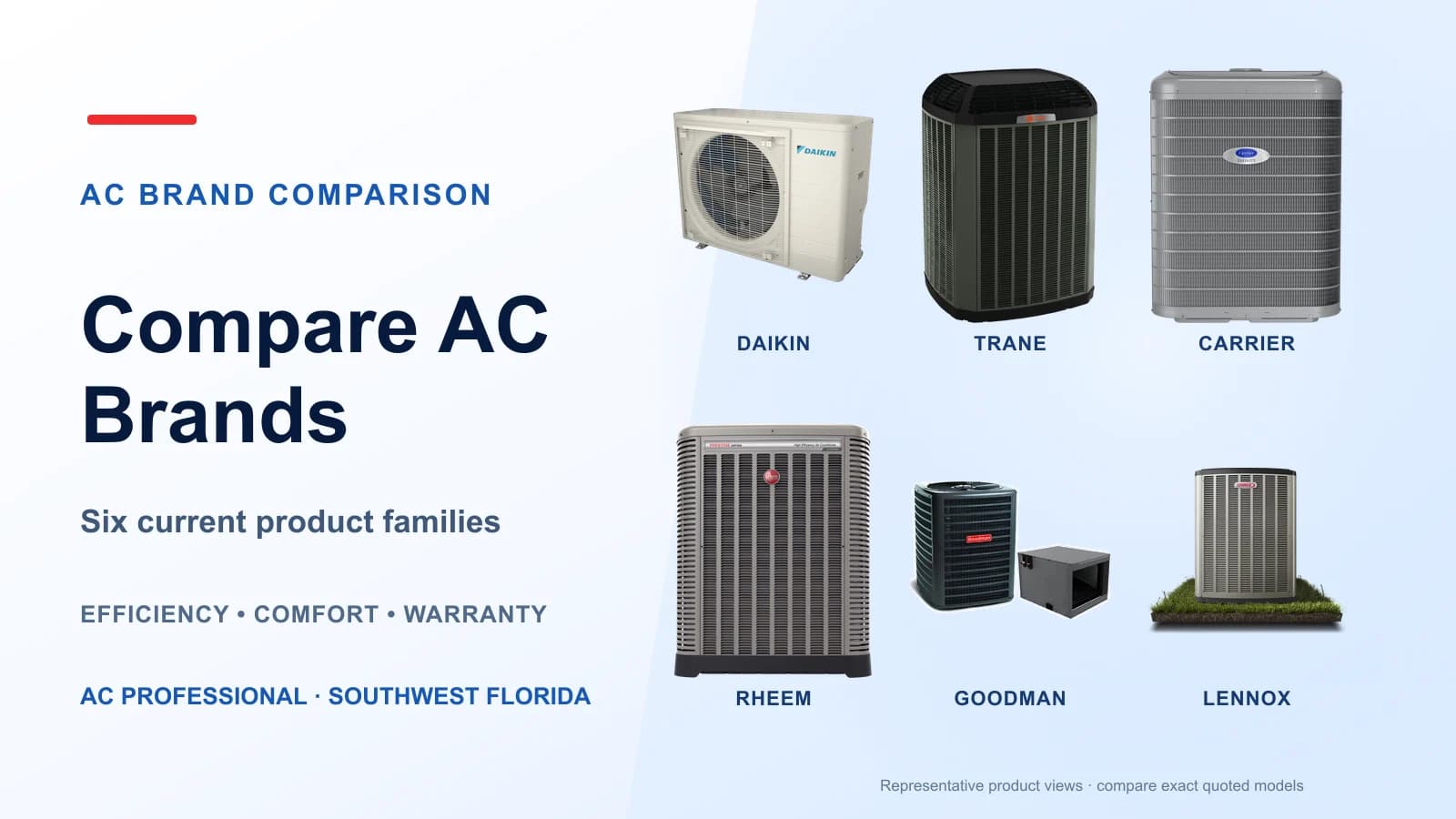
Comparing Rheem with other brands in a practical way
If you are still deciding between brands, compare them by how well each one fits your home rather than by reputation alone. The right question is which system gives you the best combination of comfort, installation fit, and serviceability for your specific house.
For a broader side-by-side perspective, you can also read our guide to compare AC brands in Southwest Florida. That can help you narrow the field before you request estimates.
What AC Professional looks at during a replacement estimate
At AC Professional, we focus on the details that affect real-world performance in Southwest Florida homes. That includes the home’s cooling needs, the condition of the existing system, and whether the proposed replacement will support comfort over the long cooling season.
We also look at the installation scope so the recommendation reflects the full job, not just the equipment label. If you are considering a Rheem air conditioner Fort Myers homeowners often ask about, or a replacement anywhere in our service area, we can walk through the options and provide a free estimate.
Conclusion
A Rheem system can be a good fit for a Southwest Florida home, but the brand name is only one part of the decision. The best outcome comes from matching the exact model to the home, confirming the installation scope, and making sure the system is designed to handle local heat and humidity well.
If you are comparing Rheem AC systems Southwest Florida homeowners commonly consider, start with a proper evaluation and a clear written estimate. AC Professional Cooling & Heating, Inc. serves Cape Coral, Fort Myers, North Fort Myers, Naples, Bonita Springs, and Estero. Call (239) 293-9373 or request a free estimate to see what Rheem option fits your home best.
Plan the next step
Use the Cape Coral new AC cost estimator for an initial planning range, then request an in-home evaluation before choosing equipment.
What the Current Rheem Lineup Adds to the Comparison
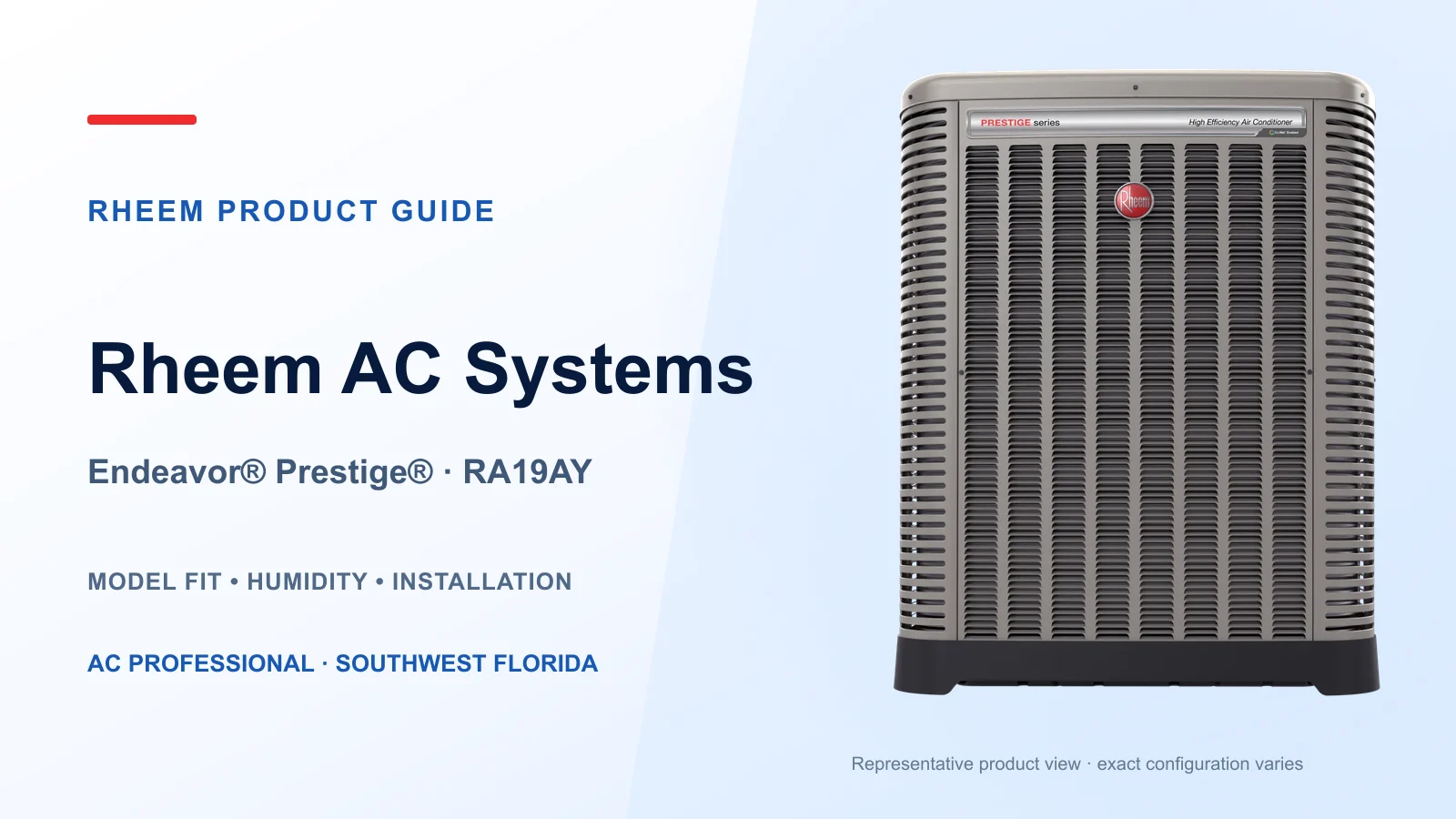
Rheem’s current residential catalog centers on the Endeavor Line and presents Prestige, Classic Plus, and Classic choices. Selected systems use EcoNet-enabled controls, and current R-454B model listings cover multiple operating tiers and capacities. Those family names are useful for organizing a comparison, but the exact outdoor model, indoor match, control, and rated performance must appear in the proposal.
Rheem is a practical comparison when the homeowner wants to move between clearly named tiers or is considering an EcoNet-capable system. Ask which quoted components are EcoNet-compatible; a brand-level description alone does not guarantee that control experience.
Product names, refrigerants, controls, availability, and certified ratings can change. Before signing, compare the exact outdoor model, indoor unit, thermostat or communicating control, AHRI-rated match when applicable, electrical work, drain work, permit scope, labor coverage, and manufacturer warranty documents.
Official Sources Checked for This Guide
Official manufacturer pages were checked on August 5, 2026. They are used to identify current product families and warranty language, not to replace an in-home load calculation or a written installation proposal.