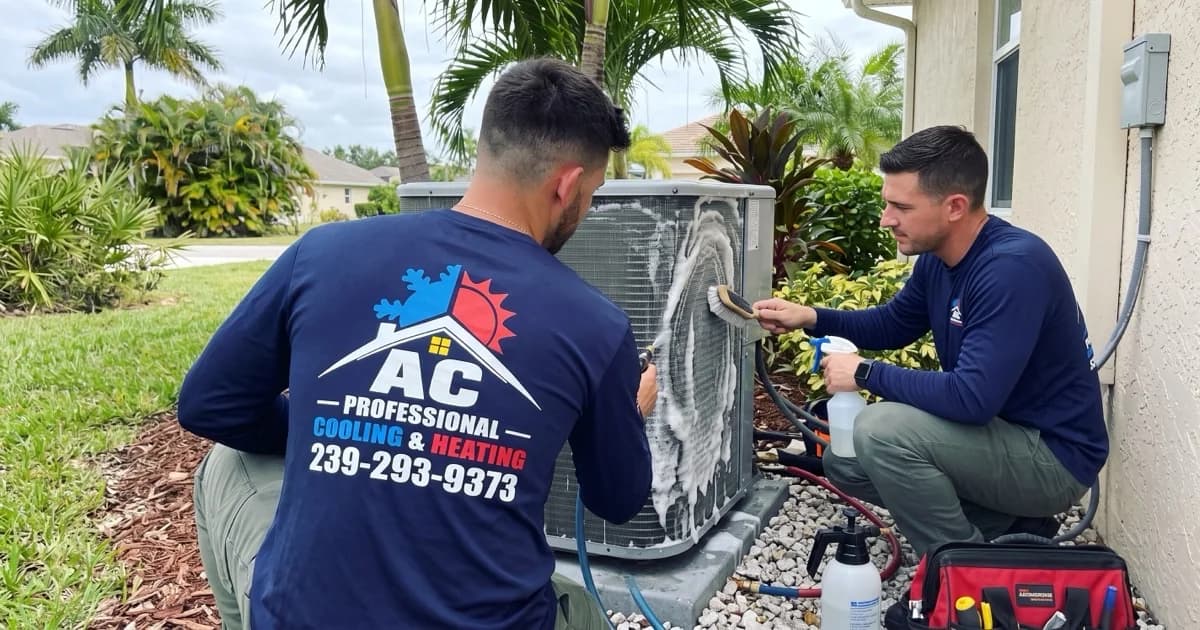
Your AC has two sets of coils — and both of them are fighting Southwest Florida's humidity, salt air, and year-round pollen every single day. When those coils get dirty, your system works harder, your electric bill climbs, and eventually something breaks. The good news: professional coil cleaning is one of the most affordable ways to keep your AC running efficiently and extend its lifespan.
This guide covers what coil cleaning costs in Cape Coral, Fort Myers, and Naples in 2026, the difference between evaporator and condenser coils, seven warning signs that your coils need attention, and how often you should schedule this service in Southwest Florida.
AC Coil Cleaning Cost in Southwest Florida (2026)
Most homeowners in Southwest Florida pay between $100 and $400 for professional AC coil cleaning. The exact price depends on which coil needs cleaning, how dirty it is, and whether the service is part of a maintenance visit.
| Service | Typical Cost | Notes |
|---|---|---|
| Condenser coil cleaning (outdoor) | $75–$200 | Basic rinse and chemical treatment |
| Evaporator coil cleaning (indoor) | $100–$400 | Requires accessing the air handler |
| Both coils during tune-up | $150–$300 | Best value — often bundled with maintenance |
| Deep chemical cleaning | $200–$400 | For heavily soiled or neglected coils |
| Diagnostic visit | $89–$150 | AC Professional: $129 ($100 with Protection Plan) |
According to HomeGuide, the national average for AC coil cleaning runs $100 to $400. Southwest Florida pricing falls in line with the national average, though coastal homes with salt buildup may run toward the higher end.
At AC Professional, coil cleaning is included as part of our seasonal AC maintenance tune-ups. Call (239) 293-3373 for current pricing and same-day availability.
Evaporator Coil vs. Condenser Coil: What's the Difference?
Your AC system has two coils, and each one does a different job in a different environment.
Evaporator Coil (Indoor)
The evaporator coil sits inside your air handler — usually in a closet, attic, or garage. It absorbs heat from your indoor air as refrigerant passes through it. In Southwest Florida's humidity, the evaporator coil also pulls moisture from the air, which is why your AC doubles as a dehumidifier.
What collects on it: Dust, pet dander, mold, mildew, and biofilm. Because this coil is constantly wet from condensation, it's a prime surface for biological growth — especially in a humid climate like ours.
Cleaning method: A technician applies a no-rinse chemical foam that breaks down buildup. The condensation from normal operation rinses the coil over the next few hours. Heavily soiled coils may require a wet cleaning with a pump sprayer.
Condenser Coil (Outdoor)
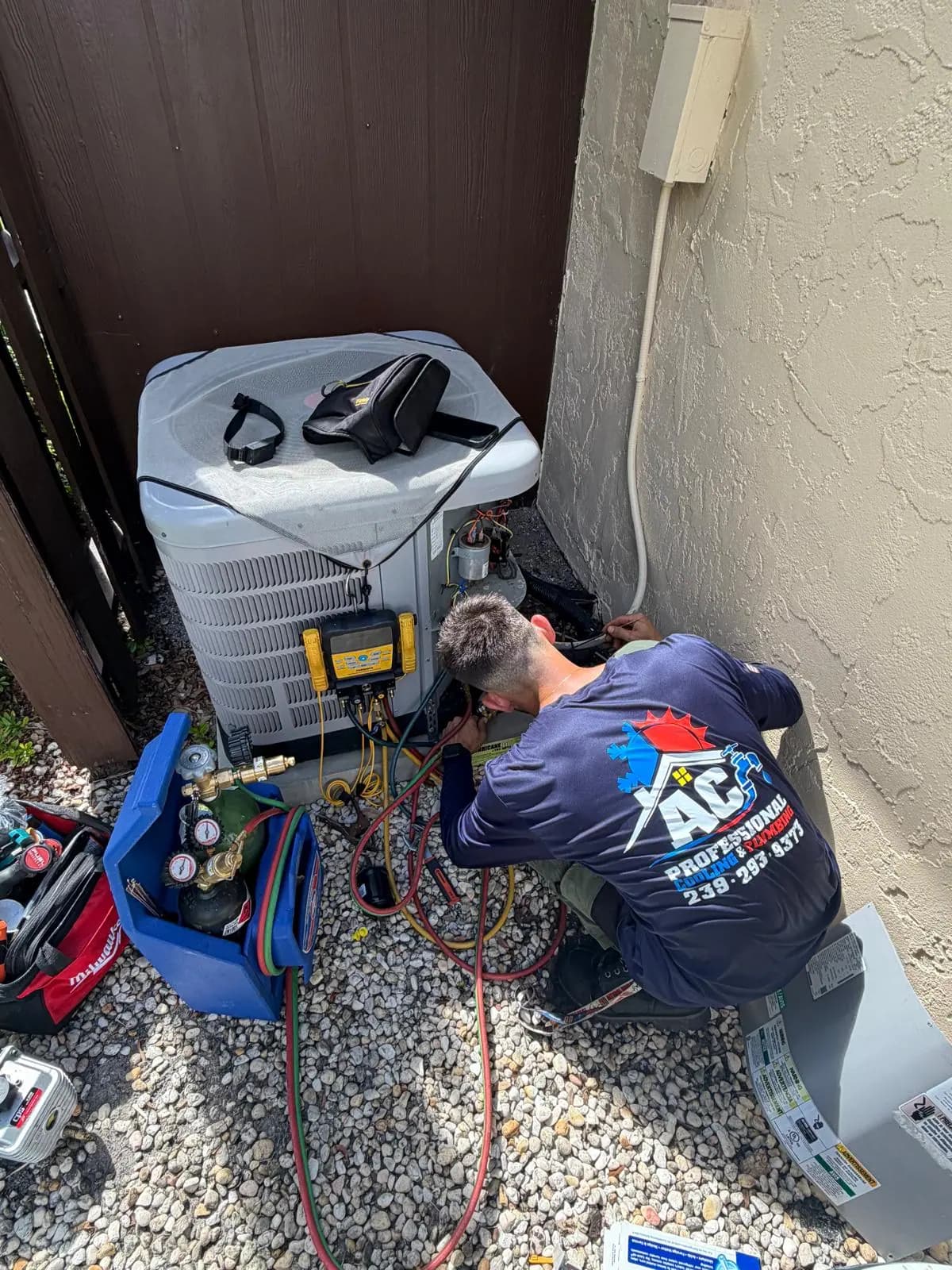
The condenser coil is inside your outdoor unit — the big metal box with the fan on top. It releases the heat that the evaporator coil absorbed from your home. Air is pulled through the coil fins by the fan, so anything airborne ends up stuck to the coil surface.
What collects on it: Grass clippings, pollen, cottonwood seeds, spider webs, dirt, and — in coastal Southwest Florida — salt deposits that cause corrosion.
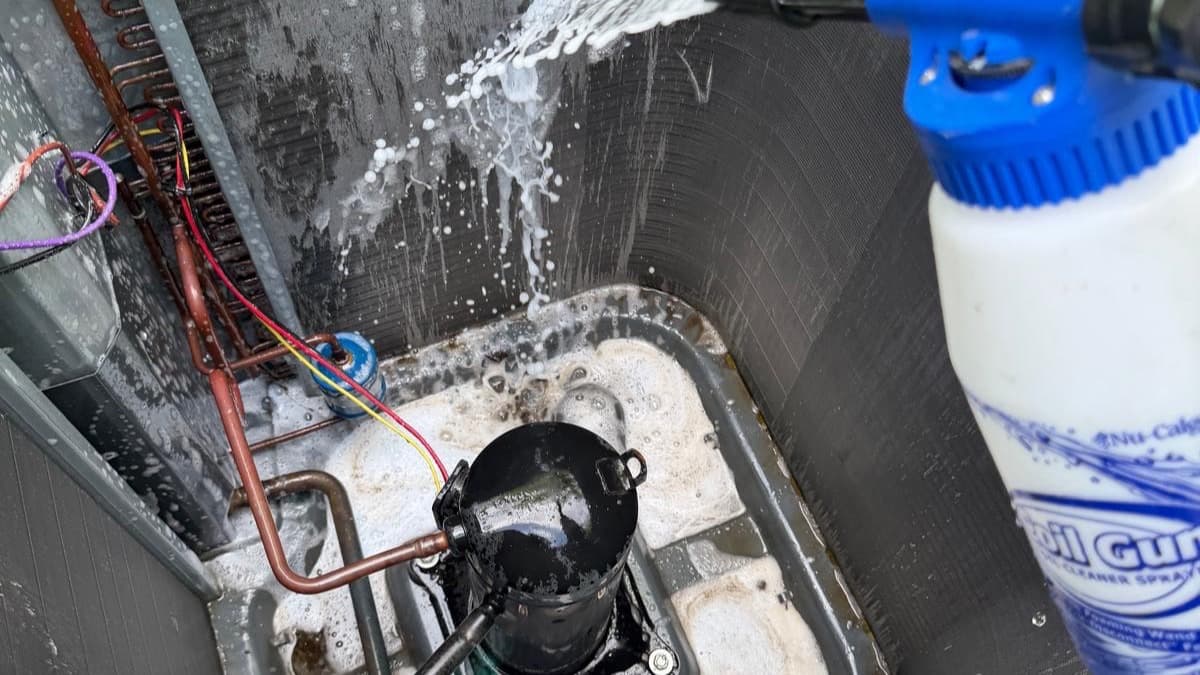
Cleaning method: The technician sprays a chemical cleaner onto the coil, lets it dwell, and rinses it off with a garden hose from the inside out. A pressure washer should never be used — it bends the delicate aluminum fins and creates more problems than it solves.
7 Signs Your AC Coils Need Cleaning
Dirty coils don't always announce themselves with a dramatic failure. Often, the signs are gradual — which makes them easy to ignore until the problem becomes expensive. Watch for these seven indicators.
- Your AC runs longer cycles than usual. Dirty coils reduce heat transfer efficiency, forcing the system to run longer to reach the thermostat setting. If your AC used to cycle off after 15 minutes and now runs 25–30, coils are a likely culprit.
- Your electric bill is climbing without explanation. The U.S. Department of Energy estimates that dirty coils can reduce AC efficiency by 5–40%. In Southwest Florida where AC accounts for 40–60% of your electric bill, even a 10% efficiency drop is noticeable.
- The air from your vents feels warmer than normal. Dirty evaporator coils can't absorb heat effectively. If the supply air temperature is 60–65°F instead of 55–58°F, the coils may be insulated by grime.
- You see ice forming on the indoor unit. A dirty evaporator coil restricts airflow and drops the coil temperature below freezing. Ice forms on the coil and refrigerant lines — and running the system in this state can damage the compressor.
- The outdoor unit looks visibly dirty. Walk outside and look at your condenser. If you can see dirt, grass, or debris caked onto the fins, airflow is restricted and heat can't escape efficiently.
- Your home feels more humid than usual. The evaporator coil is responsible for dehumidification. When it's coated in biofilm or grime, its ability to pull moisture from the air drops significantly.
- You notice a musty smell from the vents. Mold and mildew growing on a dirty evaporator coil will push that smell into your living space every time the blower runs.
If you notice two or more of these signs, schedule a coil inspection. Call AC Professional at (239) 293-3373 — same-day service available seven days a week.
How Often Should You Clean AC Coils in Southwest Florida?
National guidelines suggest cleaning AC coils once a year. In Southwest Florida, that's not enough. Our climate demands a more aggressive schedule.
Condenser Coil (Outdoor): Every 6–12 Months
The outdoor coil is exposed to everything Southwest Florida throws at it — pollen, lawn debris, tropical storms, and salt air. Most HVAC professionals recommend cleaning the condenser coil every 6 to 12 months, depending on your environment.
Clean every 6 months if:
- Your home is within 5 miles of salt water (Cape Coral canals, Naples beach, Bonita Springs coast)
- You have landscaping close to the outdoor unit (hedges, flowering plants, mulch beds)
- Your yard has heavy tree coverage that drops leaves and seeds
Annual cleaning is fine if:
- Your unit sits on a concrete pad in an open area
- You're inland with minimal landscaping near the unit
- You rinse the condenser with a garden hose every 2–3 months yourself
Evaporator Coil (Indoor): Every 1–2 Years
The indoor coil is protected from the elements but exposed to everything circulating through your home's air. With regular filter changes (every 30–60 days in Florida), the evaporator coil stays cleaner longer.
Clean every year if:
- You have pets (pet dander accelerates buildup)
- Someone in the household has allergies or asthma
- Your air handler is in the attic, where Florida heat accelerates biological growth
- You've noticed any of the warning signs listed above
Every 2 years is acceptable if:
- You change your filter on schedule
- Your home is well-sealed and relatively dust-free
- No one in the household has respiratory issues
Why AC Coils Get Dirtier in Florida Than Anywhere Else
Southwest Florida is one of the hardest environments for AC coils in the entire country. Here's why your coils need more attention than systems in most other states.
- Year-round operation. Your AC runs 10–12 months per year, compared to 4–5 months in northern states. More runtime means more air passing through the coils and more buildup accumulating.
- High humidity. With average humidity around 74–75%, your evaporator coil is constantly wet. That persistent moisture creates the perfect environment for mold, mildew, and biofilm to thrive.
- Pollen and vegetation. Southwest Florida's growing season never stops. Your outdoor coil catches pollen from palms, oak trees, and tropical plants year-round.
- Salt air. If you live near the coast — or anywhere on Cape Coral's 400+ miles of canals — salt-laden air corrodes aluminum coil fins. Salt creates micro-pitting that traps moisture and accelerates buildup. Homes within 5 miles of salt water need condenser coils inspected every 6 months.
- Tropical storms and debris. Hurricane season (June through November) brings wind-driven rain, leaves, and debris that can pack into condenser coils overnight.
Is Coil Cleaning Included in an AC Tune-Up?
In most cases, yes. A professional AC maintenance tune-up in Southwest Florida typically includes a basic condenser coil cleaning as part of the service. Here's what a standard tune-up covers:
- Condenser coil rinse and chemical treatment
- Evaporator coil inspection (cleaning if needed)
- Refrigerant pressure check
- Electrical connection inspection and tightening
- Capacitor and contactor testing
- Condensate drain line flush
- Thermostat calibration
- Full system performance test
A seasonal tune-up typically costs $150–$200 in Southwest Florida. Considering that coil cleaning alone can run $100–$400 when scheduled separately, bundling it with your annual maintenance is the most cost-effective approach.
AC Professional's Heating & Cooling Protection Plan ($19.99/month) includes two tune-ups per year — each with coil cleaning included. Members also receive priority scheduling, discounted diagnostics, and no overtime charges.
What Happens If You Never Clean Your AC Coils?
Skipping coil cleaning doesn't just reduce comfort — it creates a cascade of problems that grow more expensive over time.
Short-term effects (3–6 months of neglect):
- 5–15% drop in cooling efficiency
- Higher electric bills ($20–$50 more per month in Florida)
- Longer run times and uneven cooling
Medium-term effects (6–18 months):
- Ice formation on the evaporator coil
- Mold growth spreading through ductwork
- Increased wear on the compressor and fan motor
- Refrigerant pressure issues from restricted heat transfer
Long-term effects (2+ years):
- Compressor failure ($2,000–$3,500 to replace)
- Evaporator coil corrosion requiring full coil replacement ($1,200–$2,800)
- Indoor air quality issues triggering allergies and respiratory problems
- Premature system failure — an AC that should last 12–15 years in Florida may fail in 7–8
The math is straightforward: $150–$300 for annual coil cleaning versus $2,000–$3,500 for a compressor replacement. Prevention is always cheaper.
Can You Clean AC Coils Yourself?
You can handle basic maintenance on the outdoor condenser coil. The indoor evaporator coil is a different story.
Condenser Coil (DIY-Friendly)
- Turn off the AC at the thermostat and the breaker
- Remove loose debris by hand (leaves, grass, twigs)
- Spray the coil from the inside out with a garden hose (moderate pressure only — never a pressure washer)
- Use a commercial coil cleaner from a hardware store if the coil is particularly dirty
- Let it dry, restore power, and test
Do this every 2–3 months between professional cleanings to keep your condenser performing well.
Evaporator Coil (Call a Professional)
The evaporator coil sits inside a sealed air handler. Accessing it requires removing panels and working near refrigerant lines. Working on refrigerant-containing systems without EPA Section 608 certification is a federal violation under the Clean Air Act.
Beyond the legal issue, improper cleaning can damage the coil, introduce moisture into the system, or bend fins that restrict airflow. This is a job for a licensed HVAC technician.
Frequently Asked Questions
How much does AC coil cleaning cost in Cape Coral? In Cape Coral and across Southwest Florida, professional AC coil cleaning typically costs $100 to $400 for the evaporator coil and $75 to $200 for the condenser coil. AC Professional offers same-day service seven days a week.
How often should AC coils be cleaned in Florida? In Southwest Florida, most HVAC professionals recommend cleaning condenser coils every 6 to 12 months and evaporator coils every 1 to 2 years. Coastal homes near salt water should have coils inspected every 6 months.
What is the difference between evaporator and condenser coil cleaning? The evaporator coil is indoors and absorbs heat — it collects dust, mold, and biofilm. The condenser coil is outdoors and releases heat — it collects grass, pollen, and salt deposits. Each requires a different cleaning method.
Can dirty AC coils increase my electric bill? Yes. The U.S. Department of Energy estimates dirty coils reduce AC efficiency by 5–40%, directly increasing electricity costs. In Southwest Florida where AC runs year-round, this effect compounds.
Does salt air in coastal Florida affect AC coils? Yes. Salt air causes galvanic corrosion on aluminum fins, creating micro-pitting that traps moisture. Homes within 5 miles of salt water need more frequent cleaning.
Is AC coil cleaning something I can do myself? You can rinse the outdoor condenser with a garden hose. Evaporator coil cleaning requires a licensed technician — working on refrigerant systems without EPA 608 certification is a federal violation.
Does AC Professional service Cape Coral, Fort Myers, and Naples? Yes. AC Professional (license CAC1823099) provides coil cleaning across Cape Coral, Fort Myers, North Fort Myers, Naples, Bonita Springs, Estero, and Marco Island. Call (239) 293-3373.
Keep Your Coils Clean, Keep Your AC Running
Dirty coils are the silent efficiency killer in Southwest Florida homes. You can't see them, you can't hear them failing, and by the time symptoms appear, you've already been overpaying on electricity for months.
The fix is simple: schedule professional coil cleaning as part of your annual AC maintenance, rinse your outdoor unit every couple of months with a garden hose, and change your air filter every 30–60 days.
If it's been more than a year since your last coil cleaning — or if you've never had one done — AC Professional Cooling & Heating offers same-day service across Cape Coral, Fort Myers, Naples, and all of Southwest Florida. Licensed (CAC1823099), 5.0 stars on Google with 218+ reviews, written pricing before any work starts. Call or text (239) 293-3373.