
Welcome back. While you were up north, your Southwest Florida home spent the summer doing the hardest thing a house here can do: sitting closed through hot, humid weather, sometimes with no one checking the system in person.
This snowbird AC checklist for Florida homes covers what to check in your first 48 hours back in Cape Coral, Fort Myers, Naples, Bonita Springs, or Estero — before small problems left over from summer turn into big ones during your season here.
Problems in a seasonal home may develop quietly in a drain line, filter, or coil. A careful return check helps you notice warning signs before they interrupt your stay.
What Your AC Did All Summer While You Were Gone
If you left the system running (and you should have), your AC just finished the toughest shift of its year — cooling and dehumidifying an empty house through the hottest, wettest months, with no one changing the filter and no one hearing the noises.
That means months of moisture collecting in the condensate drain line, a filter that's been loading up since April or May, algae and biological growth enjoying a warm, dark, damp system, and afternoon thunderstorms throwing power flickers at the compressor all summer long.
None of that means something is broken. It means the system deserves a real look before you ask it to carry you through your whole season — cooling now, heating when the first cold front arrives.
The Snowbird AC Checklist: 8 Things to Check in Your First 48 Hours
Walk through these in order using accessible areas only. Do not open electrical panels, touch wiring, climb into an unsafe attic, or bypass a float switch. A thermostat with a humidity display or a separate humidity meter helps with step seven.
- Smell the air when you walk in. Notice stale or musty odors and look for visible moisture. A smell alone cannot identify mold or its source. If you see water damage or suspect mold in the HVAC system, arrange an inspection before running it.
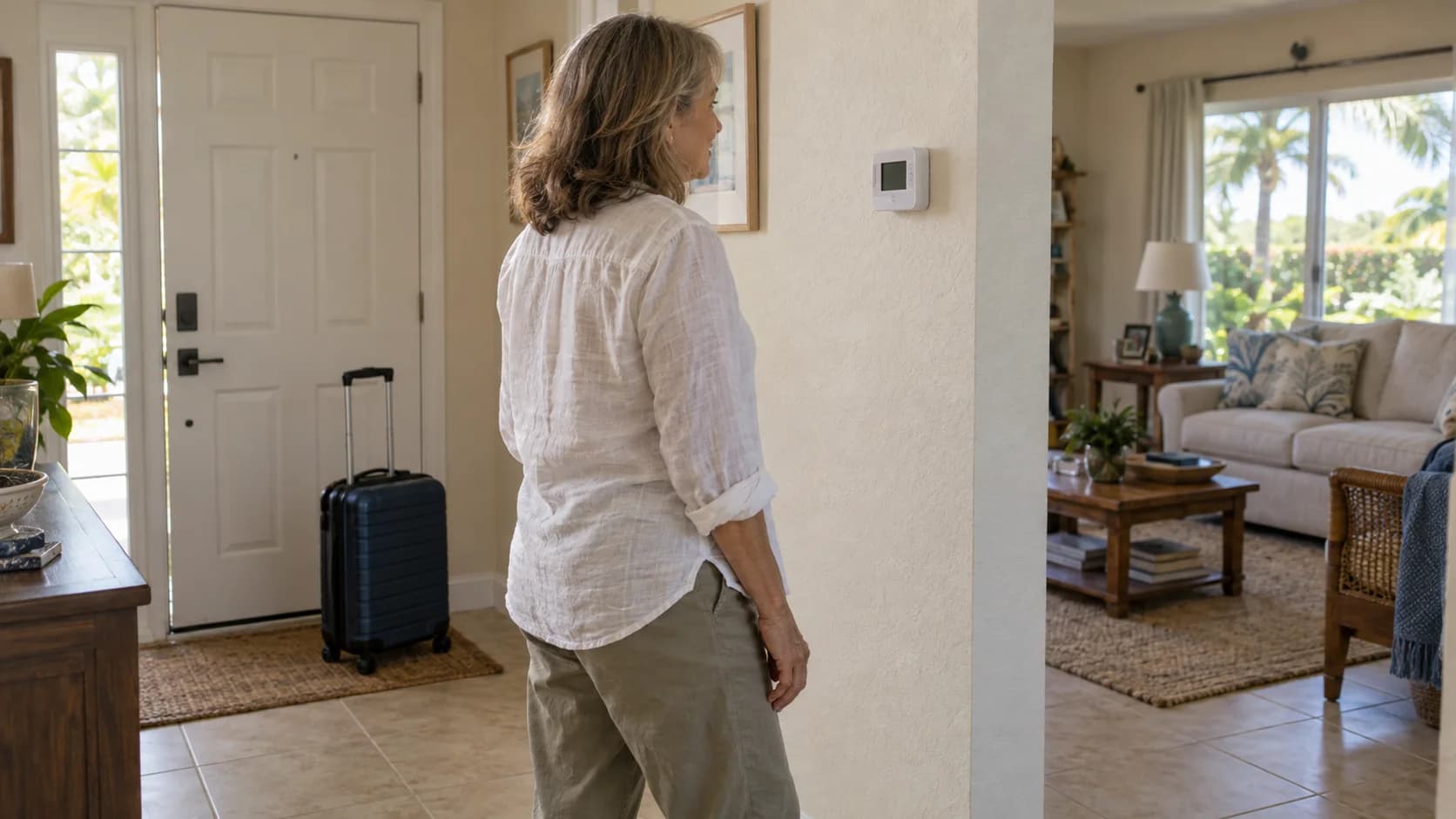
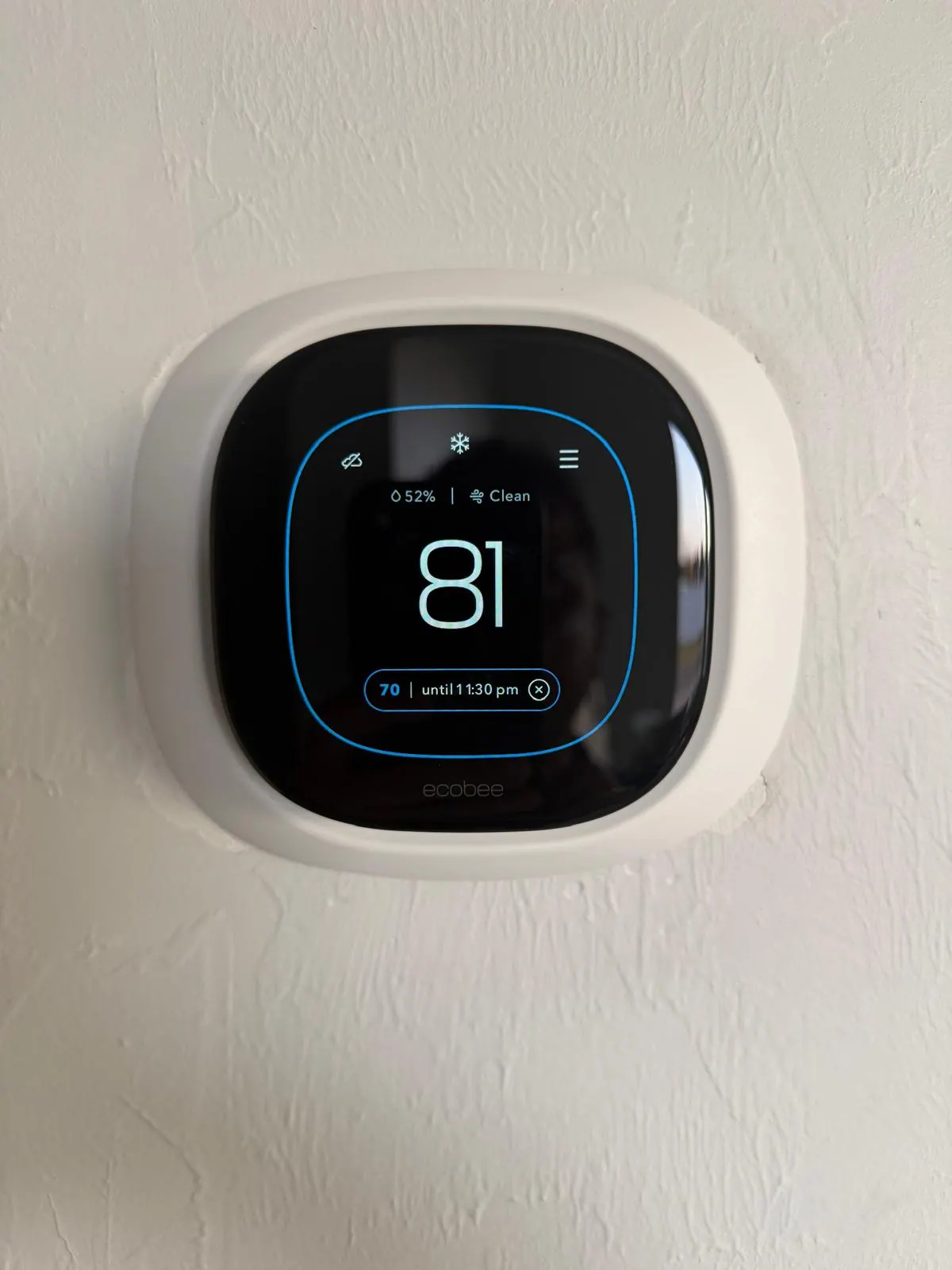
- Check the thermostat and let the system run. If there are no signs of water intrusion or suspected HVAC contamination, select cooling and a comfortable setting below room temperature. Listen through a normal cycle. Grinding, screeching, or repeated short cycling deserves a professional look.
- Inspect the filter and replace it if needed. A filter left in place for months may be overdue. Replace a dirty disposable filter with the correct size and type; follow the manufacturer’s schedule and cleaning instructions for reusable filters. Turn the system off at the thermostat before handling an accessible filter.
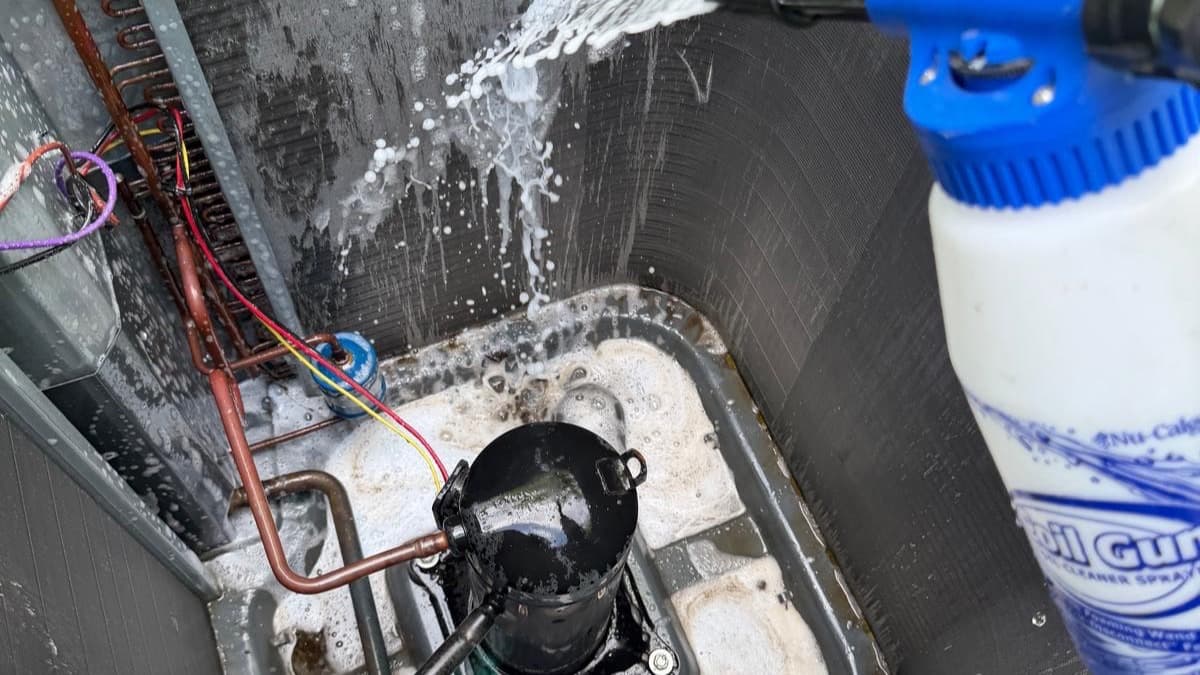
- Look at accessible condensate drainage. Identify the drain outlet if your system has an accessible one. Water flow varies with humidity, runtime, and drain design, so no visible drip alone does not prove a clog. Look for stains or standing water around accessible equipment. Do not reset or bypass a tripped overflow switch; stop cooling and call for service if water is leaking.
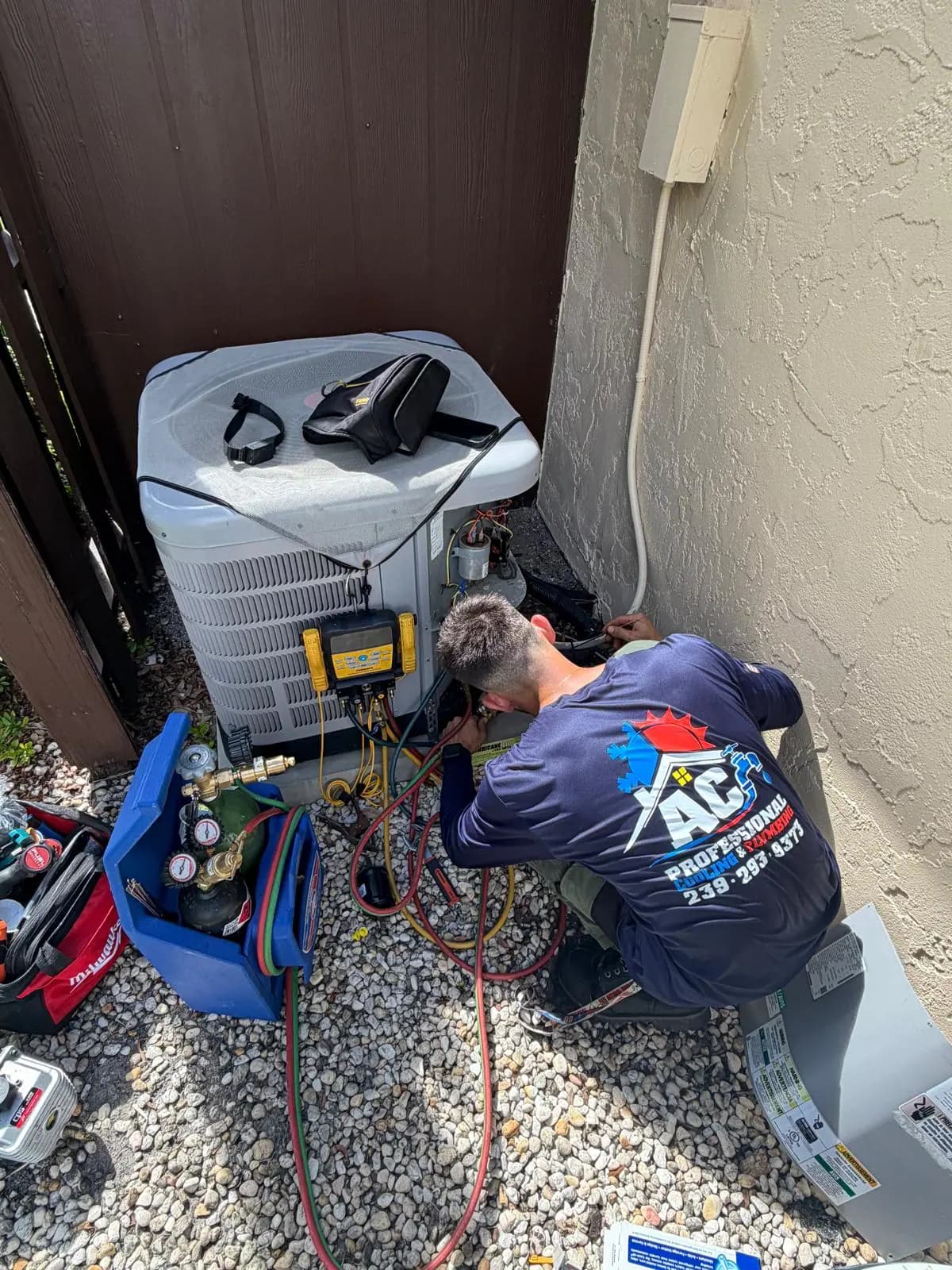
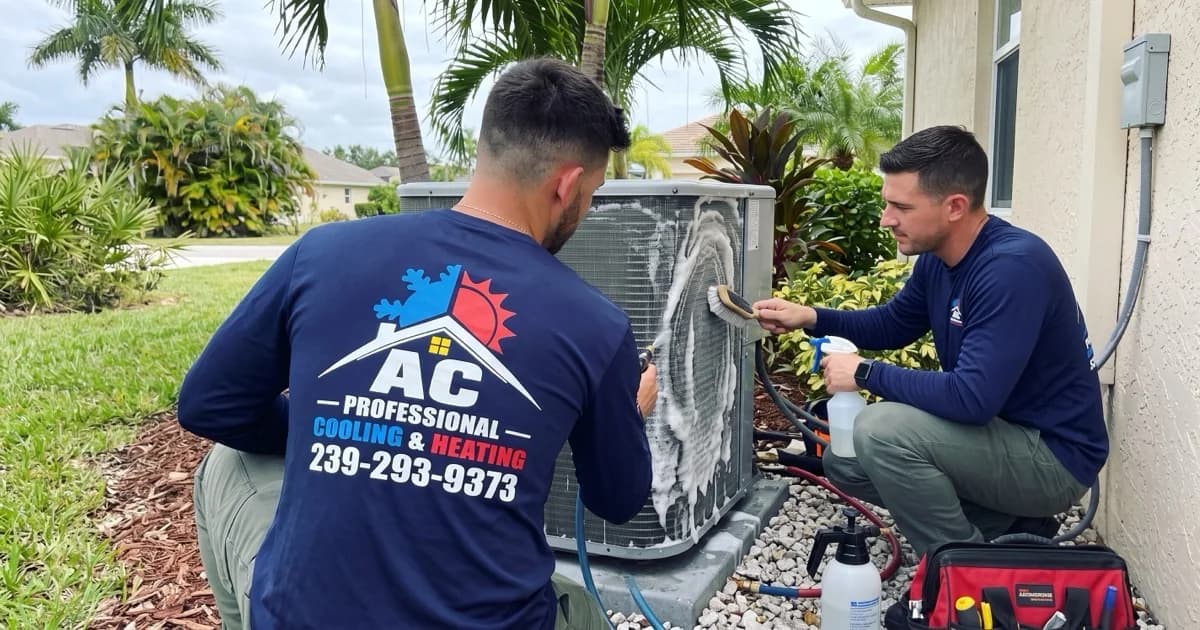
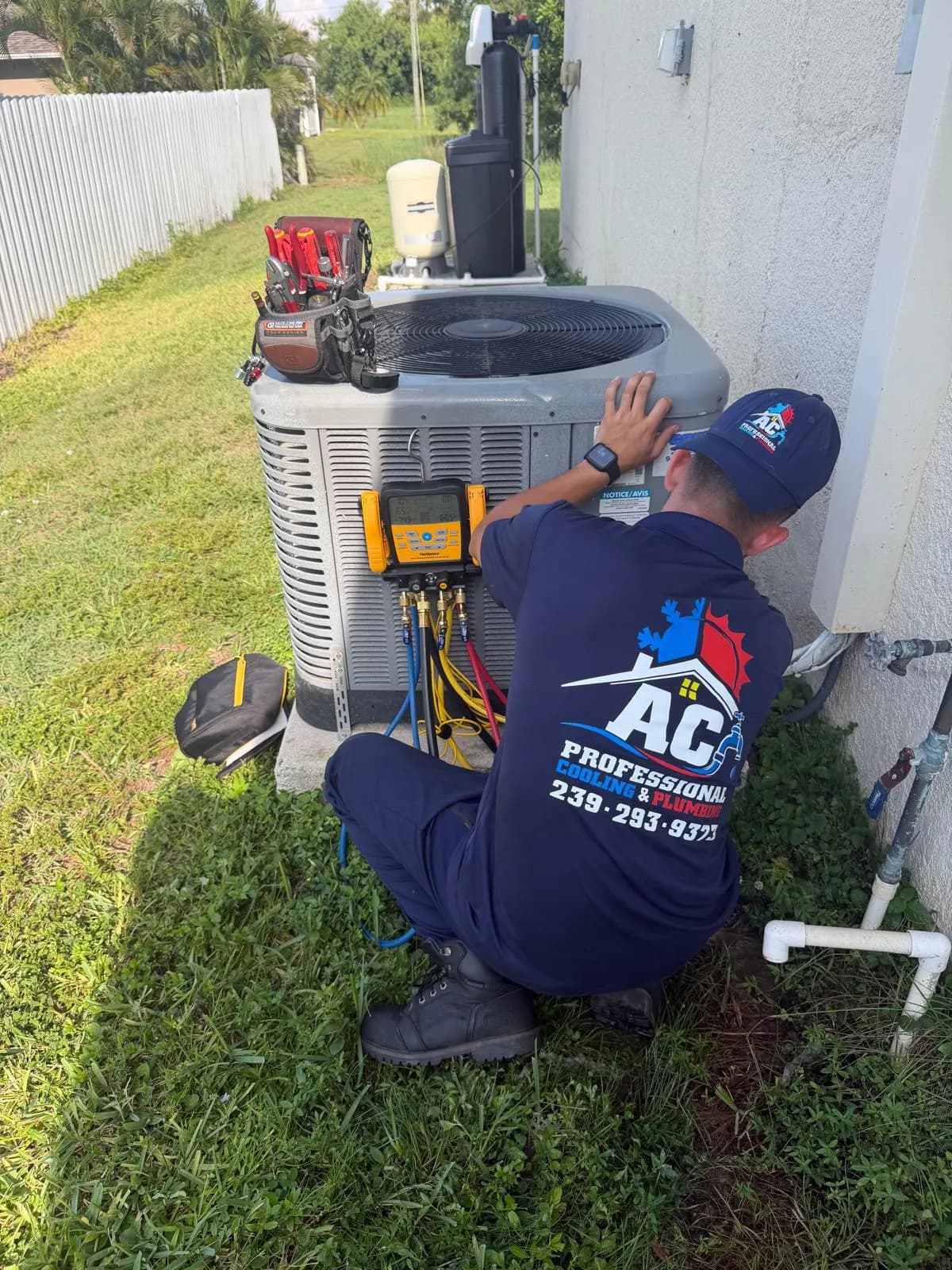
- Inspect the outdoor unit. Look for storm debris, leaves, and vegetation restricting airflow. Maintain the clearances specified for your equipment and keep the area accessible. Do not reach through the grille or touch electrical components. Near saltwater, have visible corrosion assessed instead of assuming surface deposits identify the damage.
- Feel the airflow room by room. Check that supply and return grilles are open and unobstructed. Weak airflow or one warm, sticky room can have several causes, including filter, duct, or equipment problems; a room-by-room comparison gives the technician useful information.
- Watch humidity as well as temperature. Use an indoor humidity reading rather than touch alone. Persistent high humidity calls for evaluation of the equipment, airflow, controls, and moisture entering the home. It does not by itself prove that the system is old or oversized.
- Compare your summer electric bills. Review energy use in kWh as well as the dollar amount, billing period, and weather. Compare with a similar vacant period if available. An unexplained increase is worth investigating, but pool equipment, rates, leaks, and other loads can also affect the bill.
If everything checks out, enjoy your season and continue routine monitoring. Even one significant warning sign, such as leaking water, persistent unusual odors, or abnormal cycling, can justify a professional evaluation.
That Musty Smell: When to Investigate
A returning homeowner may notice stale air, but persistent mustiness needs investigation. Odor alone cannot establish whether mold is present or whether the source is the coil, drain pan, ducts, a leak, or another part of the house. Do not mask a recurring smell with air fresheners.
The EPA’s moisture guidance recommends indoor relative humidity below 60%, ideally 30–50%. That reduces risk; it does not guarantee a mold-free home or rule out a hidden leak. If you know or suspect the HVAC system itself is contaminated with mold, do not run it until it has been assessed.
Our guide to how humidity affects your AC in Southwest Florida explains why temperature and moisture need attention together.
Don't Skip the Heat Mode Test
Here's the step almost every snowbird skips: test your heating on a mild fall day, before the first cold snap.
Most Southwest Florida homes heat with a heat pump or electric heat strips that sat unused since roughly February. Switch the thermostat to HEAT, set it a few degrees above room temperature, and let it run for 10–15 minutes. A brief burning-dust smell in the first minutes is normal (that's a season of dust on the heat strips). If a burning smell persists, the odor seems electrical, or smoke appears, stop the system and seek help; smoke or fire requires emergency services. Cold air that persists after normal startup or a system that does not switch modes also deserves an inspection.
The first real cold front is exactly when you don't want to discover the heat side quietly failed over the summer. A return visit is a useful time to check both modes, even when cooling seems normal.
Before You Head North Next Spring: Settings That Protect the House
Since you're reading this, bookmark it for April. The single best thing you can do for next summer's empty house:
- Keep a working humidity-control plan while you are away. FPL’s seasonal-resident guidance suggests around 78–82°F for extended absences. Choose the setting with your HVAC professional and verify actual indoor humidity; temperature alone is not a guarantee.
- Use compatible humidity controls and monitoring. A thermostat that displays humidity does not necessarily control it. Ask whether your equipment needs different settings or dedicated dehumidification.
- Have the drain line professionally cleared before you leave, and make sure a float switch is installed so a clog shuts the system down instead of flooding the ceiling.
- Ask about properly installed surge protection. It can help reduce some electrical risks, but it cannot prevent every lightning or power-related failure.
- Ask a neighbor to walk the house monthly — or install a Wi-Fi thermostat that emails you if temperature or humidity drifts.
A spring pre-departure tune-up plus a fall return check is the rhythm that keeps seasonal systems healthy; our AC maintenance service can help you plan visits around the equipment instructions and your travel dates.
When the Checklist Says "Call a Pro"
Some findings deserve a professional visit rather than a wait-and-see: water stains around the air handler, a musty smell that returns with every cycle, weak or uneven airflow, short cycling, a summer power bill that spiked in an empty house, or any system past age 10 that hasn't been looked at this year. For help weighing equipment condition and repair history, see our repair-or-replace guide.
The advantage of catching it now is simple: you decide the day, compare pricing in writing, and start your season with a system you trust — instead of meeting us for the first time at 9 PM with the house at 85°. And if the checkup shows your system is fine? We'll tell you exactly that. If it doesn't need work, you'll hear it from us straight.
Back for the Season? Start It With a System You Trust
If your checklist turned up a flag — or you'd simply rather have a professional set of eyes on a system that worked all summer alone — call or text AC Professional Cooling & Heating at (239) 293-9373.
Honest evaluations for seasonal and year-round homes across Cape Coral, Fort Myers, North Fort Myers, Naples, Bonita Springs, and Estero, with pricing in writing before any work starts — and 24/7 emergency service if something can't wait. 5.0 stars from 200+ Google reviews. Licensed & Insured · CAC1823099.