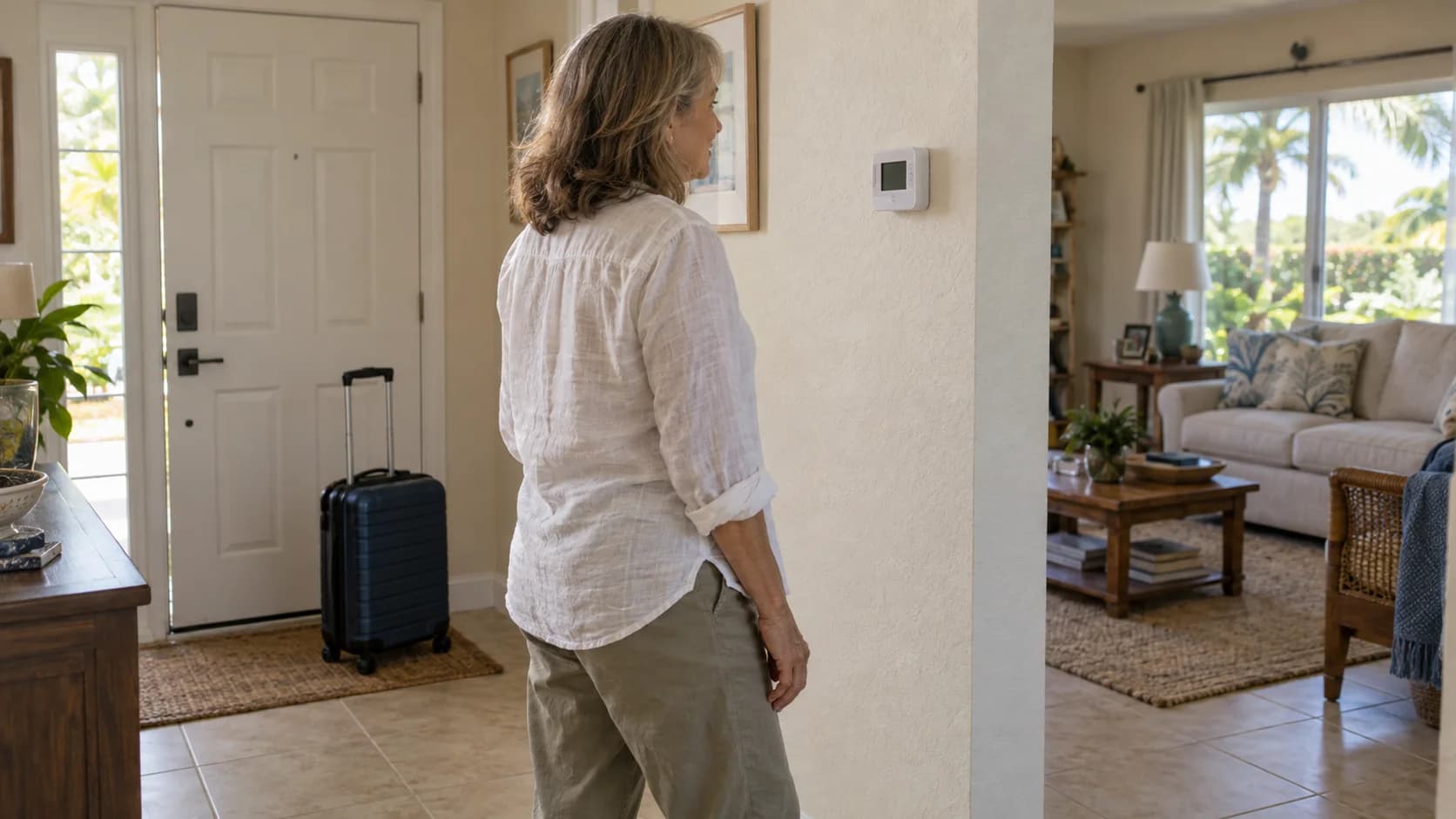
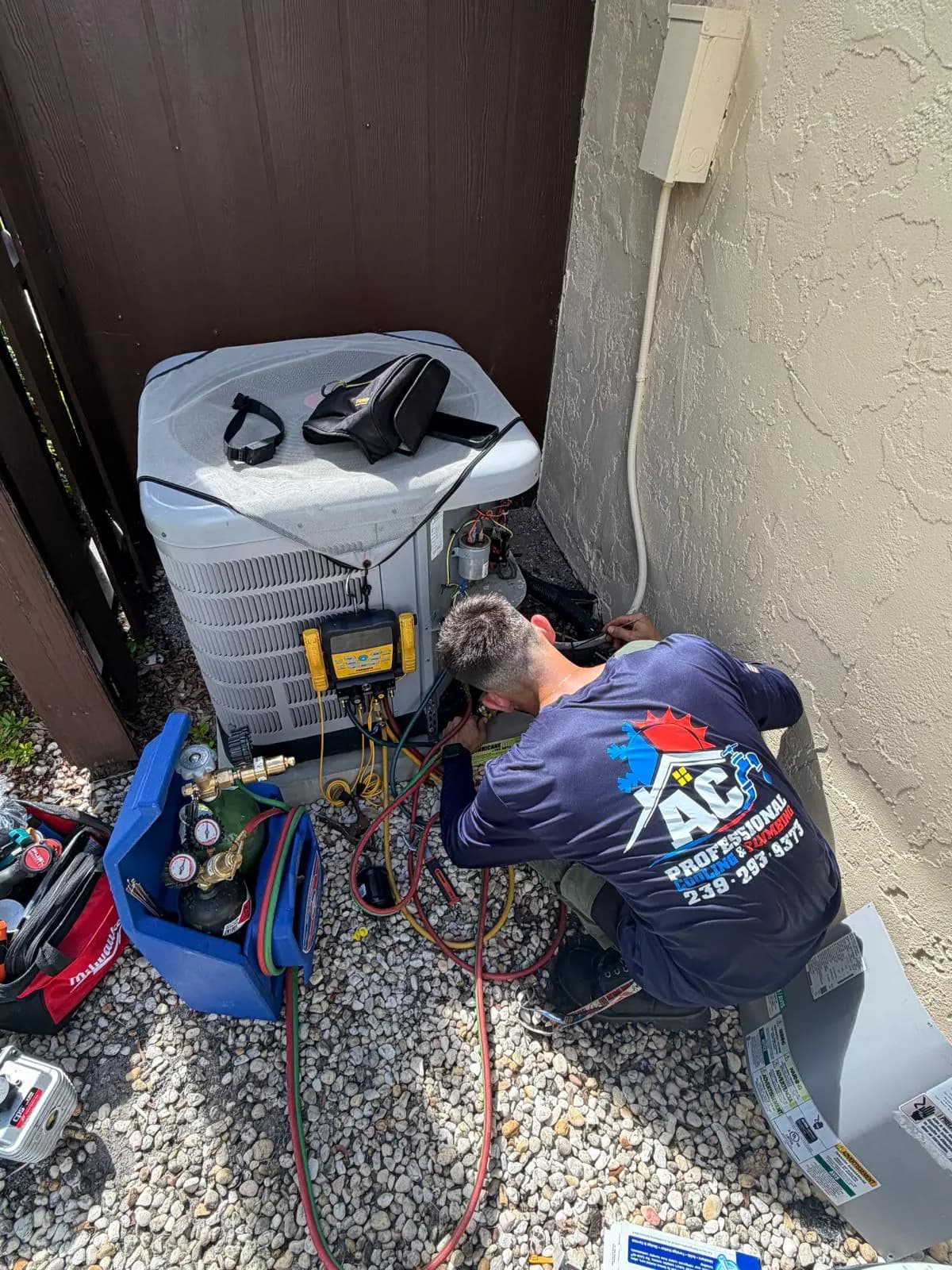
You opened the bill, checked the kilowatt-hours twice, and asked the question so many Southwest Florida homeowners ask: why is my electric bill so high?
Start by separating the price of electricity from how much you used. Your bill can change because of rates, fuel adjustments, billing days, weather, or household activity. Check the provider printed on your bill: LCEC serves Cape Coral and North Fort Myers, while FPL serves many other Southwest Florida communities. Use your own account's charges rather than assuming a neighbor has the same rate. FPL explains its current rates and bill components here.
Cooling can account for half or more of the bill during the hottest months, according to FPL's home energy guidance. That is a seasonal observation, not a fixed percentage for every home all year. When electricity use rises without an obvious change in habits, checking the AC is a sensible next step.
Here is how AC Professional Cooling & Heating approaches the question for homeowners in Cape Coral, Fort Myers, North Fort Myers, Naples, Bonita Springs, and Estero: look for the cause, explain the options, and compare repair with replacement only when the findings justify it.
Why Your Electric Bill Can Stay High in October
October does not automatically end cooling season in Southwest Florida. Warm afternoons and humid weather can keep the system working even when the calendar says fall. But October's cooling demand is not necessarily the same as July's: compare actual temperatures, humidity, and daily electricity use.
A dirty coil, airflow restriction, or leaking duct can make the system run longer to deliver the comfort you expect. Sometimes the first clue is a higher bill; other clues include weak airflow, uneven rooms, icing, or trouble reaching the thermostat setting.
Long runtime alone is not a diagnosis. Variable-speed systems can run for long periods at lower output as part of normal operation. Be more concerned when runtime increases alongside higher kWh, poor cooling, unusual noises, or rising indoor humidity.
6 AC Problems That Can Raise Your Electric Bill
1. A dirty filter or dirty coils
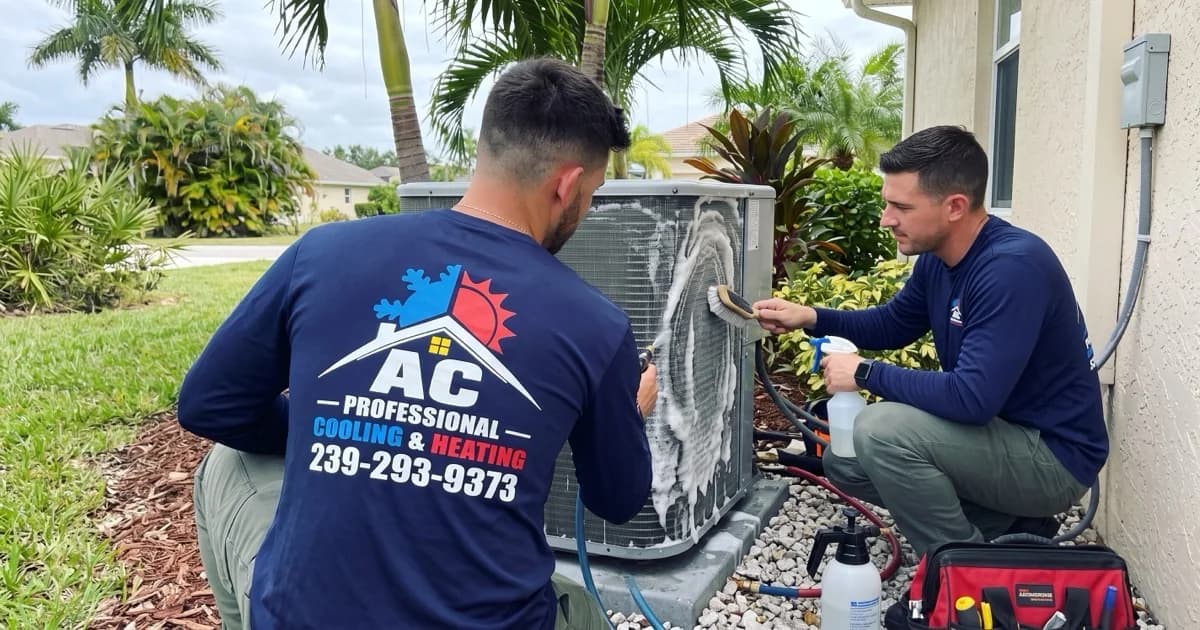
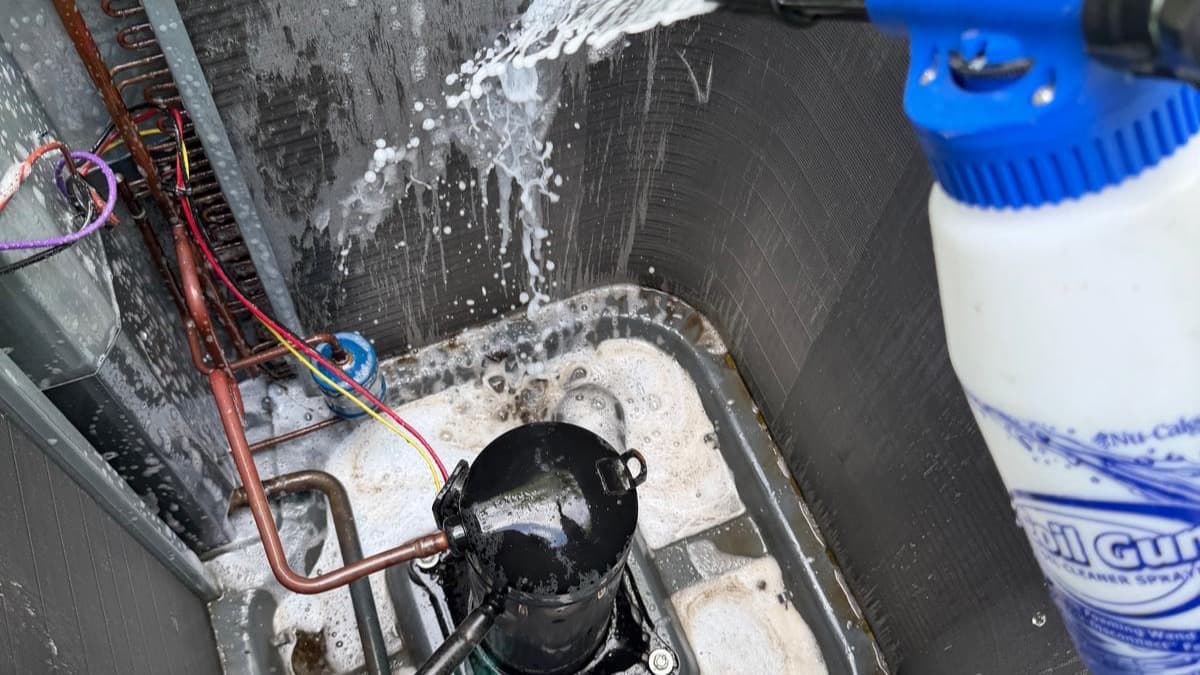
A clogged filter restricts airflow, while dirt on the indoor or outdoor coil interferes with heat transfer. Check the filter regularly and follow the equipment manufacturer's replacement instructions. Use the recommended filter size and type; a more restrictive filter is not automatically better for your system.
Coil cleaning and airflow checks belong in a proper maintenance visit. There is no reliable savings percentage for your home until the actual restriction and operating condition are known.
2. Leaking ductwork
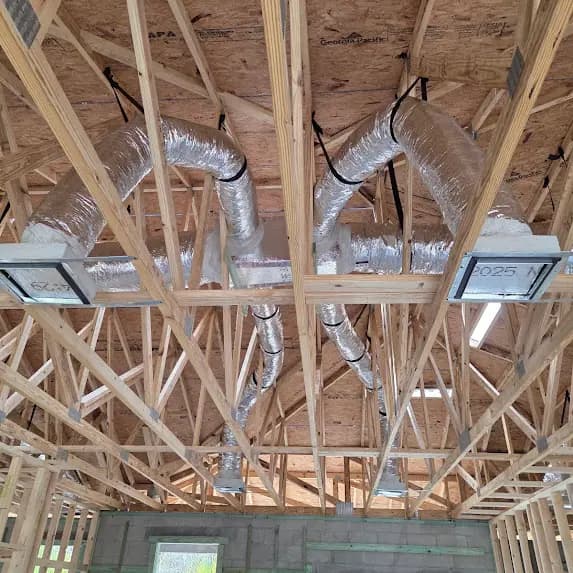
Ducts in an unconditioned attic can lose cooled air through holes, disconnected sections, and poorly sealed joints. ENERGY STAR estimates that typical homes can lose 20–30% of the air moving through their duct systems. That is not the same as a guaranteed 20–30% reduction in your total electric bill after repairs.
Uneven room temperatures and weak airflow can justify checking the ducts, but those symptoms have other possible causes. Ask for an inspection and, when appropriate, leakage or airflow testing before approving a repair.
3. Low refrigerant or an incorrect charge
Refrigerant circulates through a closed system; it is not a fuel that normally gets used up. A low charge can indicate a leak or an incorrect original charge. Depending on the fault, the system may cool poorly, run longer, or develop ice.
Ask a qualified technician to identify the cause and verify the charge using the manufacturer's procedure. Adding refrigerant without addressing a leak is not a lasting repair.
4. An aging or poorly performing system
Age can make repair and replacement worth comparing, but it does not establish how much electricity your equipment is wasting. Dirty components, installation quality, ductwork, and operating conditions also matter.
New systems use SEER2 efficiency ratings. The applicable minimum depends on equipment type and capacity. Older SEER and newer SEER2 ratings use different test procedures, so a simple subtraction is not an energy-savings calculation. Ask for the matched system's certified rating and a home-specific comparison. AHRI explains the regional requirements.
5. Equipment that does not match the home's needs
An oversized single-stage system may satisfy the temperature setting quickly without adequately controlling humidity. Other humidity causes include outside-air leaks, duct leakage, fan settings, or insufficient moisture removal. Turning the thermostat lower may mask the discomfort while increasing use.
Before recommending new equipment, review the load calculation, airflow, duct design, and humidity conditions. Our indoor air quality service information explains related inspection and cleaning options.
6. Maintenance or component problems
Dirty blower wheels, motor problems, and electrical faults can affect operation. Their effect on energy use varies; an increased bill is not enough to diagnose a capacitor or compressor.
A maintenance or diagnostic visit should connect the symptoms with measurements and explain the findings. See what an AC tune-up covers and costs in Cape Coral.
Thermostat Habits That Help Without Sacrificing Comfort
Setting the thermostat to 60°F is not a useful shortcut to cooling a house that you want at 76°F. A conventional single-stage AC does not gain capacity simply because you select a much lower temperature. Multi-stage and variable-speed systems can respond differently, but an unnecessarily low target can still cause overcooling and additional energy use.
- Choose a comfortable, efficient target. Around 76–78°F can be a starting point, adjusted for your household and indoor humidity. FPL recommends 78°F or the highest comfortable setting.
- Use fans where people are sitting. They can improve comfort without lowering the thermostat. Turn them off when you leave the room.
- Use a modest away setting. A small temperature increase can reduce cooling demand. Avoid leaving a Florida home without a plan for humidity control; the appropriate setting depends on the home and equipment.
- Check your own tariff. If you are enrolled in time-of-use pricing, use your provider's current peak hours. There is no universal 2–7 PM rule for all FPL and LCEC customers.
The Winter Surprise: Heat Strips and Higher Bills
Cold fronts can change the explanation for a high Florida electric bill. Some systems use electric resistance heat strips for heating or as auxiliary heat. These elements can consume substantial electricity while they operate.
A heat pump moves heat rather than relying entirely on resistance elements. ENERGY STAR explains how this can lower heating energy use. The difference in your bill depends on equipment performance, weather, thermostat settings, and how often auxiliary heat runs.
If a winter bill surprised you, ask a technician to check the heating mode and controls before the next cold front. Unexpected auxiliary heat is worth investigating, but it is not the only possible cause of a winter increase. Read about our heating and furnace service.
When to Repair — and When to Compare Replacement
Start with the least complicated explanation supported by the inspection: filter condition, maintenance, airflow, duct leakage, controls, or a repairable fault. A high electric bill by itself is not a reason to buy a new system.
For an older system with repeated failures or a major repair ahead, compare written options. Include repair cost, remaining warranty, expected operating costs, comfort issues, and the installed price of a correctly sized replacement. Savings should be estimated from your situation, not promised from the unit's age alone.
Our AC replacement service guide explains what to consider. If repair makes more sense, that should be part of the conversation too.
What You Can Do This Week
- Check the filter. Inspect it monthly during heavy use and replace it according to its condition and the manufacturer's guidance.
- Look around the outdoor unit. Clear loose leaves and vegetation while preserving the manufacturer's required clearance. Leave electrical compartments and refrigerant connections to a technician.
- Check supply and return vents. Keep them open and clear of furniture. Closing multiple vents can create airflow problems rather than useful savings.
- Review thermostat settings. Use a comfortable cooling target, sensible scheduling, and fans only in occupied rooms. Note any unexpected AUX or emergency-heat operation.
- Compare kWh per day. Divide each bill's kWh by its billing days, then compare a similar period last year. Account for weather, guests, pool pumps, EV charging, and other changes. Compare rates separately.
If consumption still looks unusual, or the AC cannot maintain temperature or humidity, schedule a diagnosis. Your utility's usage history and a few notes about the symptoms can help the technician narrow the problem.
Get a Straight Answer Before the Next Bill Arrives
Call or text AC Professional Cooling & Heating at (239) 293-9373 for help in Cape Coral, Fort Myers, North Fort Myers, Naples, Bonita Springs, and Estero. Emergency service is available 24/7.
Ask for findings and pricing in writing, with an explanation of whether maintenance, a repair, ductwork, or replacement deserves consideration. You can also explore our AC maintenance service before scheduling.
Licensed & Insured · CAC1823099. Financing options are available through Synchrony and Sunlight Financial, subject to approval and applicable terms.
Honest diagnosis. Expert cooling & heating.