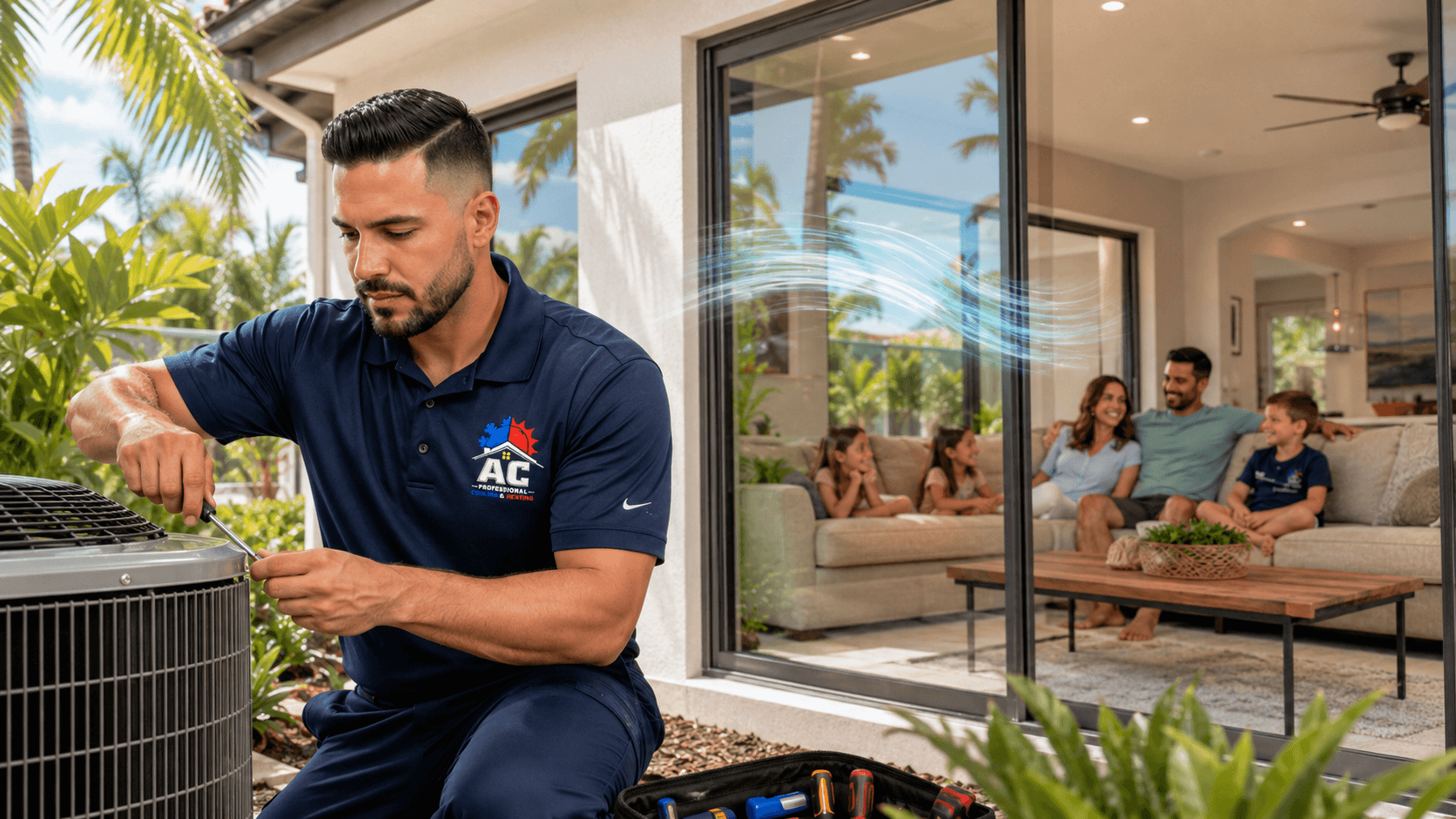
If your AC not cooling is making your Southwest Florida home uncomfortable, you are not alone. In Cape Coral, Fort Myers, and nearby areas, cooling problems can show up fast when the system is working harder in heat and humidity.
The good news is that some issues are simple to spot safely, and a few quick checks can help you decide whether the problem is minor or needs professional diagnosis. This guide walks through what to look for first, what the symptoms may mean, and when it makes sense to call AC Professional for help.
If you want help from a local team, AC Professional provides [AC repair in Cape Coral FL](/ac-repair/) and nearby Southwest Florida service.
What “not cooling” usually looks like
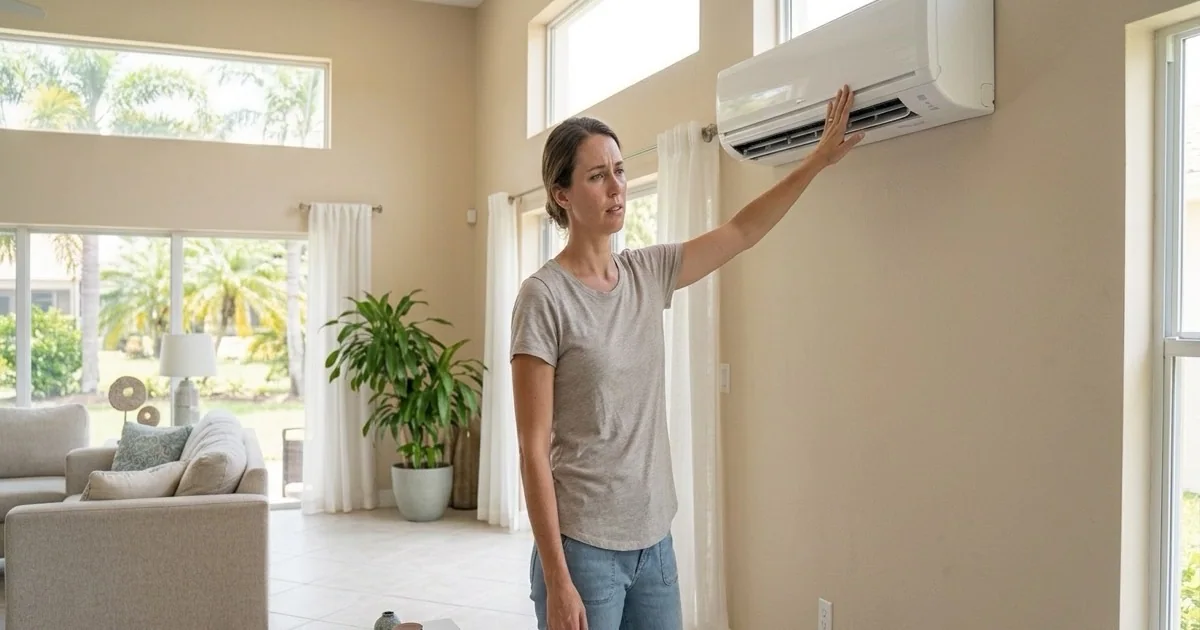
An AC problem does not always mean the system is completely off. Many homeowners notice the unit is running, but the house never reaches the set temperature. Others feel weak airflow, warm air from the vents, or cooling that works for a while and then fades.
Those symptoms can point to different causes. A thermostat setting issue is very different from a frozen coil, a clogged filter, a failing capacitor, or a refrigerant problem. The pattern of what you notice often helps narrow down the next step.
Safe checks to do first
Before opening panels or touching electrical parts, start with simple checks you can do safely inside and outside the home. These steps can help you rule out basic issues without risking damage or injury.
- Check the thermostat mode and temperature setting. Make sure it is set to cool, not fan-only or heat, and that the temperature is set below the current room temperature.
- Replace or inspect the air filter. A dirty filter can restrict airflow and make the system struggle to cool properly.
- Look at the supply vents and return grilles. Closed or blocked vents can reduce airflow and make rooms feel warmer.
- Check the circuit breaker. If a breaker has tripped, reset it only once. If it trips again, stop there and call a professional.
- Inspect the outdoor unit from a distance. Remove leaves, grass clippings, or debris around the unit, but do not open the cabinet or remove panels.
- Listen for unusual sounds. Buzzing, clicking, grinding, or repeated short cycling can help a technician identify the issue later.
If you see ice on the indoor coil, refrigerant lines, or outdoor unit, turn the system off and let it thaw. Do not try to chip ice away, and do not keep running the system while it is frozen.
Common causes of an AC that is not cooling
Several issues can cause an AC to run without delivering enough cool air. Some are simple maintenance problems, while others require diagnostic tools and training.
Dirty filter or blocked airflow
Airflow problems are one of the most common reasons a system struggles. When air cannot move properly through the system, the evaporator coil can get too cold and freeze, or the home may cool unevenly.
You may notice weak airflow, longer run times, or rooms that never seem to catch up. In many cases, a filter change helps, but if the problem returns quickly, there may be a deeper airflow issue.
Thermostat or control issue
Sometimes the AC is not the real problem. A thermostat that is set incorrectly, has weak batteries, or is reading the room temperature poorly can make the system behave as if it is failing.
If the display is blank, the settings seem wrong, or the system responds inconsistently, the thermostat or control wiring may need attention.
Frozen evaporator coil
A frozen coil often means airflow is restricted, but it can also happen because of other system problems. When the coil freezes, the AC may blow warm air or very little air.
If you notice ice, shut the system off and let it thaw. After that, the underlying cause still needs to be checked, because the ice is usually a symptom rather than the root problem.
Refrigerant issue
Low refrigerant can reduce cooling performance, but it does not happen for the same reason as a filter problem. Refrigerant issues often involve a leak or another mechanical fault that needs professional diagnosis.
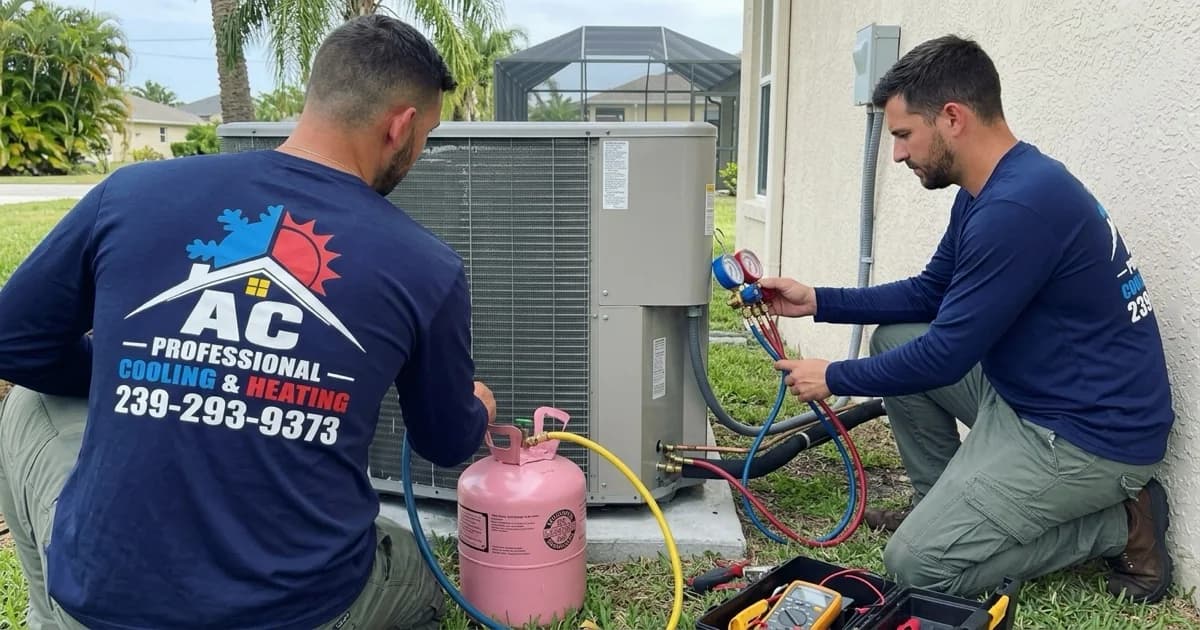
Homeowners may notice longer cooling cycles, warm air from the vents, ice on the lines, or a hissing sound in some cases. Refrigerant work should be handled by a licensed HVAC technician.
Electrical or component failure
If the indoor fan runs but the outdoor unit does not, or the system starts and stops repeatedly, the issue may involve a capacitor, contactor, relay, wiring, or another electrical component.
Because these parts can hold dangerous voltage even when the system is off, homeowners should not open equipment panels. This is a job for a trained technician.
Outdoor unit airflow problem
The outdoor condenser needs clear airflow to release heat. If the coil is dirty or the area around the unit is crowded, the system may struggle to cool the home.
You can clear away plants, trash, and debris from around the unit, but coil cleaning and internal inspection should be done carefully by a professional.
What a technician checks during diagnosis
A professional diagnosis goes beyond guesswork. A technician looks at the full system to find the cause, not just the symptom.
At AC Professional, a technician may evaluate thermostat operation, airflow, filter condition, electrical components, indoor and outdoor coil condition, drain issues, and signs of refrigerant or mechanical problems. The exact steps depend on the system type, age, installation, and what symptoms the homeowner reports.
This matters because two homes with the same complaint can have very different fixes. One may need a simple repair, while another may need a larger correction to restore reliable cooling.
How to compare your next steps
Once you have done the safe checks, the next step depends on what you found.
If the issue was a dirty filter, blocked vent, or thermostat setting, you may be able to restore cooling quickly. If the system is still not cooling after those checks, or if the problem keeps coming back, professional service is the better option.
If the AC is short cycling, freezing, tripping the breaker, or blowing warm air despite normal settings, do not keep resetting it and hoping it improves. Repeated restarts can sometimes make the problem worse.
For homeowners in the area looking for [AC repair Southwest Florida](/ac-repair/), a diagnostic visit can help determine whether the system needs a repair, maintenance, or a conversation about replacement if the equipment is no longer a good fit.
When repair, maintenance, or replacement may make sense
The right solution depends on the condition of the equipment and what the inspection shows. A repair may be the best choice when the issue is isolated and the system is otherwise in good shape.
Maintenance may help if the problem is related to dirt, airflow, or a neglected drain line. If the system has recurring failures, major component issues, or cooling performance that no longer matches the home’s needs, replacement may be worth discussing after a full evaluation.
AC Professional also offers [AC maintenance](/air-conditioning-maintenance/) and [AC replacement](/ac-replacement/), so you can compare options after the diagnosis instead of guessing.
How to prevent cooling problems in Southwest Florida
Southwest Florida heat and humidity put steady stress on air conditioners. Regular maintenance can help reduce surprise breakdowns and keep airflow moving the way it should.
A few practical habits can help:
- Change the air filter on a schedule that fits your home and system use.
- Keep the outdoor unit clear of grass, leaves, and clutter.
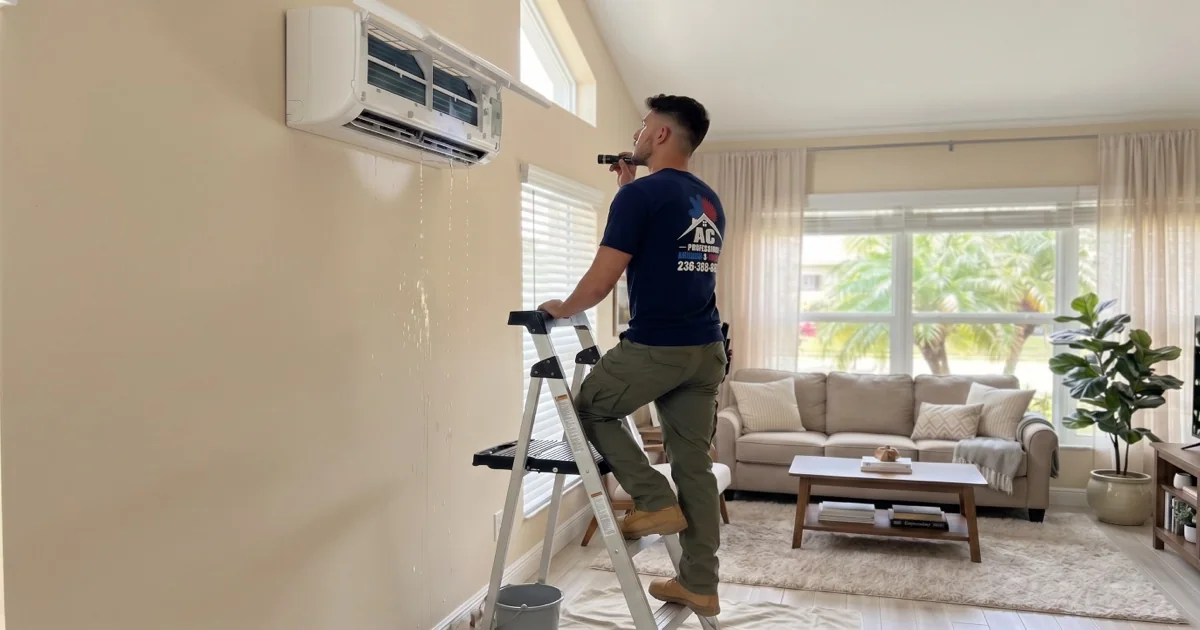
- Watch for water around the indoor unit or drain area.
- Pay attention to new noises, odors, or longer cooling cycles.
- Schedule routine maintenance before peak cooling demand builds up.
Prevention does not eliminate every repair, but it can help catch small issues before they turn into a no-cooling call.
Why local service matters in Cape Coral
Cooling problems in Cape Coral often need fast, practical attention because indoor comfort can decline quickly when the system is struggling. Local service also helps when you need a technician who understands the demands placed on AC systems in Southwest Florida homes.
AC Professional Cooling & Heating, Inc serves Cape Coral and nearby communities including Fort Myers, North Fort Myers, Naples, Bonita Springs, and Estero. If you need [AC services in Cape Coral](/service-areas/cape-coral-fl/), our team can help with diagnosis and next steps.
Call AC Professional for a free estimate
If your AC is not cooling after the basic checks, AC Professional can help determine what is causing the problem and what to do next. We provide local AC repair service in Cape Coral and throughout Southwest Florida.
Call (239) 293-9373 or request a free estimate from AC Professional Cooling & Heating, Inc, 932 Northeast 24th Lane, Unit 4, Cape Coral, FL 33909.