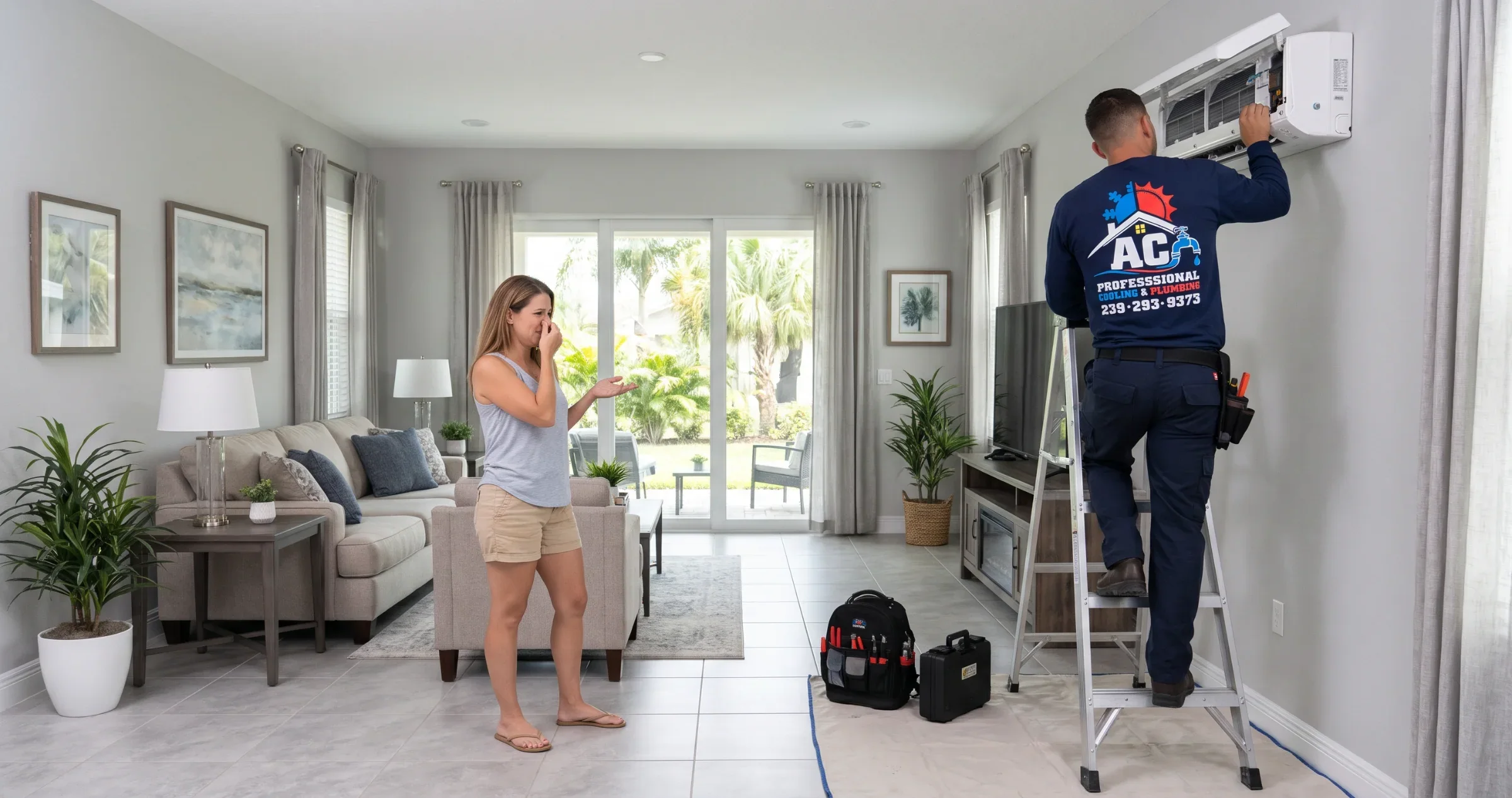
Musty or Mildew Smell From Your AC
The most common AC odor in Southwest Florida. The EPA recommends indoor humidity below 60%, ideally 30–50%. Cape Coral averages ~72% outdoor RH year-round.
Common causes:
- Dirty evaporator coil — dust and moisture create biofilm where mold thrives. Professional coil cleaning removes the source.
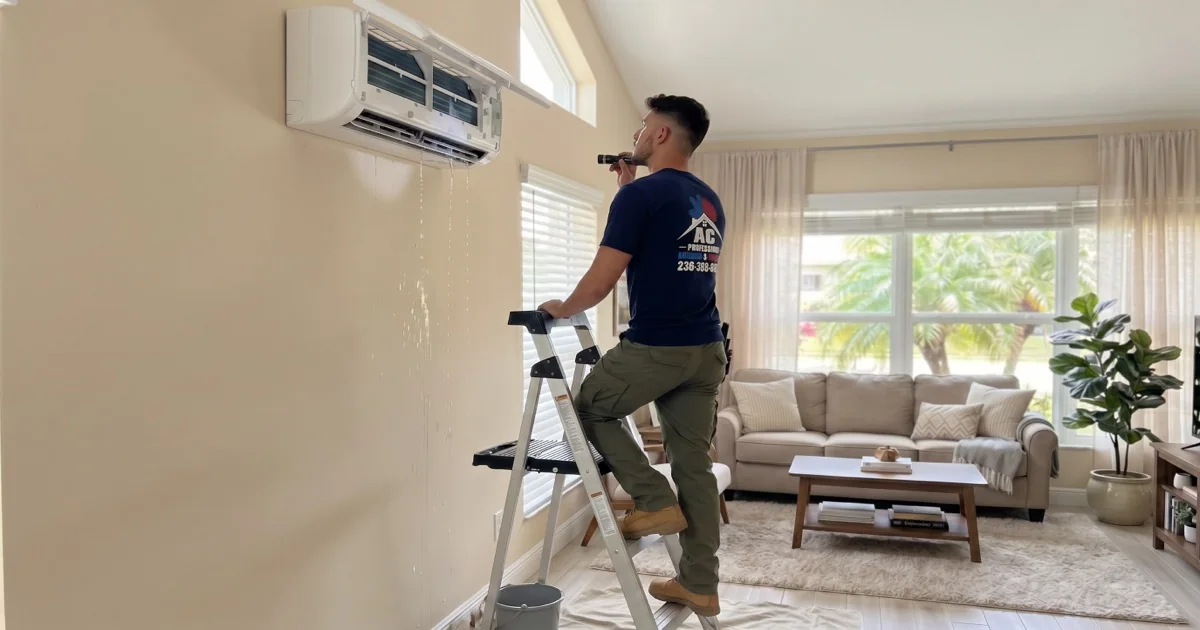
- Clogged condensate drain line — standing water becomes a mold incubator. Algae can block the line within 30 days in Florida.
- Dirty or damp air filter — saturated filter traps moisture at the air intake.
- Mold in ductwork — especially in homes closed up for months (snowbird homes).
DIY steps: Replace filter, pour 1 cup vinegar in drain cleanout, verify drain flows outside, set fan to AUTO. If smell persists → professional coil cleaning ($100–$400).
Dirty Sock Syndrome
A specific condition caused by bacteria (Mycobacterium, Bacillus) and fungi (Cladosporium, Aspergillus) colonizing the evaporator coil. They produce volatile organic compounds that smell exactly like wet, unwashed socks.
Why it's worse in SWFL:
- 72% average humidity keeps coil permanently damp
- Heat pump reversals reactivate dormant bacteria on cool mornings
- Infrequent heating use — heat strips warm biofilm but don't dry it
Fix: Professional antimicrobial coil cleaning ($150–$400). For recurring cases, UV-C germicidal light inside the air handler. See our coil cleaning guide.
Burning Smell From Your AC
Normal: Dust burning off heat strips for 10–15 minutes when heating first runs in the season. Trane confirms this is expected.
Emergency — turn off system immediately:
- Electrical or plastic burning smell (overheating wiring, failing motor)
- Burning smell over 15 minutes (seized motor or stuck relay)
- Tripped breakers during operation (electrical fault)
- Gunpowder or metallic smell (fried circuit board, shorted capacitor)
Rotten Egg or Sulfur Smell
Most SWFL homes are all-electric, making this less common — but more dangerous when it occurs.
- Natural gas leak — TECO Peoples Gas serves parts of SWFL. Mercaptan additive creates the smell. If you have gas appliances: leave immediately, don't touch lights or electronics, call 877-832-6747 from outside.
- Dead animal in ductwork — lizards, mice, small snakes enter ducts in Florida.
- Failing electrical component — some components produce sulfur-like smell when overheating.
Rule out gas first. If all-electric, inspect outdoor unit and accessible ducts for dead animals.
Sewage Smell From AC Vents
Not a broken AC — usually a plumbing issue pulled into air supply via negative pressure.
- Dried-out P-trap — unused drains (guest bathrooms, vacation homes) lose their water seal
- Cracked sewer vent pipe near air handler in attic
- Condensate drain tied to sewer without proper trap (older Florida homes)
- Full septic system — common in Cape Coral areas not yet connected to city sewer via UEP
Fix: Run water in all unused drains. Check attic vent pipe. If no fix → call plumber.
Vinegar or Sour Smell From Your AC
- Bacterial buildup producing acetic acid on evaporator coil (related to dirty sock syndrome)
- Stagnant condensate with decomposing organic matter
- Mold species producing organic acids
- NOT refrigerant — R-410A and R-454B are both odorless
Fix: Replace filter, flush drain, clean drain pan. If persistent → professional coil cleaning.
How to Prevent AC Odors in Southwest Florida
- Change filter every 30–60 days
- Flush condensate drain monthly (1 cup vinegar)
- Schedule annual coil cleaning
- Keep indoor humidity below 60% (EPA recommendation)
- Run water in all drains monthly (prevents dry P-traps)
- Don't ignore new smells that persist 24+ hours after filter change
AC Smell Quick Reference
| Smell | Cause | Urgency | DIY or Pro? |
|---|---|---|---|
| Musty/mildew | Mold on coil, drain, ducts | This week | Try filter + drain; pro if persists |
| Dirty socks | Bacteria/fungi on coil | This week | Pro — coil cleaning required |
| Burning (<15 min) | Dust on heat strips | Normal | No action |
| Burning (>15 min) | Electrical fault | Turn off now | Pro — do not restart |
| Rotten eggs | Gas leak or dead animal | Emergency if gas | Leave if gas; pro for inspection |
| Sewage | Dry P-trap or vent pipe | Same day | Run drains; plumber if no fix |
| Vinegar/sour | Bacteria or stagnant condensate | This week | Try filter + drain; pro if persists |
Sources: EPA Indoor Air Quality, CDC Mold & Health, Trane, U.S. DOE, TECO Peoples Gas.