
First, Do This Now
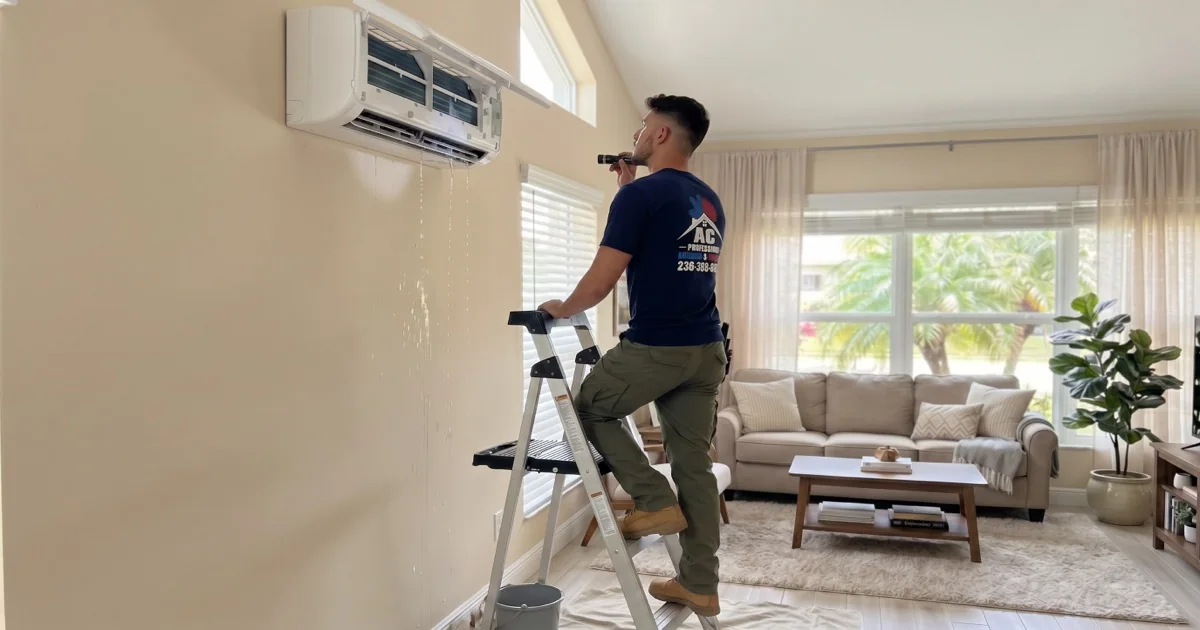
If you see water around your indoor AC unit, take these steps before anything else:
- Turn the system off at the thermostat to stop more water from forming.
- Soak up standing water with towels or a wet/dry vacuum to prevent damage to floors and drywall.
- Check your air filter. A clogged filter is one of the most common causes. If it looks dirty, replace it.
- Look at the drain pan under the indoor unit. If it's full or cracked, that's your answer.
If the leak is near your ceiling or is more than a small puddle, call AC Professional at (239) 293-9373 to prevent water damage to your home.
Where Does the Water Come From?
Your air conditioner doesn't just cool the air. It also pulls moisture out of it. In Southwest Florida, your AC removes 5 to 20 gallons of water per day from indoor air during peak summer months (ASHRAE estimates for humid climates). That water collects on the evaporator coil, drips into a drain pan, and flows out through a condensate drain line.
When any part of that path gets blocked, cracked, or overwhelmed, the water has nowhere to go — except onto your floor, ceiling, or walls.
7 Reasons Your AC Is Leaking Water Inside
1. Clogged Condensate Drain Line
The most common cause. Algae, mold, and biofilm thrive inside drain lines in Florida's humidity. A blocked line backs water up into the drain pan, which eventually overflows.
Signs: Water pooling around the indoor unit. The float switch (a safety device required by Florida Building Code) may shut your system off before the leak gets worse.
What you can do: Go outside to where the PVC drain line exits your home. Attach a wet/dry vacuum to the opening, seal with a rag, and run the vacuum for 1 to 2 minutes to pull out the sludge. Then pour one cup of distilled white vinegar into the indoor cleanout to kill remaining algae. If water flows freely from the outdoor end, you've cleared the blockage.
When to call a pro: If vinegar doesn't clear it, or the line backs up again within a few weeks. AC Professional uses wet/dry vacuum extraction and BioOne drain treatment to prevent regrowth. Call (239) 293-9373.
2. Cracked or Overflowing Drain Pan
Your indoor unit sits over a drain pan that catches condensate. Over time, the pan can rust, crack, or warp — especially in homes where the AC runs 3,500+ hours per year like in Southwest Florida.
Signs: Water directly below the air handler, even when the drain line is clear.
What you can do: Inspect the pan with a flashlight. Hairline cracks aren't always visible, but if you see rust or obvious damage, the pan needs replacing.
When to call a pro: Drain pan replacement requires partial disassembly of the air handler. This is a professional repair.
3. Dirty Air Filter Causing a Frozen Coil
A clogged air filter restricts airflow across the evaporator coil. When airflow drops, the coil temperature falls below freezing and ice forms on it. When the system cycles off, that ice melts — sometimes faster than the drain pan can handle — and water overflows.
Signs: Ice visible on the copper refrigerant lines or on the coil itself. Reduced airflow from your vents. Water leak that happens when the system shuts off.
What you can do: Turn off the AC, replace the filter, and let the ice melt completely (2 to 4 hours). Run the fan on "ON" mode (not "AUTO") to speed up defrosting.
When to call a pro: If the coil freezes again with a clean filter, the problem is likely low refrigerant or a blower motor issue. Schedule a diagnostic.
4. Low Refrigerant
Low refrigerant causes the same frozen coil problem as a dirty filter, but for a different reason. When refrigerant pressure drops, the evaporator coil gets too cold. Ice forms, then melts and overflows.
Signs: Ice on the coil plus warm air from vents. Hissing or bubbling sounds near the indoor unit. Higher electric bills. Your AC runs but can't reach the set temperature.
What you can do: This is not a DIY repair. Refrigerant is a controlled substance regulated by the EPA under Section 608 of the Clean Air Act.
When to call a pro: Immediately. Low refrigerant means a leak exists, and running the system with a leak can damage the compressor — a repair that costs $2,000 to $3,500. Call (239) 293-9373 for a leak detection diagnostic.
5. Disconnected or Damaged Drain Line
Drain lines can loosen from vibration, improper installation, or a remodel that shifted the unit. A loose connection lets water drip before it reaches the outdoor exit.
Signs: Water leaking from above the drain pan, or from a spot along the PVC drain line path — often inside a wall or ceiling cavity.
What you can do: Visually inspect any exposed PVC connections. If a fitting is loose, you may be able to reattach it. But leaks inside walls require professional access.
When to call a pro: If water is coming from your ceiling or inside a wall, call immediately to prevent mold growth and structural damage.
6. Improper Installation
If your air handler was installed without the correct slope on the drain pan, or if the condensate line wasn't pitched properly, water can pool instead of draining. This is more common in attic-mounted units and after equipment replacements.
Signs: Your system has leaked since installation or since a recent repair. The drain line looks flat instead of angled downward.
What you can do: This requires reinstallation or adjustment of the unit. Not a DIY fix.
When to call a pro: If your system is newer and has leaked from day one, the installation may need correction.
7. Condensation on Ductwork (Duct Sweating)
In Southwest Florida, uninsulated or poorly insulated ductwork in attics and crawl spaces sweats when hot, humid attic air contacts the cold duct surface. This condensation drips onto ceilings and walls, mimicking an AC leak.
Signs: Water stains on ceilings near duct runs, not near the air handler. Moisture on the outside of visible ductwork.
What you can do: Check if duct insulation has gaps, tears, or has fallen off in your attic. Small gaps can be sealed with foil tape (not duct tape).
When to call a pro: Duct insulation replacement and sealing is a professional job. Learn how humidity affects your AC in Southwest Florida.
How to Unclog Your AC Drain Line (Step by Step)
This is the most common fix for an AC leaking water inside. Try this before calling a technician.
What you'll need: A wet/dry vacuum (shop vac), distilled white vinegar, a rag or towel for sealing, and about 30 minutes.
Step 1 — Turn off the AC. Switch the system off at the thermostat to stop producing more water.
Step 2 — Vacuum the clog from outside (most important step). Go outside to where the PVC drain line exits your home (usually near the outdoor unit). Attach the wet/dry vacuum hose to the opening and seal the gap with a damp rag to create strong suction. Run the vacuum for 1 to 2 minutes. You should see dark sludge, algae clumps, or standing water pull into the canister. This step removes the physical blockage that vinegar alone cannot dissolve.
Step 3 — Find the indoor cleanout. Go back inside and look for a PVC pipe with a cap near your air handler (T-shaped access point).
Step 4 — Flush with vinegar. Remove the cleanout cap and pour one cup of distilled white vinegar into the opening. The vinegar kills remaining algae and dissolves biofilm on the pipe walls. It will not dissolve a solid clog on its own, but once the vacuum clears the path, it disinfects what's left.
Step 5 — Wait 30 minutes, then flush with water. Pour a cup of clean water into the line to push the loosened debris through.
Step 6 — Check the outdoor end. Go outside and confirm that water is flowing freely out of the drain line exit. If it is, you've cleared the clog.
Step 7 — Turn the AC back on. Restart the system and monitor the drain pan for 24 hours to confirm the leak has stopped.
Prevention tip: Repeat this vinegar flush every 30 days during summer. Florida's humidity makes monthly maintenance essential — algae can regrow in as little as two to four weeks. AC Professional's Protection Plan ($19.99/month) includes drain line cleaning at every maintenance visit.
AC Leak Symptoms: What They Mean
| Symptom | Likely Cause | Urgency |
|---|---|---|
| Water pooling around indoor unit | Clogged drain line or full drain pan | Medium — try wet/dry vac and vinegar flush |
| Water dripping from ceiling | Drain pan overflow, duct sweating, or disconnected line | High — potential water damage |
| Ice on refrigerant lines or coil | Dirty filter or low refrigerant | High — turn off system immediately |
| Water only when AC shuts off | Frozen coil melting | High — check filter, then call pro |
| Small drip at PVC connection | Loose drain fitting | Low — inspect and retighten |
| Water stains near duct runs | Duct sweating (poor insulation) | Medium — schedule duct inspection |
| Musty smell + water | Clogged drain + mold growth | High — health risk, call pro |
How Much Does It Cost to Fix an AC Water Leak?
Most indoor AC water leaks are affordable to repair. Here are typical costs in Southwest Florida:
| Repair | Typical Cost (SWFL 2026) | Notes |
|---|---|---|
| Diagnostic visit | $129 | AC Professional's current rate |
| Drain line flush | $75–$200 | Included with some maintenance plans |
| Drain pan replacement | $200–$600 | Depends on unit access (attic vs. closet) |
| Frozen coil repair (filter-related) | $0 (filter cost only) | Replace filter, let ice melt |
| Refrigerant leak detection + repair | $200–$650 | Depends on leak location |
| Duct insulation repair | $300–$800 | Depends on duct run length |
| Protection Plan | $19.99/month | Includes drain line cleaning, priority scheduling, discounted diagnostics |
Prices sourced from Angi and HomeGuide for Southwest Florida. AC Professional pricing from acprofessionalswfl.com/pricing.
Is It Normal for an AC to Leak Water Outside?
Yes. That's the system working correctly. Your AC removes 5 to 20 gallons of condensate per day in Florida's summer humidity. That water exits through the drain line and drips outside, usually near the outdoor unit.
What's not normal:
- Water pooling inside your home
- No water dripping outside at all (the line may be clogged)
- Large puddles around the outdoor unit (possible drain line issue or unit-level problem)
How to Prevent AC Leaks in a Florida Home
Florida homeowners deal with more condensate than almost anywhere else in the country. These habits prevent most indoor leaks:
- Change your air filter every 30 days during summer (every 60 in winter). A clean filter prevents frozen coils and keeps airflow steady.
- Flush the drain line with vinegar monthly from April through October. Algae grows fast in Florida humidity.
- Schedule professional maintenance twice a year. AC Professional's tune-up service includes drain line cleaning, coil cleaning, and refrigerant level checks. Book online or call (239) 293-9373.
- Verify your float switch works. Florida Building Code requires a secondary drain pan or float switch on all overhead air handlers. If yours doesn't shut off the system when the pan fills, it's not doing its job.
- Inspect ductwork insulation annually. Especially in attics where summer temperatures can exceed 140°F and condensation forms where insulation has gaps.
- Keep the area around your indoor unit clear. Obstructions can block drain access and make leaks harder to spot early.
Frequently Asked Questions
Why is my AC leaking water inside my house? The most common cause is a clogged condensate drain line. In Florida, algae and biofilm block the line within 30 days. Other causes include a cracked drain pan, frozen coil, or low refrigerant. Start by checking your air filter and flushing the drain line with vinegar.
Can I still run my AC if it's leaking water? Turn it off. Running an AC with a water leak can cause water damage to ceilings, walls, and flooring. If the leak is caused by a frozen coil, running the system makes the ice — and the eventual flood — worse. Switch the thermostat to "OFF," soak up the water, and call a technician before restarting.
How much does it cost to fix an AC leaking water? A drain line flush costs $75 to $200. Drain pan replacement runs $200 to $600. A diagnostic visit at AC Professional is $129. Most water leak repairs are under $600 unless refrigerant or ductwork is involved.
How often should I clean my AC drain line in Florida? Every 30 days from April through October. Florida's humidity creates ideal conditions for algae growth. Pour one cup of distilled white vinegar into the cleanout monthly to prevent clogs. If your system runs year-round, continue every 60 days from November through March.
What's the difference between a drain line clog and a refrigerant leak? A drain line clog causes water to overflow from the drain pan. A refrigerant leak causes the coil to freeze, and water appears when the ice melts. Both cause indoor water, but refrigerant leaks also mean warm air from vents and higher energy bills.
Why does my AC leak water only at night? Your AC runs longer cycles at night to maintain temperature as the thermostat setting stays constant. Longer cycles produce more condensate, which overwhelms a partially clogged drain line. Flushing the line with vinegar usually solves this. If it happens repeatedly, schedule a professional drain line cleaning.
Does homeowners insurance cover AC water damage? Most Florida homeowners policies cover sudden water damage (a burst drain pan) but not gradual damage from a slow leak you ignored. Document the leak, call your insurer, and get repairs done quickly to protect your claim.
Still Seeing Water Around Your AC?
A small clog today can become a ceiling collapse, mold outbreak, or $3,000 water damage repair next month. If the vinegar flush didn't solve it, or if water is coming from your ceiling, don't wait.
Call AC Professional at [(239) 293-9373](/emergency-ac-repair/) or book a diagnostic online. We serve Cape Coral, Fort Myers, Naples, Bonita Springs, Estero, and Marco Island.
By Kenia V. · Updated October 2026
Sources: [EPA Indoor Air Quality](https://www.epa.gov/indoor-air-quality-iaq), [ENERGY STAR](https://www.energystar.gov/), [Florida Building Code](https://floridabuilding.org/), [Angi](https://www.angi.com/articles/ac-repair-cost.htm), [HomeGuide](https://homeguide.com/costs/ac-repair-cost). AC Professional pricing from [acprofessionalswfl.com/pricing](/pricing/).