
If you are comparing Carrier AC systems Southwest Florida homeowners often ask the same question first: not “Is Carrier good?” but “Which Carrier system fits my house, comfort goals, and installation needs?” That is the right place to start.
In Southwest Florida, the best choice is usually the system that matches the home’s cooling load, humidity needs, ductwork condition, and installation scope. A well-selected Carrier system can be a strong option, but the model and the quality of the installation matter just as much as the brand name.
If you want help comparing options for a Carrier AC Cape Coral or nearby home, AC Professional can review the installation needs and provide a free estimate.
Why Carrier is often part of the conversation
Carrier is one of the brands many homeowners consider when they start looking at replacement or new installation. That usually happens because they want a system with multiple model choices, different comfort features, and options that can be matched to the home’s needs.
But brand recognition does not tell you whether a specific system will perform well in your house. A high-end model installed incorrectly can still cool poorly, run loudly, or struggle with humidity. On the other hand, a simpler system that is sized and installed correctly can be a better fit for many homes.
That is why the real comparison should focus on the system design, not just the logo on the cabinet.
What to compare in a Carrier AC system
When you compare a Carrier air conditioner, look at the full picture instead of one feature at a time. The goal is to understand how the system will behave in your home over the long cooling season.
Exact model and system type
Carrier offers different system styles, and the right one depends on your home and comfort goals. Some homeowners want a straightforward replacement. Others are looking for a system with more comfort control or quieter operation.
The important question is not which model sounds best in a brochure. It is which model fits your ductwork, thermostat setup, and cooling needs without creating installation problems.
Efficiency and real-world operation
Efficiency matters, but it should be viewed in context. A more efficient system may be appealing, yet the actual performance depends on correct sizing, duct condition, airflow, and installation quality.
In Southwest Florida, a system that runs smoothly and consistently can be more valuable than one chosen only for a feature list. If the home has duct leaks, poor airflow, or a mismatched indoor and outdoor setup, those issues can reduce comfort no matter what brand you choose.
Sound level and placement
Noise is another factor homeowners often notice after installation. Some systems are designed to run more quietly than others, but the final sound level also depends on where the equipment is placed and how it is mounted.
If the outdoor unit sits near a patio, bedroom, or neighbor’s property line, sound may matter more than in other homes. A technician should consider placement, pad condition, vibration control, and clearances during the estimate.
Humidity control
Humidity is a major comfort issue in Southwest Florida. A system can cool the air but still leave the home feeling sticky if it is not matched properly to the house or if airflow is not set correctly.
This is one reason load calculation matters so much. An oversized system may cool the air too quickly and shut off before it removes enough moisture. A properly selected system, installed with the right airflow and controls, is more likely to support steadier comfort.
Thermostat compatibility
Not every thermostat works the same way with every system. If you want smart controls, zoning, or advanced comfort settings, the thermostat and equipment must be compatible.
This is worth checking before installation, not after. A technician should confirm what controls are needed, whether any accessories are required, and how the system will communicate with the thermostat you plan to use.
Parts and service access
Homeowners sometimes overlook serviceability until something needs attention. It helps to ask how easy it is to access common service components and whether the system layout supports future maintenance.
A good installation should not make routine service difficult. Clear access, proper clearances, and a clean layout can make a difference when the system needs maintenance or repair later.
Why installation quality matters as much as the brand
A Carrier system is only as good as the installation behind it. That includes the load calculation, duct evaluation, refrigerant line work, airflow setup, electrical connections, drainage, and startup testing.
If any of those steps are rushed or skipped, the system may not deliver the comfort the homeowner expected. Problems can show up as uneven temperatures, short cycling, poor humidity control, or repeated service calls.
For that reason, homeowners should compare contractors as carefully as they compare equipment. The best system choice is the one that is installed to match the home.
What a proper replacement or installation estimate should include
A useful estimate should explain more than the equipment name. It should show how the contractor plans to match the system to the home and what work is included in the project.
Look for a proposal that addresses:
- The exact indoor and outdoor equipment being proposed
- The load calculation or sizing method used
- Ductwork condition and any needed corrections
- Thermostat compatibility and controls
- Electrical and drainage considerations
- Startup, testing, and commissioning steps
- Any accessories or changes needed for the system to operate correctly
- Written warranty terms from the manufacturer and the installer, if offered
If the estimate is vague, ask for more detail before you decide. A clear scope helps you compare one proposal to another without guessing what is included.
Safe homeowner checklist before you call for an estimate
You can gather useful information without opening equipment panels or handling electrical parts. That helps the estimate go more smoothly and keeps the process safe.
- Check whether the home has hot or cold spots in certain rooms.
- Note when the system struggles most, such as afternoons, evenings, or during heavy humidity.
- Look at the thermostat settings and whether the system cycles on and off often.
- Listen for unusual noise from the indoor or outdoor unit.
- Check whether any vents feel weak or blocked.
- Make a note of the age and general condition of the current system if you know it.
- Share any recent repairs, leaks, or drainage issues with the contractor.
Do not remove panels, touch wiring, or inspect refrigerant components yourself. Those tasks can involve electricity, sharp edges, or sealed system parts that should be handled by a licensed technician.
When a Carrier replacement makes more sense than another repair
Sometimes homeowners start by asking about repair, then realize replacement may be the better long-term step. That decision usually depends on the system’s condition, the type of problem, and whether the existing equipment still matches the home.
Replacement may be worth discussing if the current system has repeated breakdowns, comfort problems, or major installation issues that repair will not solve. If the ductwork, airflow, or sizing is part of the problem, a new system alone may not fix everything unless the installation scope addresses those issues too.
If you are comparing Carrier AC replacement options, ask the contractor to explain what is being corrected beyond the equipment swap. That is often where the real value is found.
How to compare Carrier models without getting lost in marketing
A practical comparison should focus on how each model affects your home, not on feature names alone. Two systems can look similar on paper but behave differently once they are installed.
Compare each option by asking:
- How will this model handle humidity in my home?
- Is it a good match for my ductwork and airflow?
- What thermostat or controls does it require?
- How loud is it expected to be in my installation location?
- What maintenance access will it need?
- What is included in the written installation scope?
- What are the exact warranty terms provided in writing?
This approach helps you compare a Carrier air conditioner Fort Myers homeowner might consider with the same discipline you would use for any other brand. The model should fit the home, not the other way around.
Prevention and long-term care after installation
Once the new system is installed, routine maintenance helps protect comfort and performance. Southwest Florida homes deal with long cooling seasons, humidity, and outdoor exposure, so regular care matters.
Keep the area around the outdoor unit clear, replace filters as recommended for your system, and schedule maintenance so a technician can check airflow, drainage, electrical connections, and overall operation. If you notice new noise, weak airflow, or moisture issues, do not wait too long to have it checked.
If the system is not cooling the way it should, AC Repair may be the next step. For ongoing care, AC Maintenance can help keep the system running as intended.
Choosing the right contractor for the job
The contractor’s process matters because it affects the final result. A careful installer should ask about the home, inspect the existing setup, and explain why a specific system is being recommended.
For homeowners in Cape Coral, Fort Myers, North Fort Myers, Naples, Bonita Springs, and Estero, that local experience can help with practical issues like installation access, duct layout, and coastal conditions. If the contractor is not willing to explain the scope clearly, keep looking.
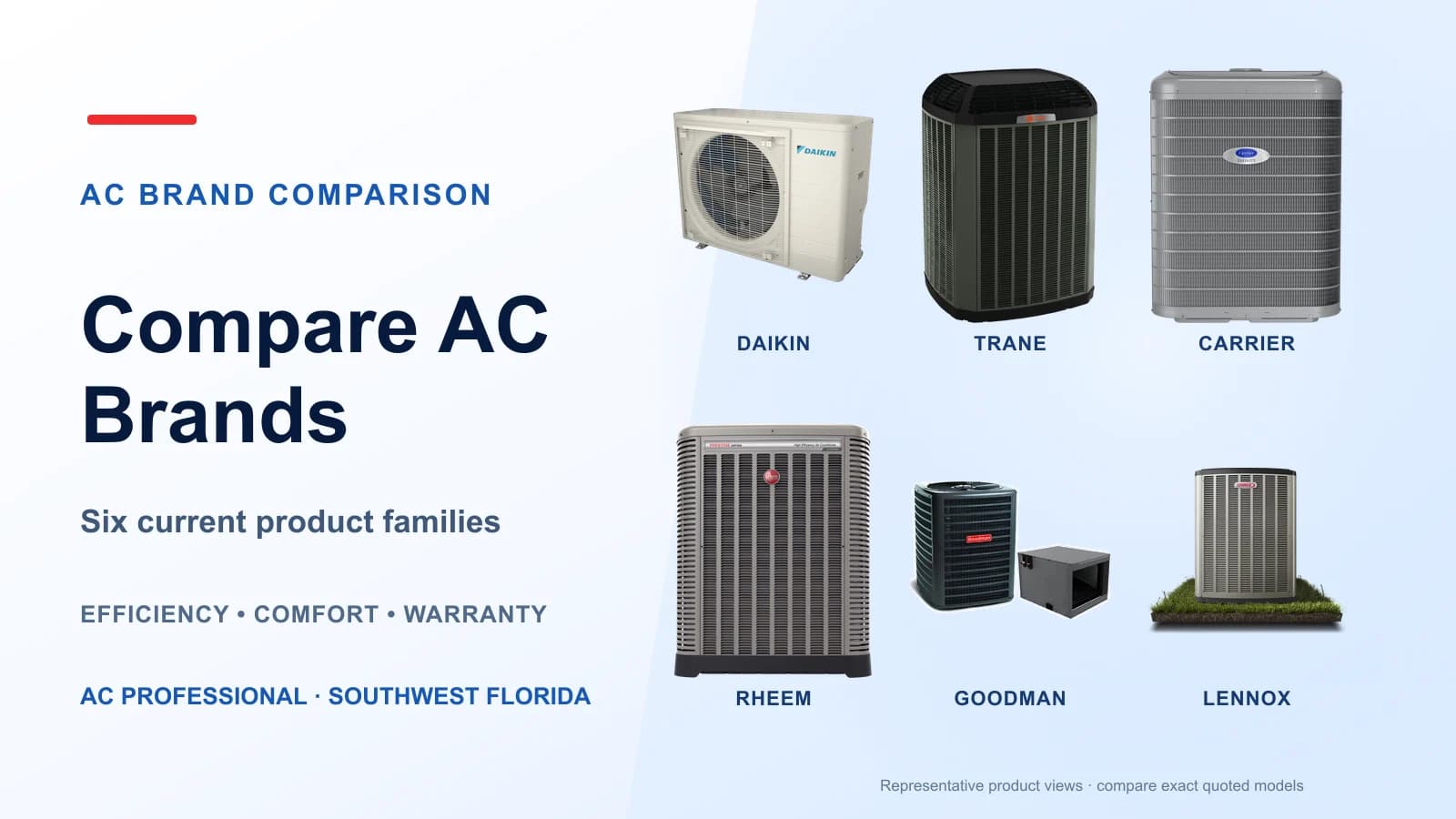
You can also review broader brand comparisons in our guide to compare AC brands Southwest Florida.
Conclusion
A Carrier system can be a smart option for a Southwest Florida home, but the best choice depends on the exact model, the home’s cooling needs, and the quality of the installation. Focus on load calculation, humidity control, thermostat compatibility, service access, and the written scope before you decide.
If you are considering Carrier AC systems Southwest Florida homeowners commonly compare, AC Professional can help you evaluate the options and determine whether a Carrier system is the right fit for your home. Call (239) 293-9373 or request a free estimate to get started.
Plan the next step
Use the Cape Coral new AC cost estimator for an initial planning range, then request an in-home evaluation before choosing equipment.
What the Current Carrier Lineup Adds to the Comparison
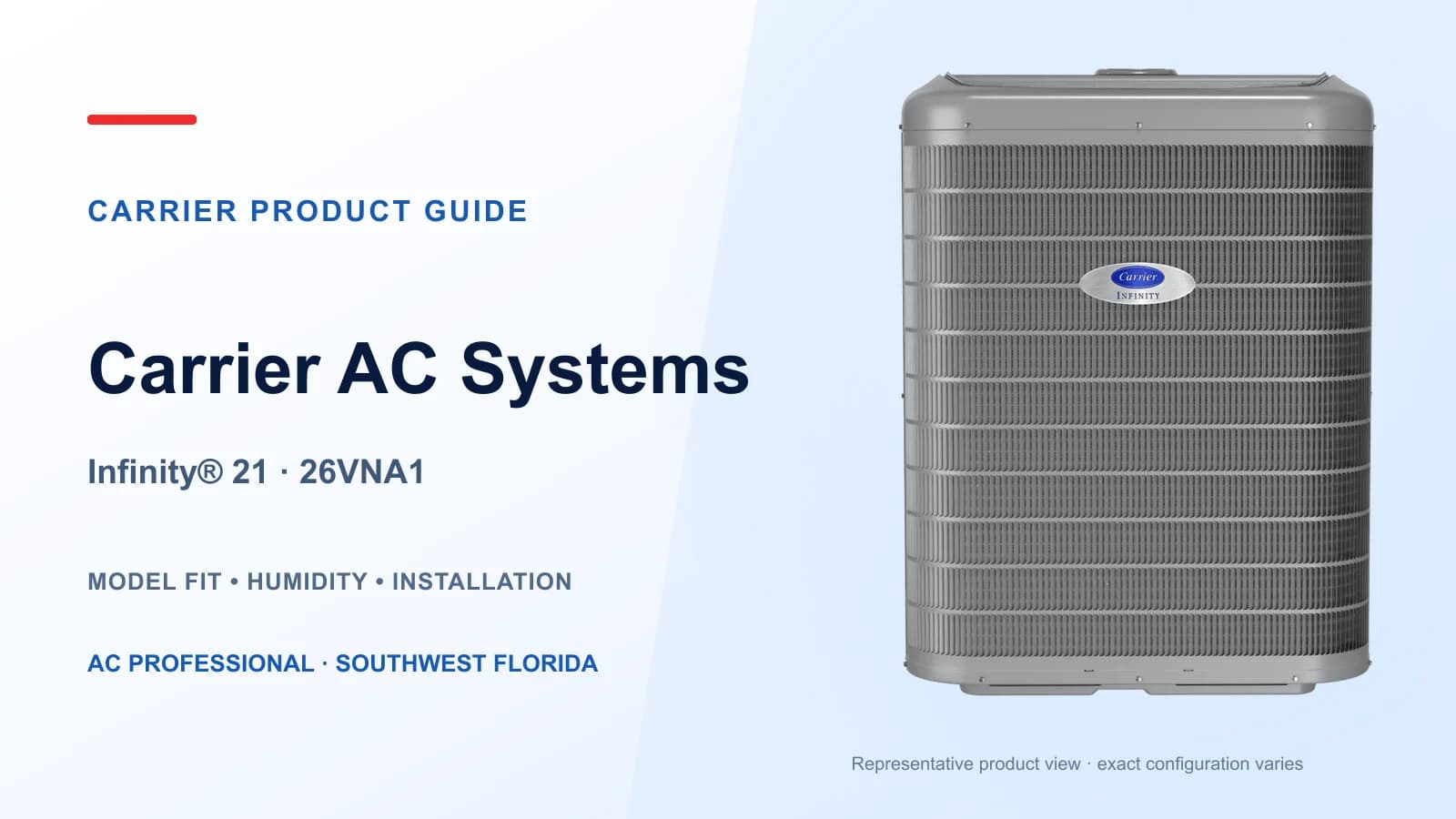
Carrier’s current residential catalog uses three recognizable tiers: Infinity, Performance, and Comfort. Current examples include the Infinity 21 26VNA1 variable-speed unit, Performance 18 26TPA8 two-stage unit, and Comfort single-stage choices. Carrier also lists coastal variants within parts of the Performance and Comfort families, a relevant detail for homes exposed to salt air. Coastal labeling does not replace proper placement, maintenance, or model-specific warranty review.
Carrier is especially worth a model-level comparison when coastal construction or a specific operating tier is part of the decision. Confirm whether the quoted unit is actually a coastal model and whether its paired indoor unit and control preserve the features being discussed.
Product names, refrigerants, controls, availability, and certified ratings can change. Before signing, compare the exact outdoor model, indoor unit, thermostat or communicating control, AHRI-rated match when applicable, electrical work, drain work, permit scope, labor coverage, and manufacturer warranty documents.
Official Sources Checked for This Guide
Official manufacturer pages were checked on August 5, 2026. They are used to identify current product families and warranty language, not to replace an in-home load calculation or a written installation proposal.