
That does not make 4 tons automatically better. The right size is the one that matches the home's actual cooling load, airflow, and humidity needs.
HVAC Terms Without the Jargon
- BTU: A small unit used to measure heat, much like gallons measure liquid. More BTUs means the system can remove more heat in one hour.
- Tonnage: A simple way to group cooling capacity. One ton equals 12,000 BTUs per hour. It does not describe how much the equipment weighs.
- Cooling capacity: How much heat the AC can remove. Think of it as the size of the system's cooling job, not how cold the air feels at a vent.
- Cooling load: The amount of heat and humidity the home gains on a hot day. Windows, sun, insulation, people, and air leaks all add to that workload.
- Airflow: The movement of cooled air through the ducts and rooms. Even the right-size equipment will struggle if the duct system cannot move enough air.
- Efficiency: How much electricity the system needs to do its job. A more efficient unit can use less energy, but correct sizing and installation still matter.
- Short cycling: When the AC turns on and off too quickly. This can happen when a system is too large and may leave the home feeling humid.
3-Ton vs. 4-Ton AC in Simple Terms
A 3-ton system has less cooling capacity than a 4-ton system. Either one can be the correct choice, depending on the home.
- A system that is too small may run for long periods and struggle during peak heat.
- A system that is too large may cool quickly, shut off too soon, and leave the home feeling humid or uneven.
- A correctly matched system should support steady cooling, useful run time, balanced airflow, and better moisture removal.
The goal is not to buy the largest system. It is to choose the capacity that fits the property.
Why Square Footage Is Only a Starting Point
Homeowners often search for an AC unit for a 1,200-, 1,500-, 1,800-, or 2,500-square-foot house. Square footage helps start the conversation, but there is no reliable chart that can size every Southwest Florida home.
Two homes with the same floor area can need different systems because of:
- Ceiling height, room layout, and number of occupants
- Window size, direction, shade, and sun exposure
- Insulation and air leakage
- Duct size, condition, leakage, and return-air capacity
- Indoor humidity and comfort goals
- Electrical and installation conditions
This is why replacing an old unit with the same tonnage is not always the best answer.
What a Technician Checks Before Recommending a Size
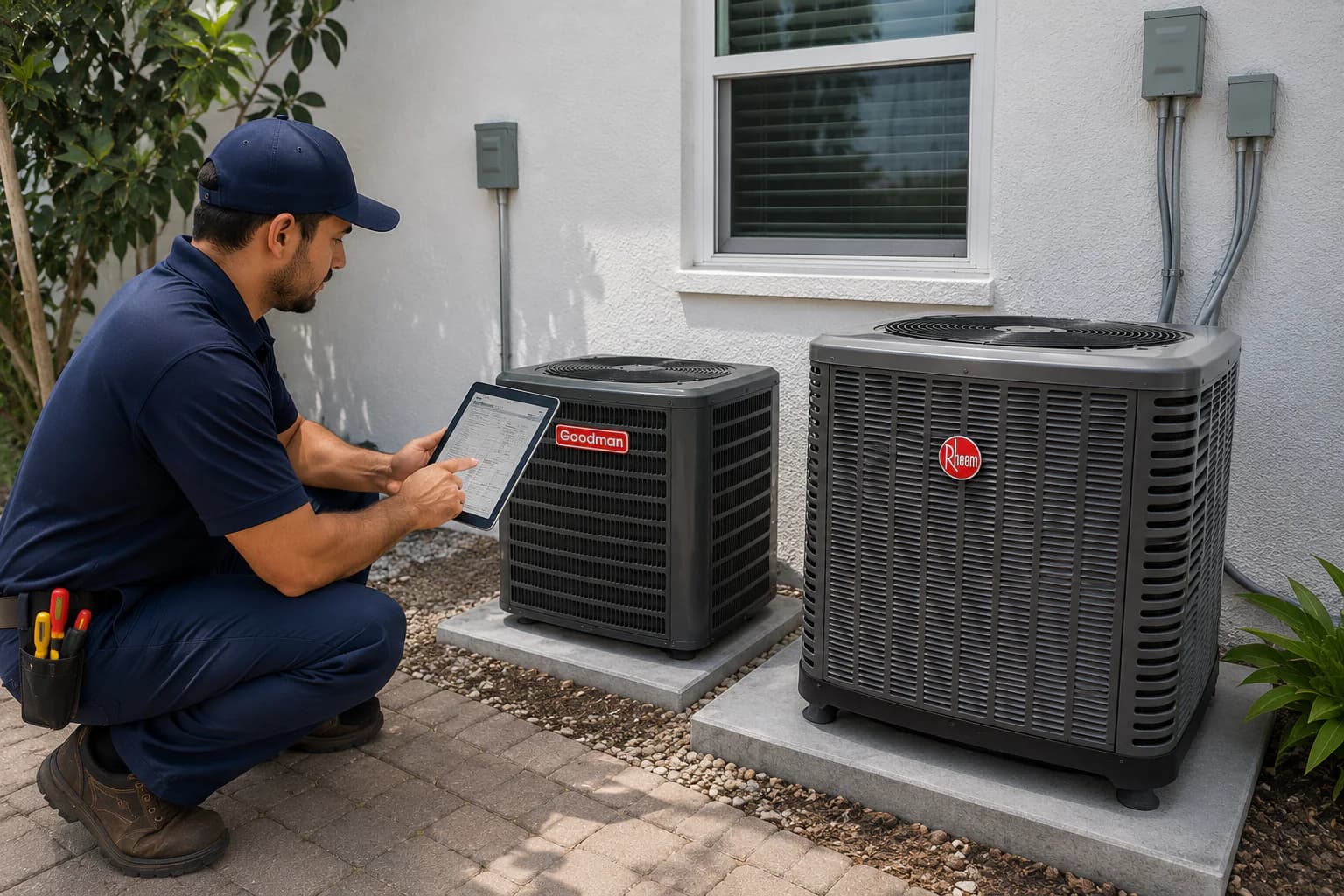
AC Professional keeps the process practical. A technician reviews the home and the existing system before explaining appropriate options.
- Home size, layout, ceiling height, windows, and sun exposure
- Existing equipment, system age, cooling performance, and recurring problems
- Supply ducts, return air, airflow, and signs of leakage or restriction
- Uneven rooms, long run times, humidity, and the homeowner's comfort priorities
- Installation access, electrical needs, drain conditions, and project scope
For projects that require it, professional load-calculation methods such as ACCA Manual J can turn these details into a more precise sizing decision. The important point is that a recommendation should be based on the home, not only a square-foot estimate.
What Options Can Be Compared
After the assessment, AC Professional can explain matched system options in the capacity range that fits the home. The comparison may include:
- Cooling capacity and airflow requirements
- Energy-efficiency ratings
- Single-stage, multi-stage, or variable-capacity operation when appropriate
- Humidity-control and comfort features
- Duct or return-air corrections that may be needed
- Equipment and labor warranties
- Financing options, without promising approval
You receive a project-specific recommendation and quote after the property is evaluated. This guide does not provide remote sizing or generic installed prices because the wrong shortcut can lead to an uncomfortable and expensive decision.
A Simple Way to Start
Use the new AC system estimator to organize basic details about the home. It does not choose equipment or show a generic price. It helps the AC Professional team prepare for the conversation.
The next step is a free in-home estimate. A technician can inspect the property, explain the difference between the appropriate options, and provide a written quote for the actual project.
You can also learn more about AC installation, AC replacement, and HVAC financing.