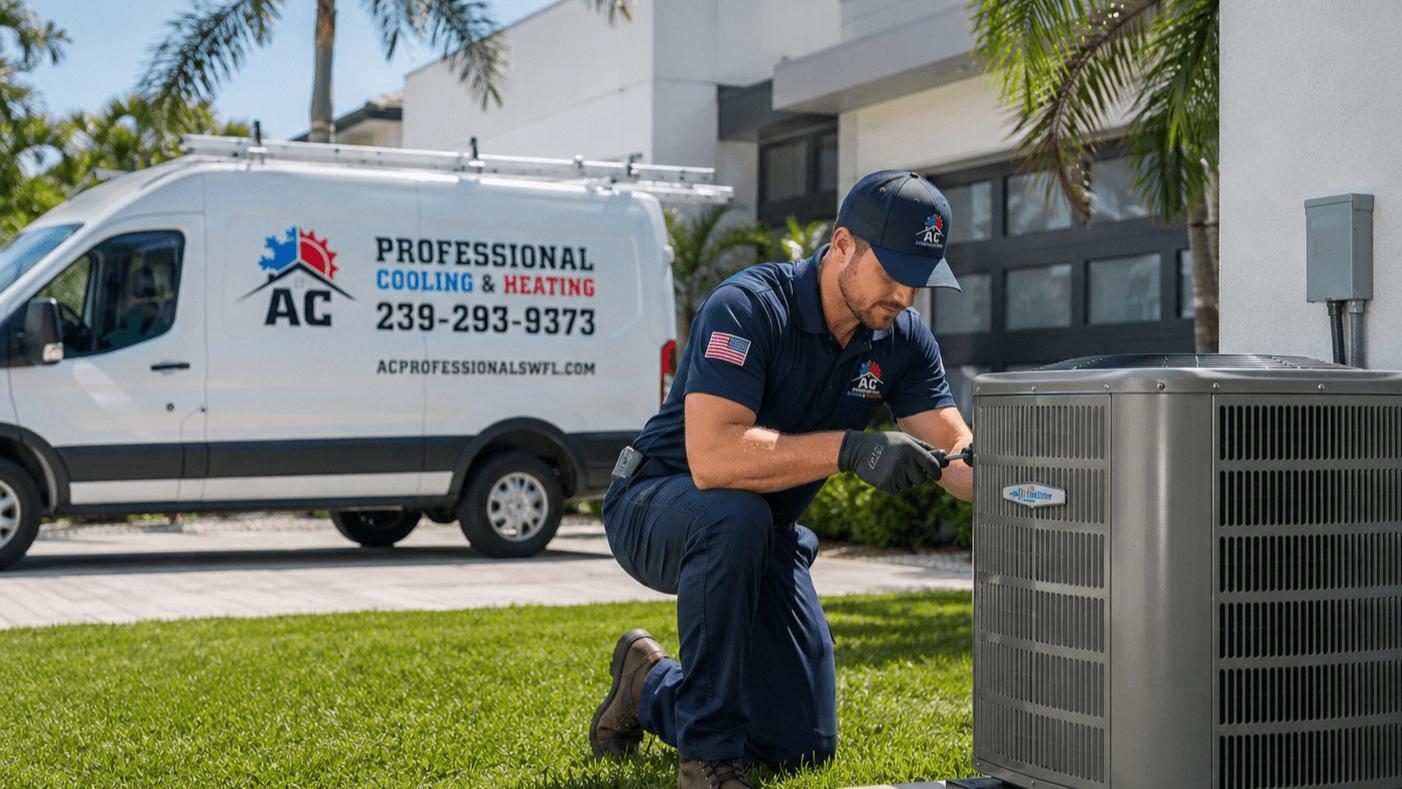
If you live in Cape Coral, you already know summer heat can push an air conditioner hard. A little attention before the hottest months can help you catch small issues early, avoid uncomfortable surprises, and decide whether your system needs routine maintenance or a closer diagnosis.
This guide walks through a practical AC maintenance Cape Coral checklist for homeowners. You’ll learn what to look for first, what the signs may mean, what you can safely check yourself, and when it makes more sense to call AC Professional for help.
Wondering what a professional visit should cost — and what has to be on the checklist? See our AC tune-up cost guide for Cape Coral for 2026 prices.
Some checks are safe for homeowners. Anything involving electrical components, refrigerant, sealed equipment panels, or a clogged drain line that keeps returning should be handled by a licensed HVAC technician. If you want a professional opinion before peak heat arrives, schedule AC Maintenance with AC Professional.
Why pre-summer AC maintenance matters in Cape Coral
Southwest Florida cooling systems work through long stretches of heat, humidity, and frequent runtime. That means small issues can show up as comfort problems sooner than many homeowners expect.
A system that is slightly dirty, low on airflow, or struggling with drainage may still run, but it may cool unevenly, cycle more often, or leave the home feeling sticky. Those symptoms can point to maintenance needs, a repair issue, or both.
The goal before summer is not to guess. It is to notice changes early so you can compare simple homeowner checks with a professional diagnosis if needed.
What to check first on your AC maintenance checklist
Start with the items that are easy to inspect safely and most likely to affect performance.
1. Check the air filter
A dirty filter is one of the most common reasons airflow drops. When airflow is restricted, the system may run longer, cool less effectively, and put more strain on the equipment.
If the filter looks dusty or clogged, replace it with the correct size and type for your system. If you are unsure which filter your unit uses, check the existing filter frame or the system documentation before buying a replacement.
2. Confirm the thermostat settings
Make sure the thermostat is set to cool and the temperature is where you want it. If the home feels warmer than the setting, the issue could be the thermostat, airflow, or the AC system itself.
If the thermostat uses batteries, replace them if needed. If the display is blank, inaccurate, or unresponsive, that may be a sign of a thermostat problem rather than an AC failure.
3. Look at supply and return vents
Walk through the house and make sure vents are open and not blocked by furniture, rugs, or curtains. Closed or blocked vents can reduce airflow and make some rooms feel warmer than others.
If one room is much hotter than the rest, note whether the vent is blocked, the door is usually closed, or the room has more sun exposure. That information helps a technician narrow down the cause.
4. Inspect the indoor area for moisture
Check around the indoor air handler or closet unit for water, damp insulation, or signs of overflow. Moisture around the system can point to a clogged drain line, a drainage issue, or another problem that needs attention.
If you see active leaking, turn your attention to safety first. Do not remove panels or handle wiring. A technician can determine whether the issue is a drain blockage, condensate pump problem, or something else.
5. Clear the outdoor unit area
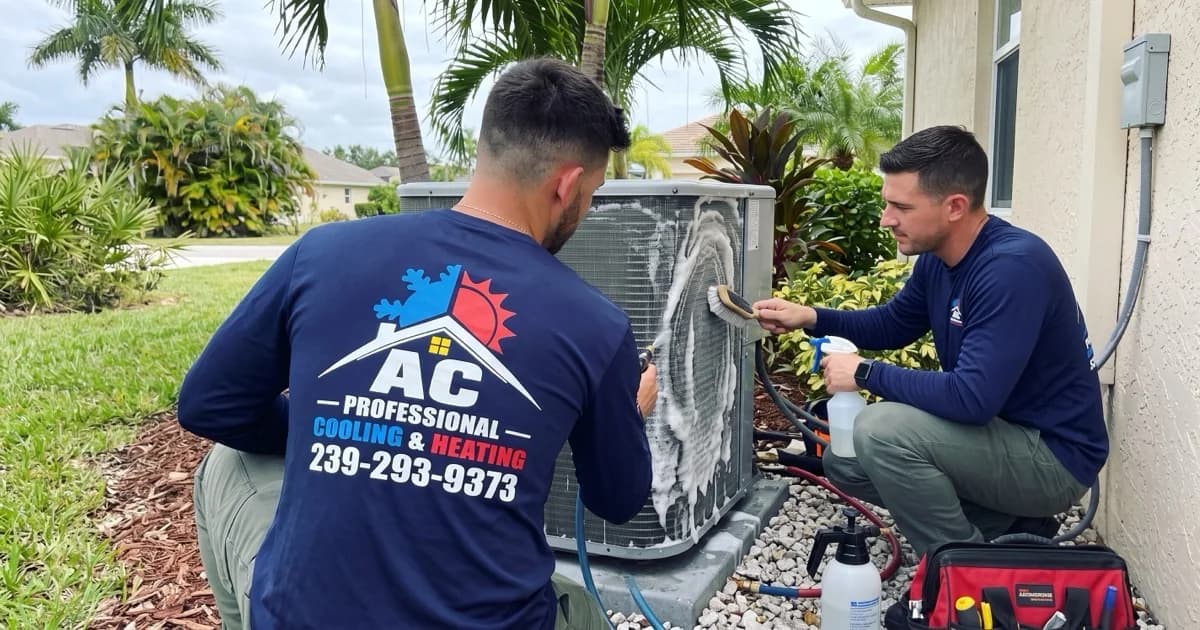
The outdoor condenser needs open space around it to breathe properly. Remove leaves, grass clippings, branches, and other debris from around the unit.
You can gently clear the area around the cabinet, but do not bend the fins or spray the unit with a strong stream of water. If the coil is dirty or the unit looks damaged, that is a good time to bring in a professional.
Common symptoms and what they may mean
A homeowner often notices the symptom before the cause. Paying attention to the pattern can help you decide whether the issue is simple maintenance or something more involved.
Weak airflow
Weak airflow can mean a clogged filter, blocked vents, a dirty coil, or a blower issue. If airflow drops suddenly, the problem may be more than routine maintenance.
If only one room is affected, the issue may be duct-related or tied to that room’s venting. If the whole home has weak airflow, the system may need a deeper inspection.
Warm air or longer cooling cycles
If the system runs but the air never feels cool enough, the cause could be airflow restriction, thermostat trouble, dirty coils, or a refrigerant-related issue. Homeowners can safely check the filter and thermostat first.
If those basics are fine and the system still struggles, a technician should evaluate the unit rather than guessing at the cause.
Short cycling
Short cycling means the system turns on and off too often. That can happen with airflow problems, thermostat issues, electrical concerns, or system sizing and control problems.
Because short cycling can stress the equipment, it is worth addressing early instead of waiting for a complete breakdown.
Musty odors or humidity that feels high indoors
In Cape Coral, humidity matters as much as temperature. If the home feels damp or smells musty when the AC runs, the system may not be removing moisture the way it should.
That can happen for several reasons, including airflow issues, dirty components, drainage problems, or a system that needs service. A technician can help determine whether maintenance is enough or whether repair is needed.
Unusual noises
Rattling, buzzing, grinding, or squealing are not normal background sounds. Some noises may come from loose parts or debris, while others can point to electrical or mechanical issues.
If the noise is new or getting worse, turn the system off if it seems unsafe and schedule service.
Safe homeowner checklist before calling for service
Use this simple checklist before you decide on the next step:
- Replace or inspect the air filter.
- Confirm the thermostat is set to cool and working properly.
- Make sure vents are open and unobstructed.
- Check for water around the indoor unit.
- Clear debris from around the outdoor condenser.
- Listen for unusual noises.
- Note whether the problem affects one room or the whole home.
- Write down when the issue started and whether it happens all the time or only at certain times.
If you need to open an equipment panel, handle wiring, inspect refrigerant lines closely, or climb a ladder to reach components, stop there. Those tasks are better left to a licensed HVAC professional.
What a technician evaluates during AC maintenance
A professional maintenance visit goes beyond the visible checklist. The technician looks for signs that affect performance, reliability, and comfort.
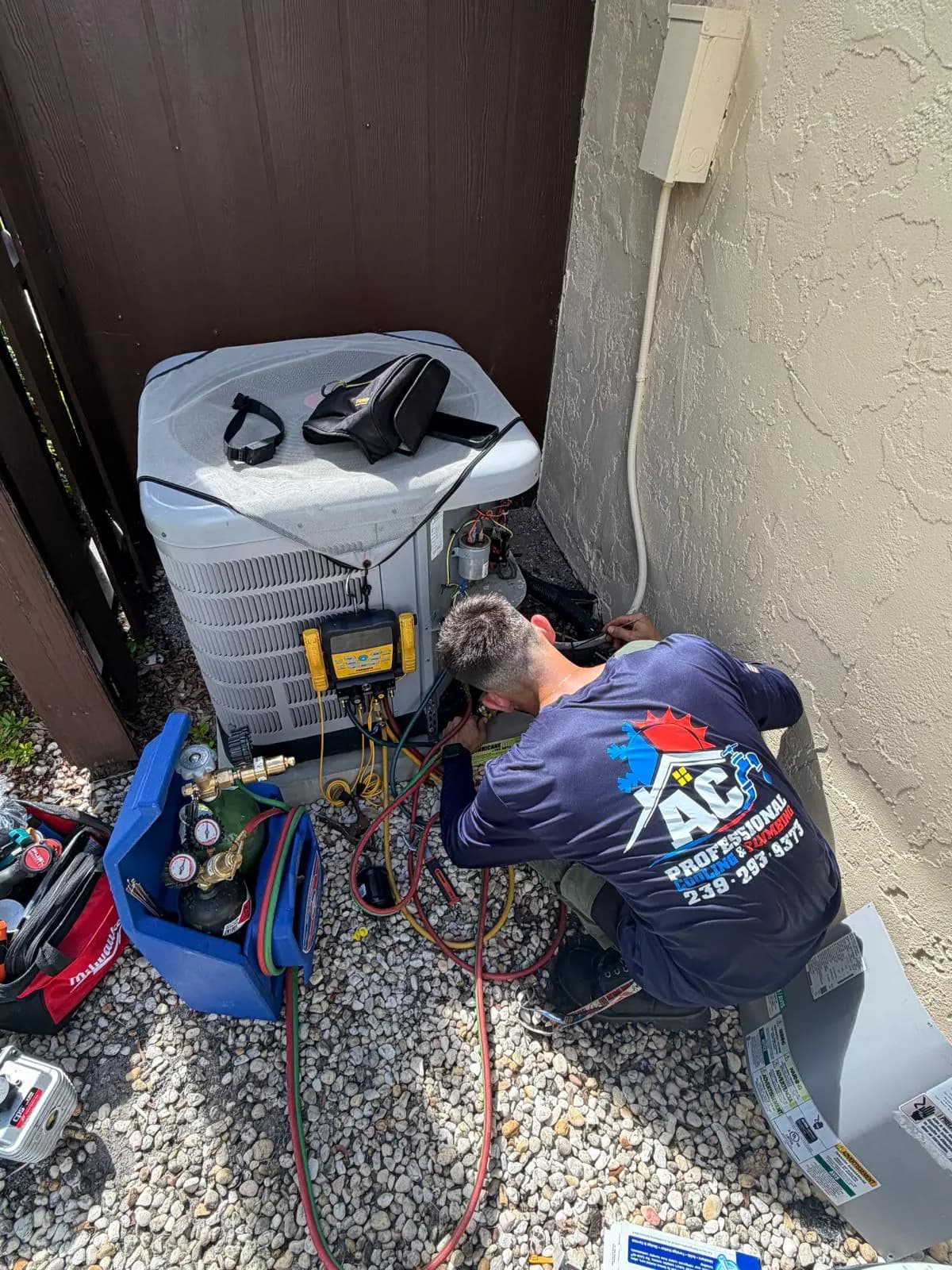
That may include checking airflow, inspecting indoor and outdoor components, evaluating the drain system, looking for dirt buildup, and testing how the system responds during operation. If the system is not cooling properly, the technician can help determine whether the issue is maintenance-related or whether a repair is needed.
If the system is older, has repeated problems, or needs major work, the technician may also help you compare repair and replacement options based on the condition of the equipment.
If you are comparing next steps, AC Professional can help with AC Repair when the issue goes beyond routine maintenance, or AC Replacement if the system is no longer the best fit for the home.
How to compare your next steps
Not every AC issue means the same solution. A homeowner can usually start by asking three questions.
First, is the problem something simple and visible, like a dirty filter or blocked vent? If yes, fix that first and see whether performance improves.
Second, does the system still show the same symptom after the basic checks? If yes, the issue may involve airflow, drainage, electrical parts, or another internal component.
Third, is the system older, repeatedly breaking down, or requiring frequent service? If so, it may be time to compare repair and replacement options with a professional.
That comparison should be based on inspection, not guesswork. The right answer depends on the system’s condition, installation, and what the technician finds during diagnosis.
Prevention tips for Southwest Florida homeowners
A few habits can help your AC stay ready for summer.
Change the filter regularly based on your system and household conditions. Keep the outdoor unit clear of landscaping debris. Avoid closing too many vents in an attempt to force more cooling into one room, since that can affect airflow.
It also helps to schedule maintenance before the hottest stretch of the season. That gives you time to address small issues before the system is under constant demand.
For homeowners in the area, AC services in Cape Coral can help keep your system on track before summer heat settles in.
When to call AC Professional
Call a licensed HVAC technician if your system is blowing weak air, making unusual noises, leaking water, short cycling, or failing to cool after basic homeowner checks. Those symptoms can point to issues that need professional diagnosis.
AC Professional Cooling & Heating, Inc. serves Cape Coral and nearby Southwest Florida communities from 932 Northeast 24th Lane, Unit 4, Cape Coral, FL 33909. If you want a free estimate or a professional look at your system before summer, call AC Professional at (239) 293-9373.
Conclusion
A smart AC maintenance Cape Coral checklist starts with the simple things: filter, thermostat, vents, moisture, and outdoor clearance. Those checks can reveal whether your system just needs routine attention or whether it needs a technician to diagnose a deeper issue.
The earlier you catch a problem, the easier it is to compare your options and avoid discomfort when summer heat arrives. If you want help getting your system ready, AC Professional is here to help homeowners across Cape Coral and Southwest Florida.