
Goodman AC Systems Southwest Florida: How to Decide If They Fit Your Home
Choosing a new air conditioner in Southwest Florida is not just about the brand name on the cabinet. The right fit depends on your home’s size, ductwork, humidity needs, thermostat setup, and how well the system is installed. That is especially true with Goodman AC systems Southwest Florida homeowners may be considering for replacement or new installation.
Goodman can be a practical option for many homes, but the best choice is always the specific model matched to the home and installed correctly. A system that looks similar on paper can perform very differently once it is sized, connected, and commissioned in a real house.
If you are comparing options in Cape Coral, Fort Myers, or nearby areas, ask for a free estimate that explains the exact equipment, the work included, and any changes needed to the ducts, electrical, or thermostat. AC Professional can help you compare the full scope before you decide.
Why the model matters more than the brand name
Homeowners often ask whether Goodman is “good” or “worth it,” but that question is too broad to answer well. One Goodman model may be a simple replacement for a basic system, while another may offer different comfort features or compatibility with more advanced controls.
What matters is how the model fits your home. A properly selected system can cool more evenly, manage humidity better, and avoid short cycling. A poorly matched system can leave rooms uneven, feel sticky, or wear itself out faster than it should.
That is why a real comparison should start with the home, not the brochure.
What to compare when looking at Goodman AC systems
When you compare Goodman AC systems, focus on the details that affect daily comfort and long-term ownership. These are the questions that matter most for Southwest Florida homes.
Exact model and system type
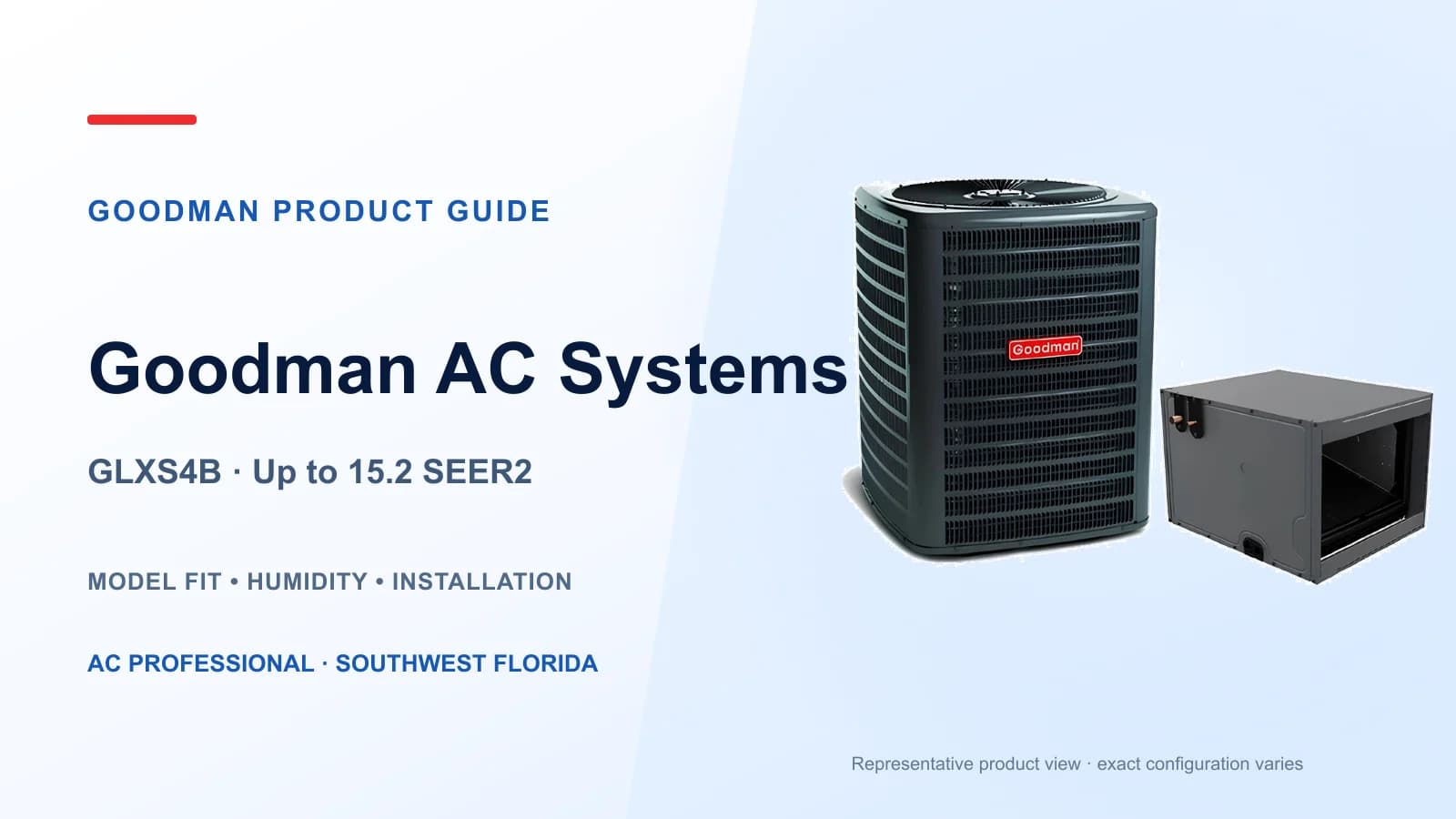
Start by identifying the exact outdoor unit and indoor equipment being proposed. A replacement may involve only the condenser, or it may require a matched air handler, coil, thermostat, and other components.
Ask whether the proposal is for a full matched system or a partial replacement. A matched setup is often easier to evaluate because the equipment is designed to work together, but the final decision still depends on your home and installation conditions.
Efficiency and operating style
Efficiency is worth comparing, but it should not be the only factor. In a long cooling season, a system that fits the home well and runs correctly may be more valuable than one that looks impressive on paper but is not installed or sized properly.
Also consider how the system operates. Some homeowners want simpler operation, while others want more control over comfort and humidity. The right choice depends on how your family uses the home and what kind of comfort issues you are trying to solve.
Sound and placement
Sound matters more than many homeowners expect. If the outdoor unit sits near a patio, bedroom, or side yard, the noise level can affect how comfortable the home feels day to day.
Ask where the unit will be placed, how close it will sit to walls or windows, and whether the installation plan allows for proper airflow and service access. A good installation can reduce unnecessary vibration and make the system easier to live with.
Humidity control
In Southwest Florida, cooling is only part of the job. The system also needs to help manage indoor humidity so the home feels comfortable without overcooling.
If your current system leaves the house cool but damp, the issue may be related to sizing, airflow, duct leakage, or control settings. A new Goodman system should be evaluated with humidity performance in mind, not just temperature drop.
Thermostat compatibility
The thermostat is part of the system, not an afterthought. Before you choose a model, confirm that the thermostat will work properly with the equipment and the comfort features you want.
If you plan to keep your current thermostat, ask whether it is compatible with the new setup. If you want a new thermostat, make sure the proposal explains what it does, how it communicates with the equipment, and whether any wiring changes are needed.
Parts and service access
Any AC system should be easy to service when maintenance or repairs are needed. Ask how accessible the filters, coil, electrical components, and drain areas will be after installation.
You should also ask what service access looks like for the specific model. A system that is difficult to inspect or maintain can create avoidable headaches later, especially in a climate where the equipment runs often.
Why installation quality is central to the decision
Even a solid system can underperform if the installation is rushed or incomplete. In Southwest Florida, installation quality affects comfort, humidity control, and how often the system may need attention.
A careful installation should account for the home’s cooling load, duct condition, airflow, electrical requirements, drain setup, and equipment placement. If any of those pieces are off, the system may not deliver the comfort the homeowner expected.
This is why the best comparison is not just “Which Goodman model?” but “What does the full installation require in my home?”
What a proper evaluation should include
Before you approve a replacement or installation, the estimate should explain what the contractor is checking and why. A thorough evaluation usually looks at the following:
- Home size and layout
- Existing duct condition and airflow concerns
- Current thermostat and control setup
- Electrical compatibility
- Drainage and condensate handling
- Indoor and outdoor equipment condition
- Space for service access and proper airflow
If the home has comfort problems now, the evaluation should also consider whether the issue is caused by the equipment, the ducts, the installation, or a combination of factors. That distinction matters because replacing a unit without correcting the real problem can leave the same issues in place.
Safe homeowner checklist before you request a quote
You can do a few simple checks before a professional visit. Keep the focus on observation, not disassembly.
- Note which rooms feel too warm, too humid, or uneven.
- Check whether the system runs longer than usual or turns on and off frequently.
- Look at the thermostat settings and make sure they have not been changed accidentally.
- Replace or inspect the air filter if it is easy to access.
- Make sure supply vents are open and not blocked by furniture or rugs.
- Listen for unusual noises from the indoor or outdoor unit.
- Look around the indoor unit for water near the drain area.
Do not open electrical panels, remove equipment covers, or handle refrigerant lines. Those tasks should be left to a licensed HVAC professional.
When a Goodman replacement may make sense
A Goodman AC replacement may be worth considering if your current system is aging, no longer cools evenly, or needs repeated repairs. It may also make sense if the existing equipment is not well matched to the home or if the installation scope needs to be updated.
Replacement is not only about swapping equipment. It may also involve correcting duct issues, updating the thermostat, improving airflow, or adjusting the installation so the new system can perform the way it should.
If you are comparing Goodman AC replacement options, ask for a written explanation of what is being replaced and what is staying in place. That helps you compare proposals fairly.
When installation scope matters more than the brand
Sometimes the biggest difference between proposals is not the equipment brand at all. It is the amount of work included.
One estimate may include only the basic equipment swap, while another may include more of the items needed for a complete installation. That can affect how the system performs after the job is done. For that reason, compare the total installed scope, not just the model number.
If you are evaluating Goodman HVAC installation for a new system, ask whether the proposal includes the indoor and outdoor components, thermostat compatibility, drain work, and any needed adjustments to the existing setup.
How to compare next steps from different proposals
When you have more than one estimate, compare them side by side using the same questions. The goal is to understand what each contractor is actually promising to do.
Look for clarity on these points:
- Exact model numbers
- Whether the system is matched
- What load calculation or sizing method was used
- What duct or airflow issues were identified
- What thermostat is included or recommended
- What installation work is included
- What is excluded from the proposal
- How warranty terms are written and explained
Written warranty terms matter because the details can vary by equipment and by how the system is installed and registered. Ask for the terms in writing and read them carefully before you decide.
Good questions to ask before you choose
A good contractor should be able to answer practical questions without pressure. Ask:
- Why is this model being recommended for my home?
- How was the system sized?
- What comfort issue will this solve?
- Will this help with humidity, or is another fix needed too?
- Is my current thermostat compatible?
- What parts of the installation are included?
- What maintenance will this system need after installation?
These questions help you compare the real value of the proposal, not just the brand name.
Preventing problems after installation
Once the new system is installed, the best way to protect performance is to keep up with maintenance and pay attention to changes in comfort. A clean filter, clear drain line, and regular professional checkups can help the system run more reliably.
If you notice uneven cooling, rising humidity, or new noises after installation, do not ignore them. Small issues are often easier to correct early, especially when they involve airflow or control settings.
For ongoing care, see our AC Maintenance page. If the system is not cooling as expected, our AC Repair service may help diagnose the issue.
Choosing a local installer in Southwest Florida
In this climate, the installer matters as much as the equipment. Homes in Cape Coral, Fort Myers, North Fort Myers, Naples, Bonita Springs, and Estero all face long cooling seasons, humidity, and outdoor conditions that can affect system performance.
That is why local experience is valuable. A contractor who understands Southwest Florida homes can better evaluate airflow, placement, and the installation details that influence comfort over time.
If you are planning a replacement, our AC Replacement and HVAC Installation services can help you compare the full scope before you commit.
Final thoughts on Goodman AC systems Southwest Florida homeowners should consider
A Goodman system can be a sensible choice when the exact model fits the home, the installation scope is complete, and the system is sized and set up correctly. The brand name alone should never decide the project.
If you are comparing Goodman AC systems Southwest Florida homeowners often ask about, focus on the home’s needs first, then compare the model, thermostat compatibility, humidity performance, service access, and written warranty terms. That approach gives you a much clearer picture of value.
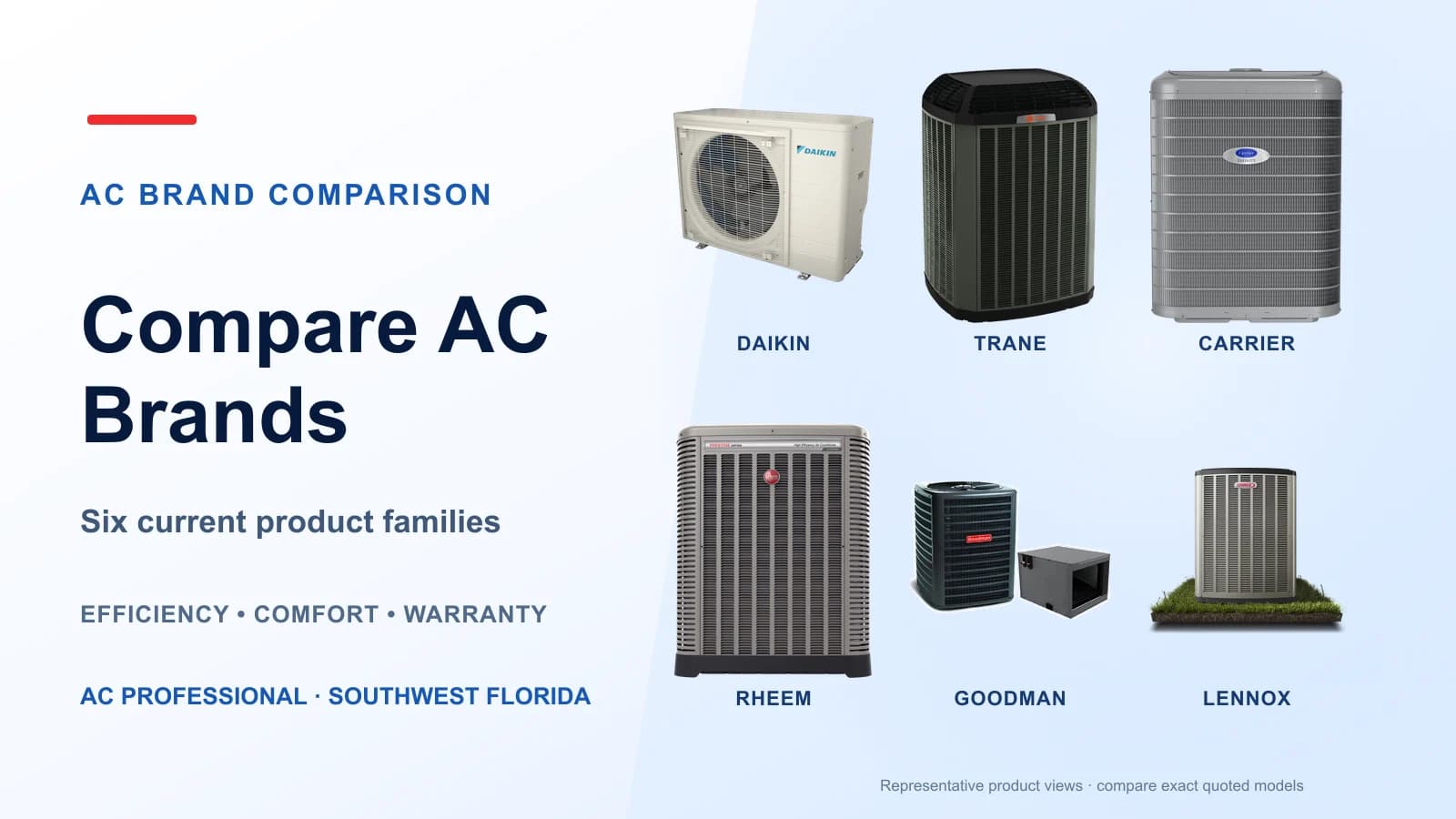
If you want help reviewing your options, AC Professional can provide a free estimate and explain what your home actually needs before installation begins. For a broader look at brand comparisons, visit our guide to compare AC brands in Southwest Florida.
Plan the next step
Use the Cape Coral new AC cost estimator for an initial planning range, then request an in-home evaluation before choosing equipment.
What the Current Goodman Lineup Adds to the Comparison
Goodman proposals should be compared by exact model and matched system, not by a generic value label. Warranty language also deserves Florida-specific attention. Goodman’s current warranty information says that, for Florida installations on or after July 1, 2024, the manufacturer cannot condition the applicable limited warranty on registration. It also describes transfer treatment for qualifying Florida installations on or after July 1, 2023. Homeowners should still keep the invoice, model and serial numbers, and written terms for the exact equipment.
Goodman can be a sensible candidate when the written scope is straightforward and the homeowner wants to compare installed value. The important protection is a complete proposal: exact equipment, AHRI match when applicable, labor coverage, and the Florida-specific warranty terms—not an unsupported claim that every Goodman system is equivalent.
Product names, refrigerants, controls, availability, and certified ratings can change. Before signing, compare the exact outdoor model, indoor unit, thermostat or communicating control, AHRI-rated match when applicable, electrical work, drain work, permit scope, labor coverage, and manufacturer warranty documents.
Official Sources Checked for This Guide
Official manufacturer pages were checked on August 5, 2026. They are used to identify current product families and warranty language, not to replace an in-home load calculation or a written installation proposal.