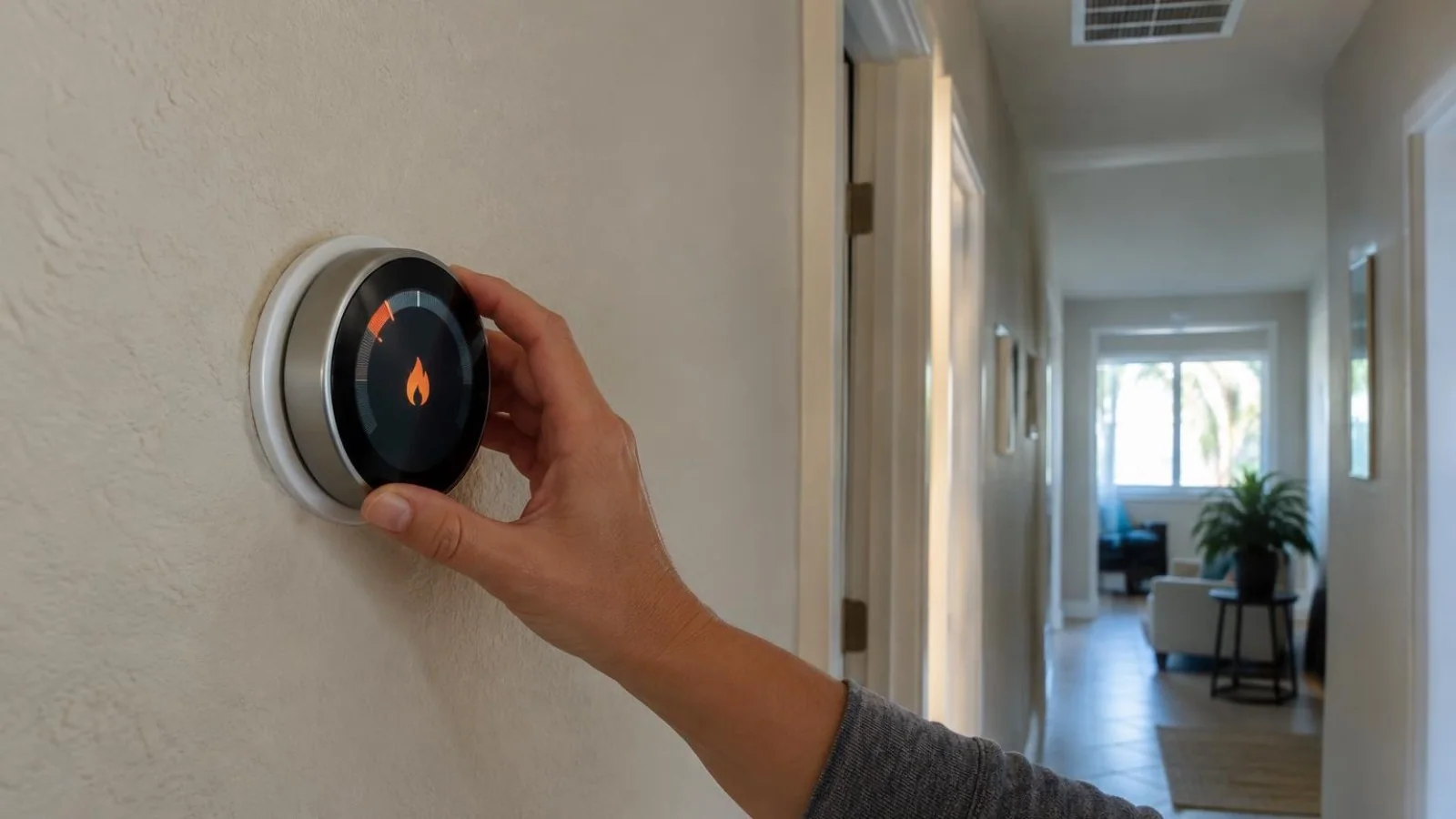
In Southwest Florida the heat sits unused for most of the year. Then a cold front arrives, you switch the thermostat to HEAT and nothing warm comes out. A heat pump not heating on the first cold morning is one of the most common calls of the season, and often the cause is something you can check in a few minutes.
This guide walks through those checks, explains what is normal and tells you when the system needs a technician.
Then give the system several minutes. If the air is still cold, the outdoor unit does not start or the breaker trips again, turn the system off and call a technician.
How Heat Works in Most Southwest Florida Homes
Most homes here heat in one of two ways, and it helps to know which one you have.
- Heat pump. The same outdoor unit that cools the house runs in reverse and brings heat inside. Many heat pumps also have electric heat strips as backup.
- Straight cool with heat strips. The outdoor unit only cools. The heat comes from electric heating elements inside the air handler.
Either way, the air handler, the filter, the ducts and the thermostat are the same ones your cooling uses. We compare the two types in heat pump vs. air conditioner in Southwest Florida.
What to Check First
- The thermostat mode. It should say HEAT, not COOL or OFF. Set the temperature a few degrees above what the room reads now.
- The fan setting. Use AUTO. With the fan set to ON, it blows between cycles and the air feels cool.
- The thermostat batteries. Replace them if the screen is dim or blank.
- The filter. A clogged filter restricts airflow and can make safety controls shut the heat off.
- The breakers. The air handler and the outdoor unit are usually on separate breakers. The heat strips can draw a lot of power, so a breaker that held all summer can trip in heat. Reset it once. If it trips again, leave it off and call.
- The vents. Open the supply vents and clear the return grille.
What Is Normal and What Is Not
Some things surprise homeowners the first time the heat runs and are not a problem:
- Warm air, not hot air. A heat pump delivers air that is warm to the hand. It heats the house steadily over a longer cycle.
- A dusty smell for a few minutes. Dust settles on the heat strips during the months they are off and burns away the first time they heat up.
- A short delay. The fan may wait briefly before it starts so it does not blow cold air.
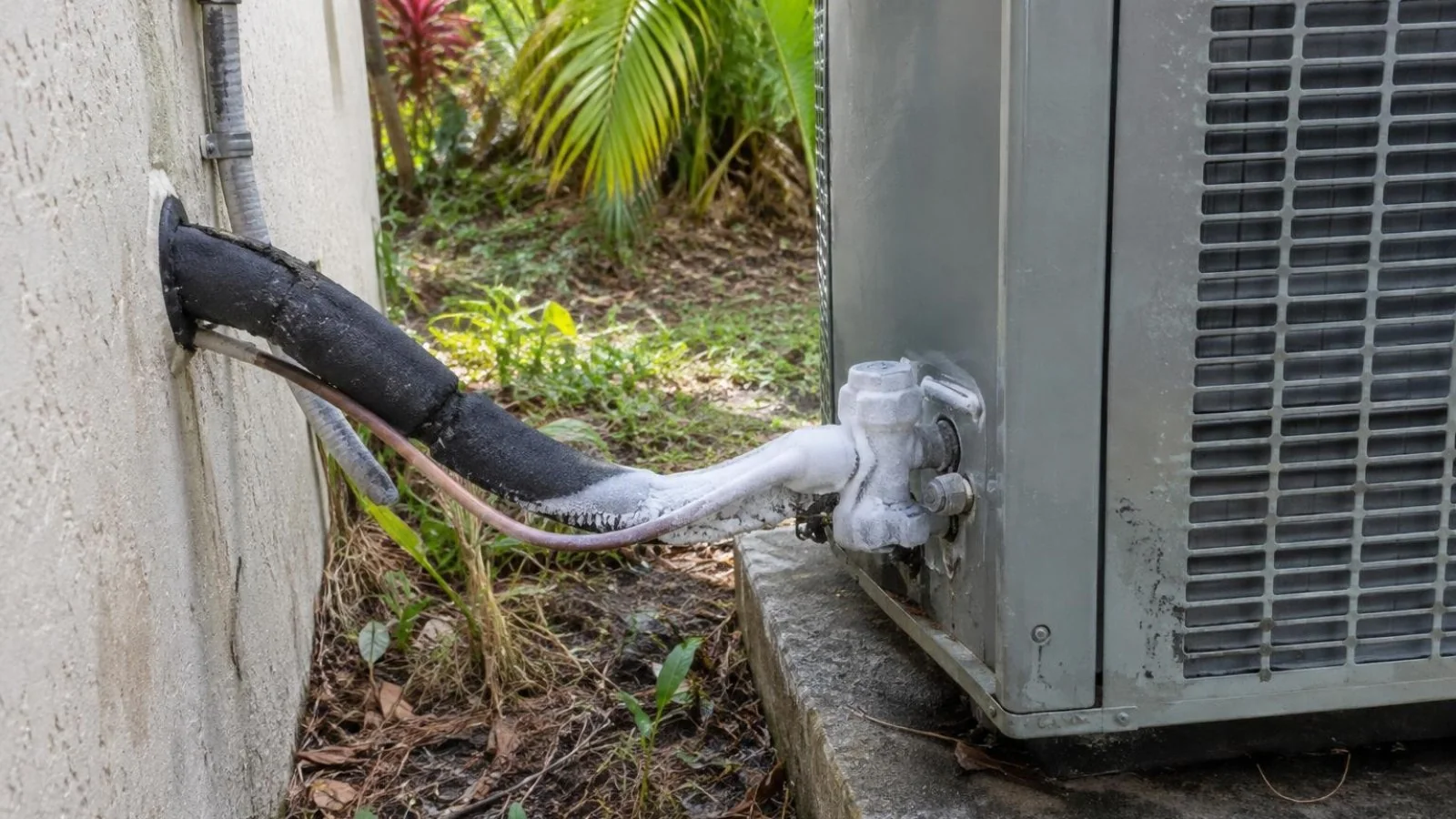
- A whoosh and a pause at the outdoor unit. On a cold morning a heat pump may briefly reverse to clear frost from the outdoor coil. You may see steam. It should return to heating within a few minutes.
These are not normal:
- Cold air from the vents after several minutes in HEAT.
- A burning smell that is strong, that lasts or that smells like plastic.
- An outdoor unit that stays silent on a heat pump system.
- A breaker that trips more than once.
- The system turning on and off every few minutes.
Common Causes a Technician Finds
When the simple checks do not solve it, the cause is usually one of these:
- A reversing valve that does not shift. This is the part that changes a heat pump from cooling to heating. When it sticks, the system cools in HEAT mode.
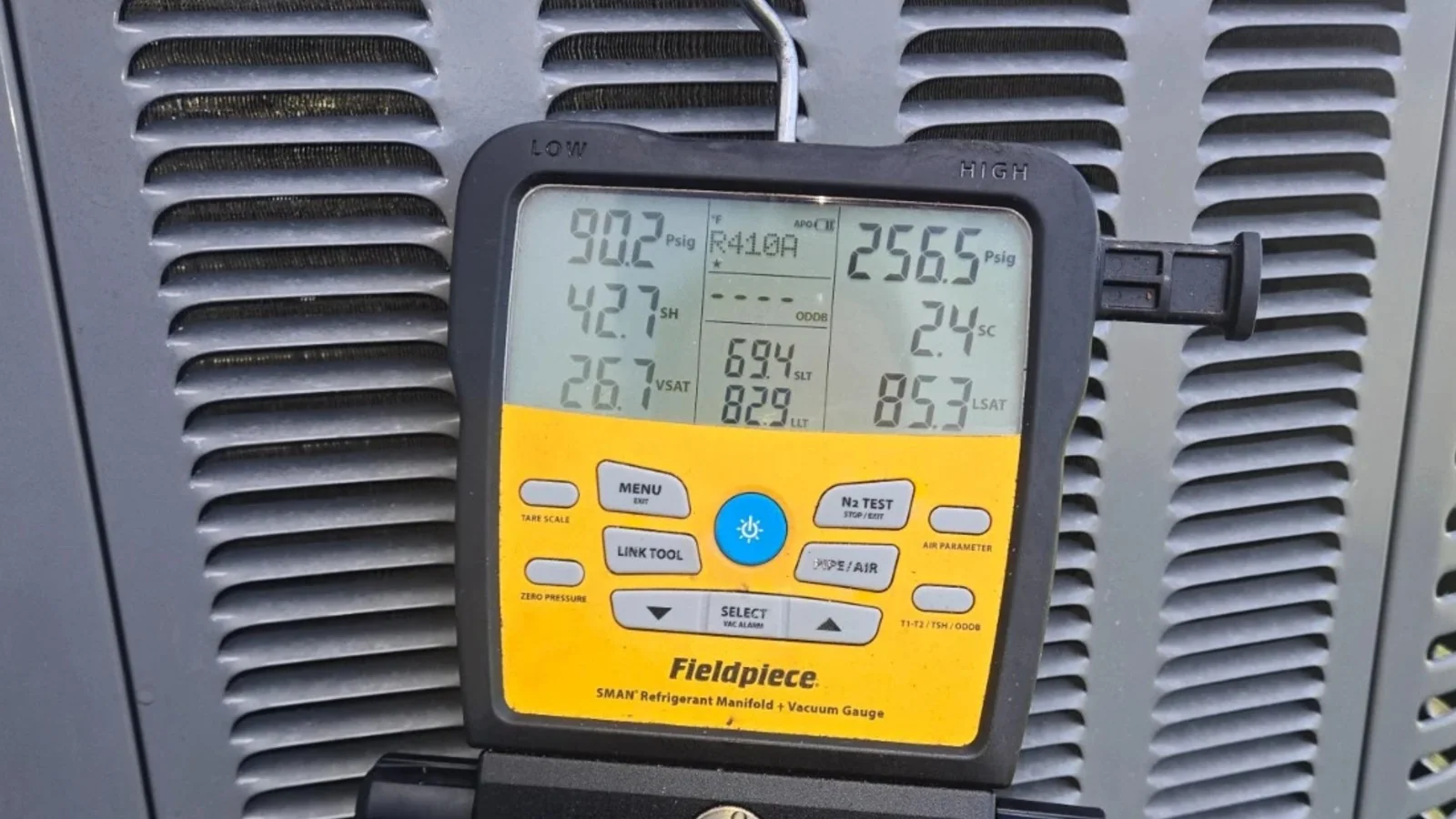
- Low refrigerant. A heat pump needs the correct charge to move heat. A low level means there is a leak.
- Failed heat strips or a control that feeds them. The fan runs and the air never warms.
- A weak capacitor or contactor. The outdoor unit hums or does not start.
- A thermostat or wiring problem. The thermostat calls for heat and the signal never reaches the equipment.
These involve refrigerant and high-voltage parts. They are not homeowner repairs.
When to Call
Call if the air is still cold after the checks above, if a breaker trips again, if you smell burning that does not go away or if the outdoor unit is iced over and stays that way.
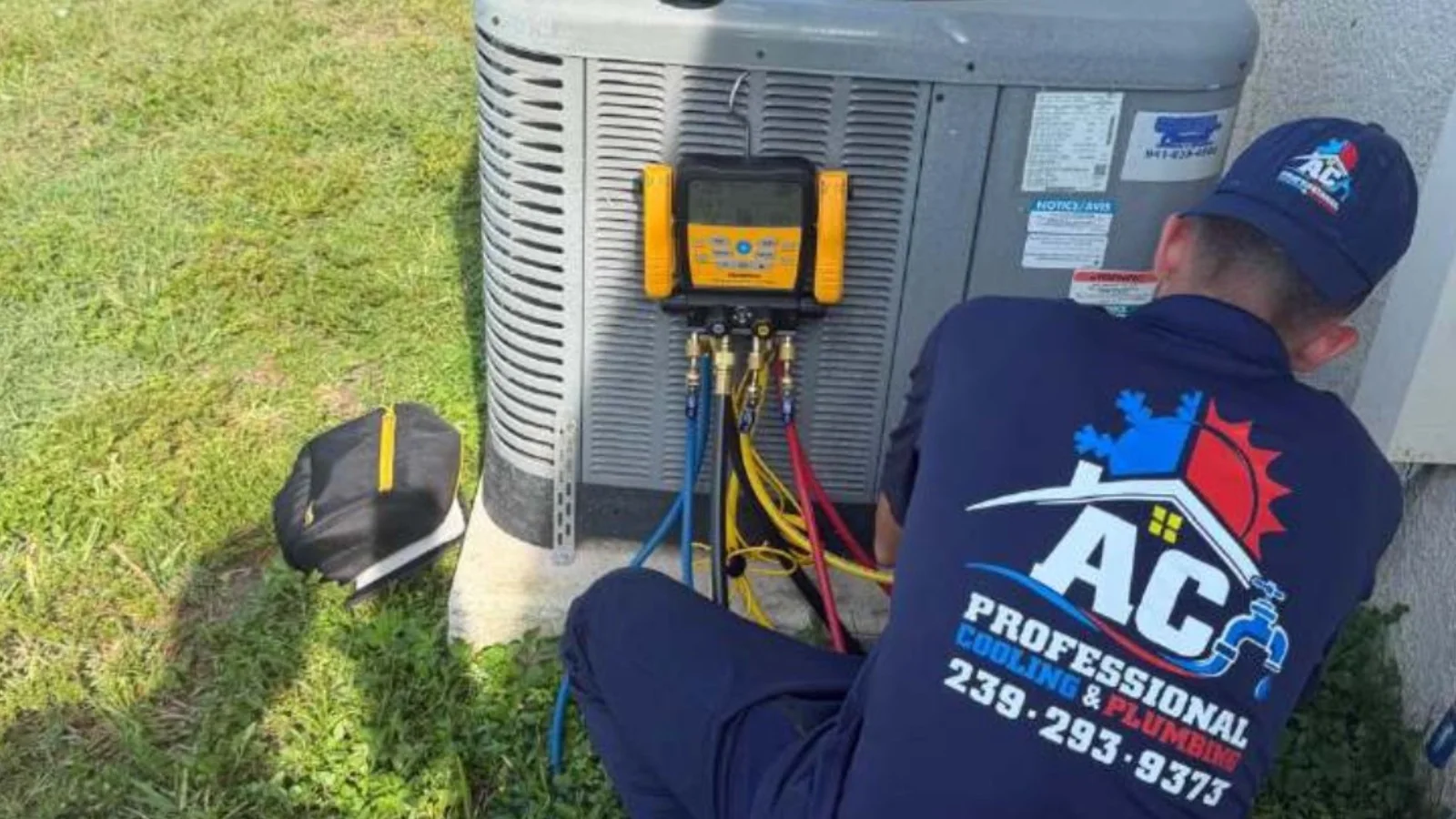
AC Professional Cooling & Plumbing diagnoses the system and gives you the price in writing before any repair starts. You can see what we check on our heating service page.
Why Testing the Heat Early Helps
The easiest time to find a heating problem is before you need the heat. Switch the thermostat to HEAT for ten minutes on a mild day in the fall. If something is wrong, you find out on your schedule.
Heating parts are also checked during regular AC maintenance, along with the filter, the coil and the electrical connections that both heating and cooling depend on.
Heating Service in Cape Coral, Fort Myers and Naples
AC Professional Cooling & Plumbing is a licensed and insured HVAC contractor based in Cape Coral (CAC1823099), with same-day and next-day service 7 days a week and 200+ Google reviews. If your heat pump is not heating, call (239) 293-9373 and tell us what you checked. We will find the cause and explain your options before any work starts.