Start with the filter and the thermostat. If the unit keeps turning on and off after that, turn it off and call a technician. Every start is the hardest moment for the compressor, and a system that starts all day wears out faster and never removes enough humidity.
What Counts as Short Cycling
A healthy system in Southwest Florida runs in long, steady cycles on a hot afternoon. Shorter cycles on a mild November day are normal, because the house needs less cooling.
It is short cycling when you notice a pattern like this:
- The outdoor unit starts and stops again within a few minutes, over and over.
- The house never reaches the set temperature, or it reaches it and feels sticky.
- You hear the system click on far more often than it used to.
Why It Matters More in Southwest Florida
An air conditioner removes humidity only while it runs. In the first minutes of a cycle it is mostly cooling the coil. The steady moisture removal comes later.
A system that shuts off after a few minutes cools the air a little and leaves the moisture behind. In Cape Coral or Fort Myers that means a house that feels clammy at 74 degrees, and extra starts that add wear to the compressor. We cover the moisture side in how humidity affects your AC.
Seven Common Causes of AC Short Cycling
1. A clogged air filter
A dirty filter chokes the airflow. The system overheats or the coil gets too cold, a safety control shuts it down, and it restarts once it recovers. This is the first thing to check and the cheapest to fix.
2. A frozen indoor coil
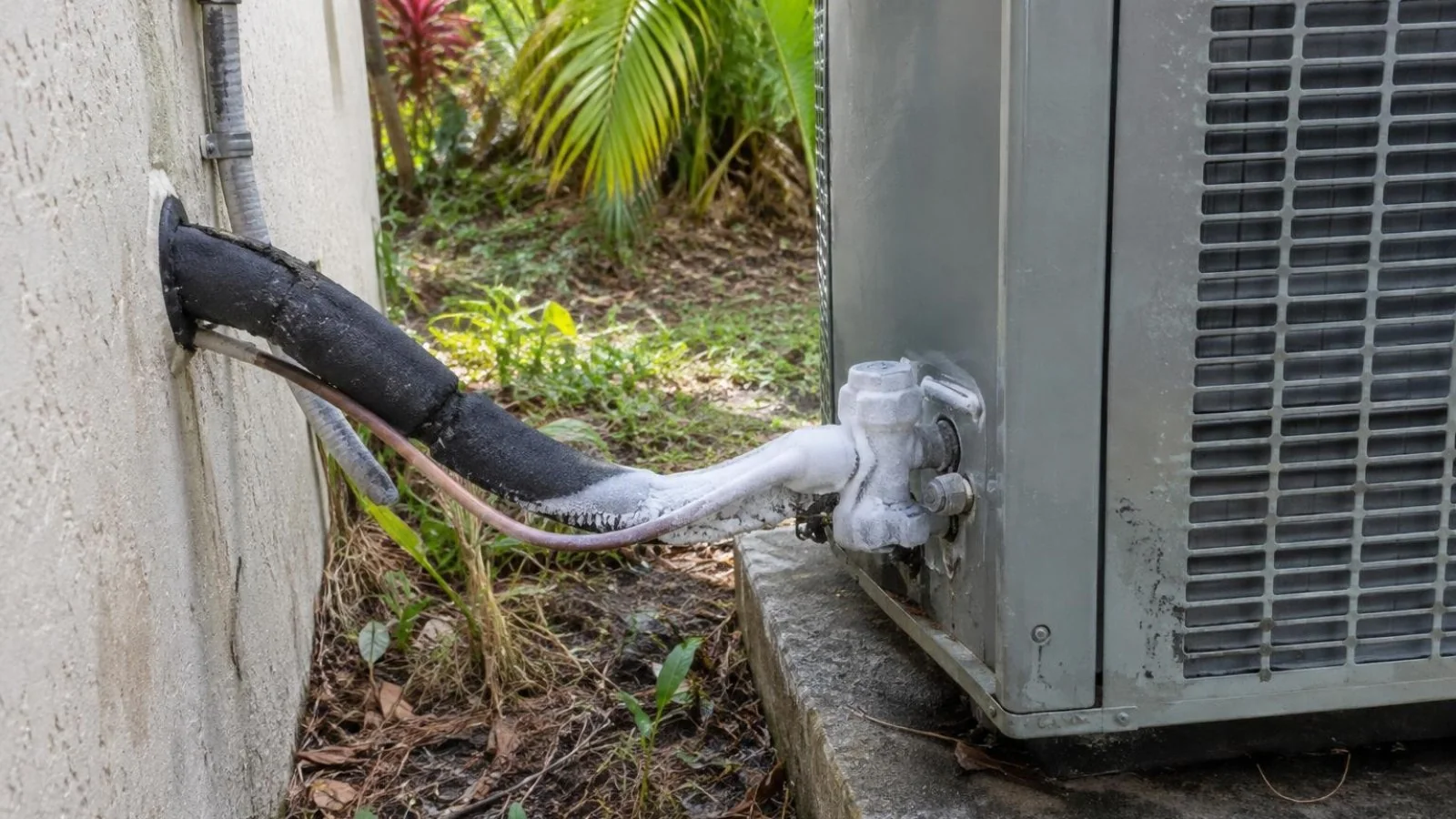
Low airflow or low refrigerant can turn the coil into a block of ice. Air cannot pass through, so the system stops and starts. If you see ice on the copper line or the air handler, turn the system off and set the fan to ON so it can thaw.
3. A thermostat in the wrong place
A thermostat in direct sun, next to a supply vent or near the kitchen reads the wrong temperature. It thinks the house is already cool, stops the system and calls for it again a few minutes later. Weak batteries or loose wiring can do the same.
4. A full drain pan or clogged drain line
Many air handlers have a float switch that cuts the system off when water backs up in the pan. As the water level moves, the unit turns off and on. Our guide to an AC leaking water inside explains what to look for.
5. Low refrigerant
A system that is low on refrigerant has a leak. Pressures drop, a safety switch opens and the compressor stops. Adding refrigerant without finding the leak only delays the same call.
6. A failing capacitor or contactor
These are the electrical parts that help the compressor and fan motor start and keep running. Heat and age wear them out. When one is weak, the outdoor unit may try to start, hum and shut off. See our AC capacitor replacement guide for the signs.
7. An oversized system
An air conditioner that is too big cools the house so fast that it shuts off before it has removed the humidity. If your system has short cycled since the day it was installed, size is the first suspect. We explain how sizing works in what size AC you need in Southwest Florida.
What You Can Check Yourself
These checks are safe for a homeowner and take about ten minutes:
- Look at the filter. If you cannot see light through it, replace it.
- Check the thermostat. Confirm it is on COOL and AUTO, replace the batteries if it uses them, and make sure no lamp, TV or sunny window is heating it.
- Open the supply vents. Closed vents in unused rooms reduce airflow for the whole system.
- Look at the air handler. Water in the pan, a wet floor or ice on the lines tells the technician where to start.
- Look at the outdoor unit. Clear leaves, grass and anything stored against it.
Do not open electrical panels on the equipment, and do not add refrigerant yourself.
When to Turn It Off and Call
Stop running the system and call if:
- The cycles last only a few minutes after you changed the filter.
- You see ice, standing water or a tripped breaker.
- The outdoor unit hums or clicks and does not start.
- The house feels humid even though the thermostat shows the set temperature.
Write down how long the unit runs and how long it rests. That one note makes the diagnosis faster.
How a Technician Finds the Cause
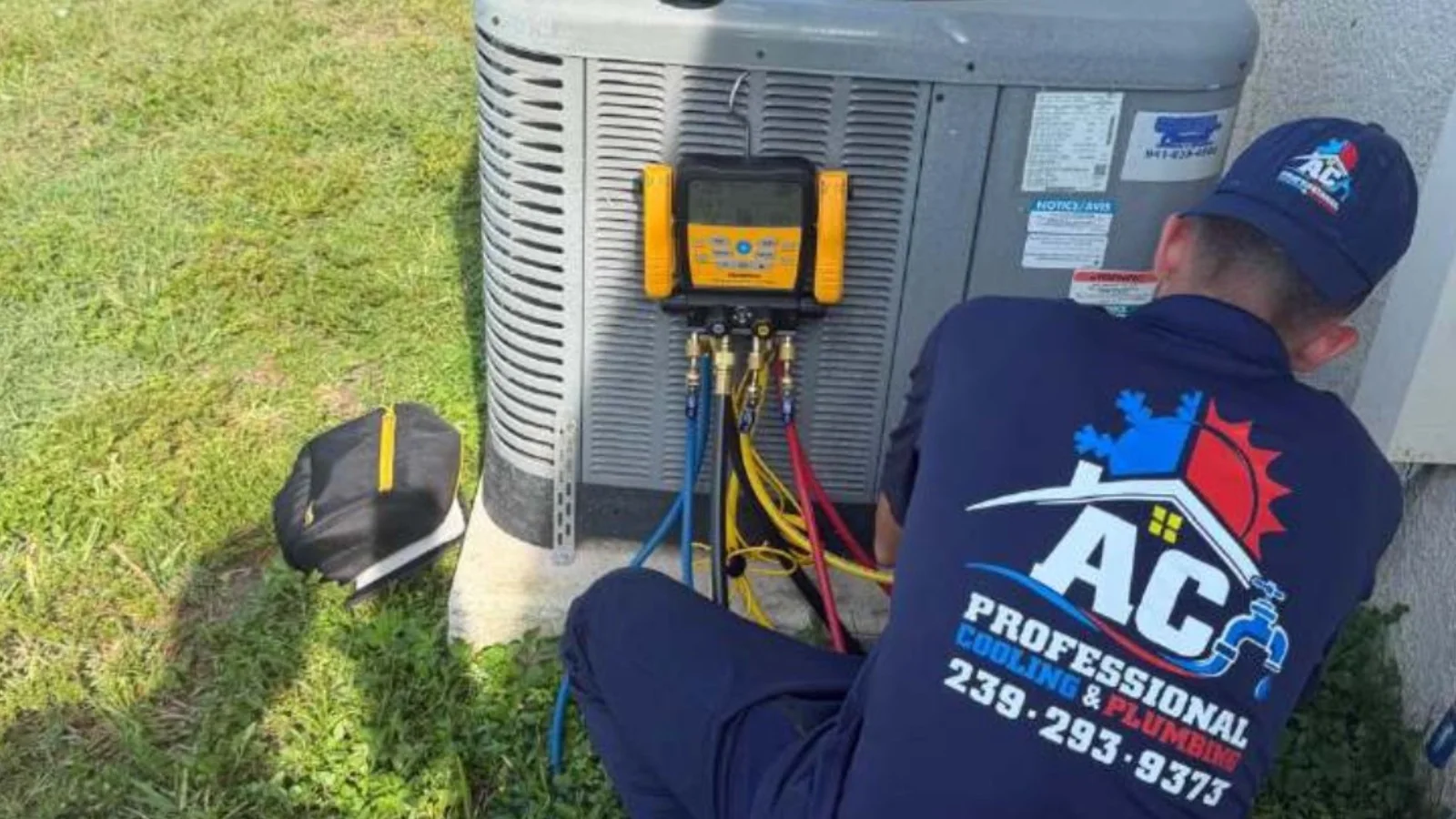
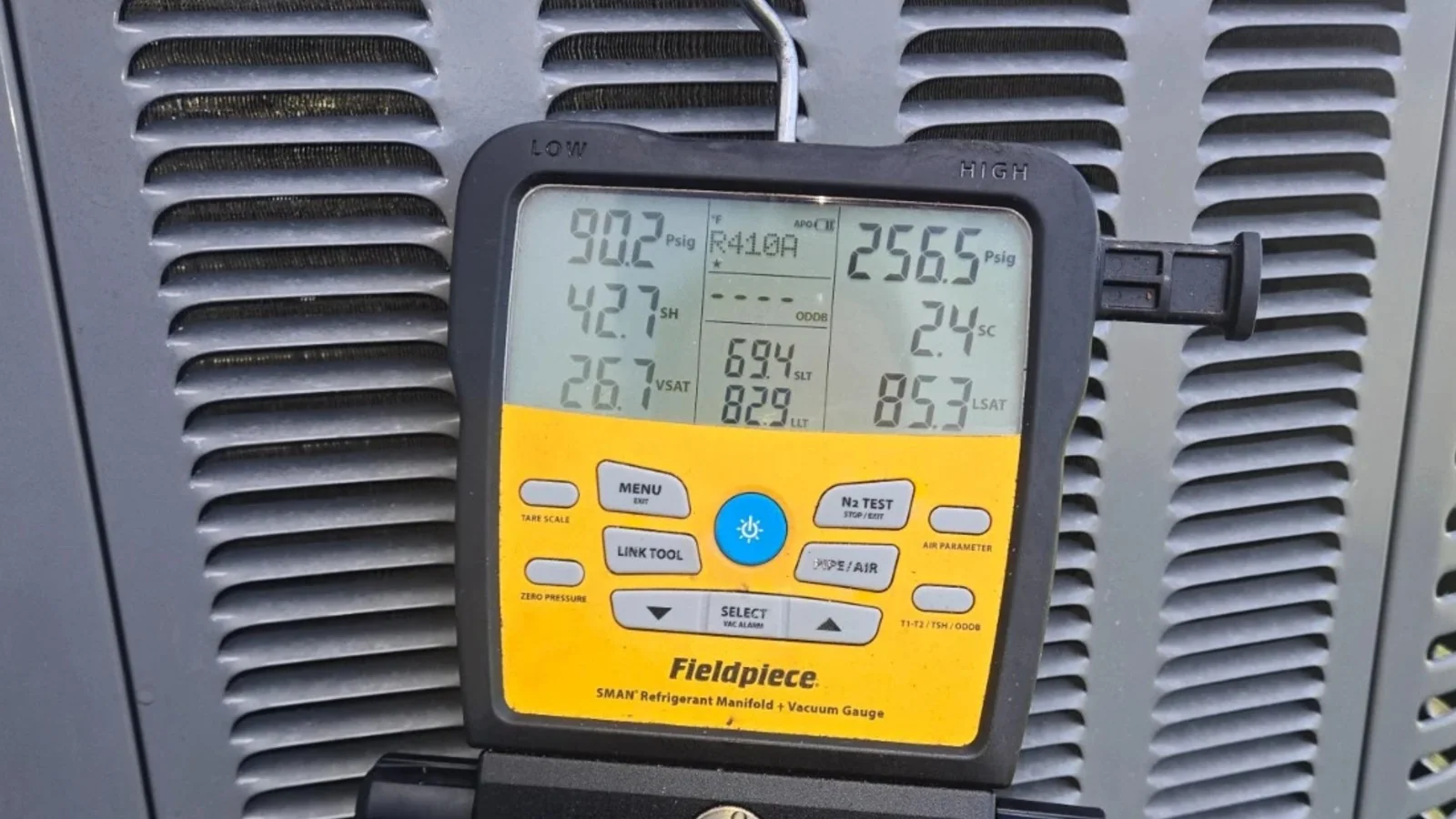
A proper visit does not start with a guess. The technician measures airflow and temperatures across the coil, checks refrigerant pressures, tests the capacitor and contactor, inspects the drain safety switch and looks at where the thermostat sits. If the system is oversized, you should hear that plainly, along with your options.
At AC Professional Cooling & Plumbing you get the diagnosis and the estimate in writing before any repair starts. If it does not need replacing, we tell you.
Short Cycling in Cape Coral, Fort Myers or Naples? Get It Checked
A system that keeps turning on and off is asking for attention before a small part becomes a compressor. We serve Cape Coral, Fort Myers, Naples, Bonita Springs and Estero.
Call (239) 293-9373 or request AC repair and tell us what you noticed.