It feels wrong to find ice on an air conditioner when it is warm and humid outside. But an AC freezing up is common in Southwest Florida, and it has nothing to do with the weather being cold. It means something inside the system is out of balance.
This guide explains what to do right now, what causes the ice, what you can check yourself and when the system needs a licensed technician.
If the system ices again after a clean filter and open vents, the cause is inside the equipment, most often low refrigerant, a dirty coil or a blower problem. That needs a technician.
How to Tell Your AC Is Frozen
You may not see the ice at first, because the coil is inside the air handler. Look for these signs:
- Weak air from the vents, or air that is not cold.
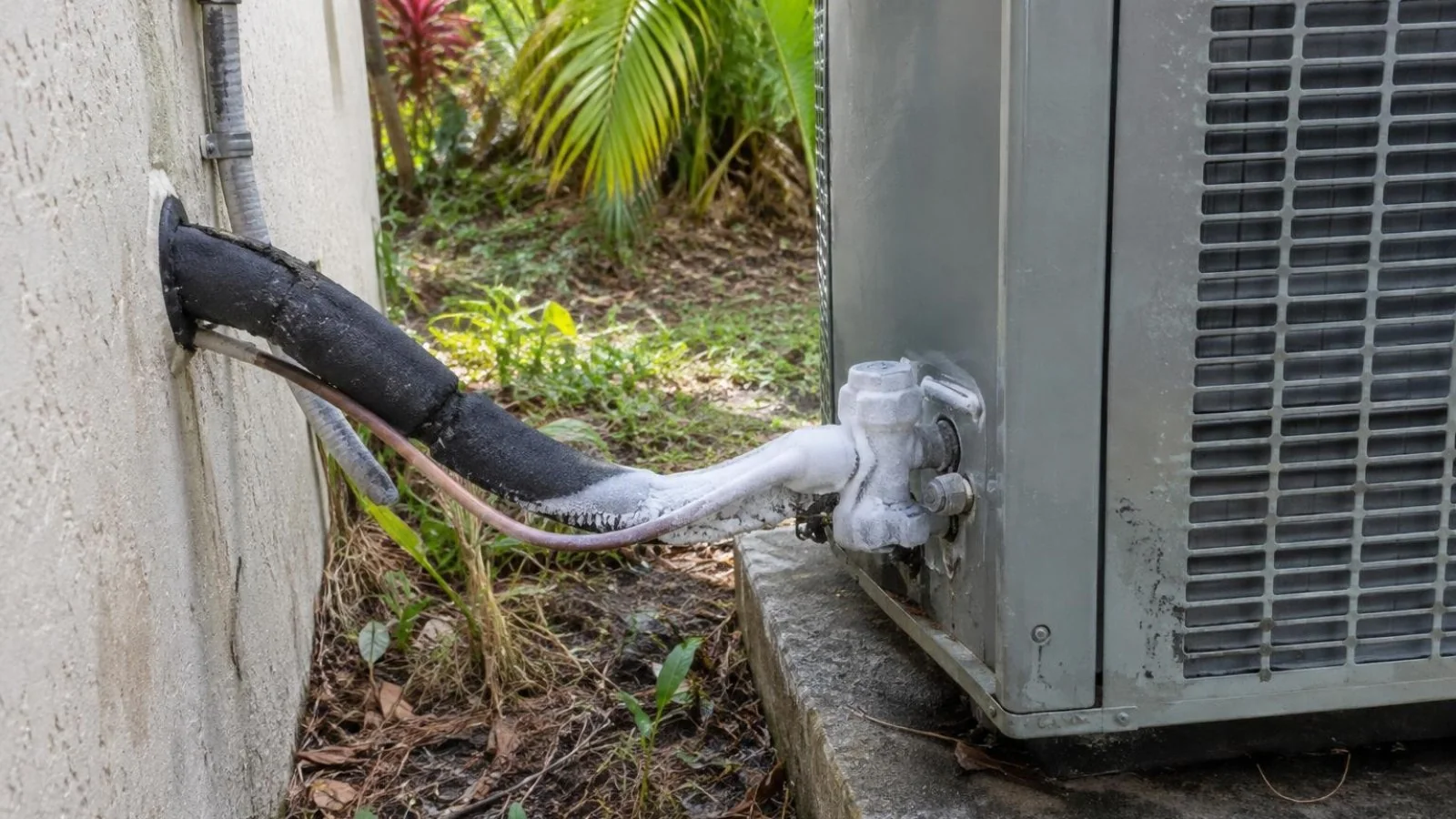
- Ice or frost on the copper line at the outdoor unit.
- Water around the air handler after the system has been off for a while.
- The system runs constantly and the house keeps getting warmer.
- A hissing or bubbling sound near the indoor unit.
Why an AC Freezes Up
The indoor coil removes heat from the air that passes over it. When too little warm air reaches the coil, or the refrigerant pressure drops, the coil temperature falls below freezing. Humidity in the air then turns to ice on its surface. In our climate there is plenty of humidity to feed it.
Six causes account for most cases:
1. A clogged air filter
This is the most common one. A dirty filter chokes the airflow, the coil gets too cold and ice starts to form.
2. Closed or blocked vents
Furniture over a return grille or several supply vents closed in unused rooms can reduce airflow enough to cause the same effect.
3. A dirty evaporator coil
Dust that gets past the filter builds up on the coil and insulates it. Air cannot transfer its heat, and the coil freezes.
4. Low refrigerant
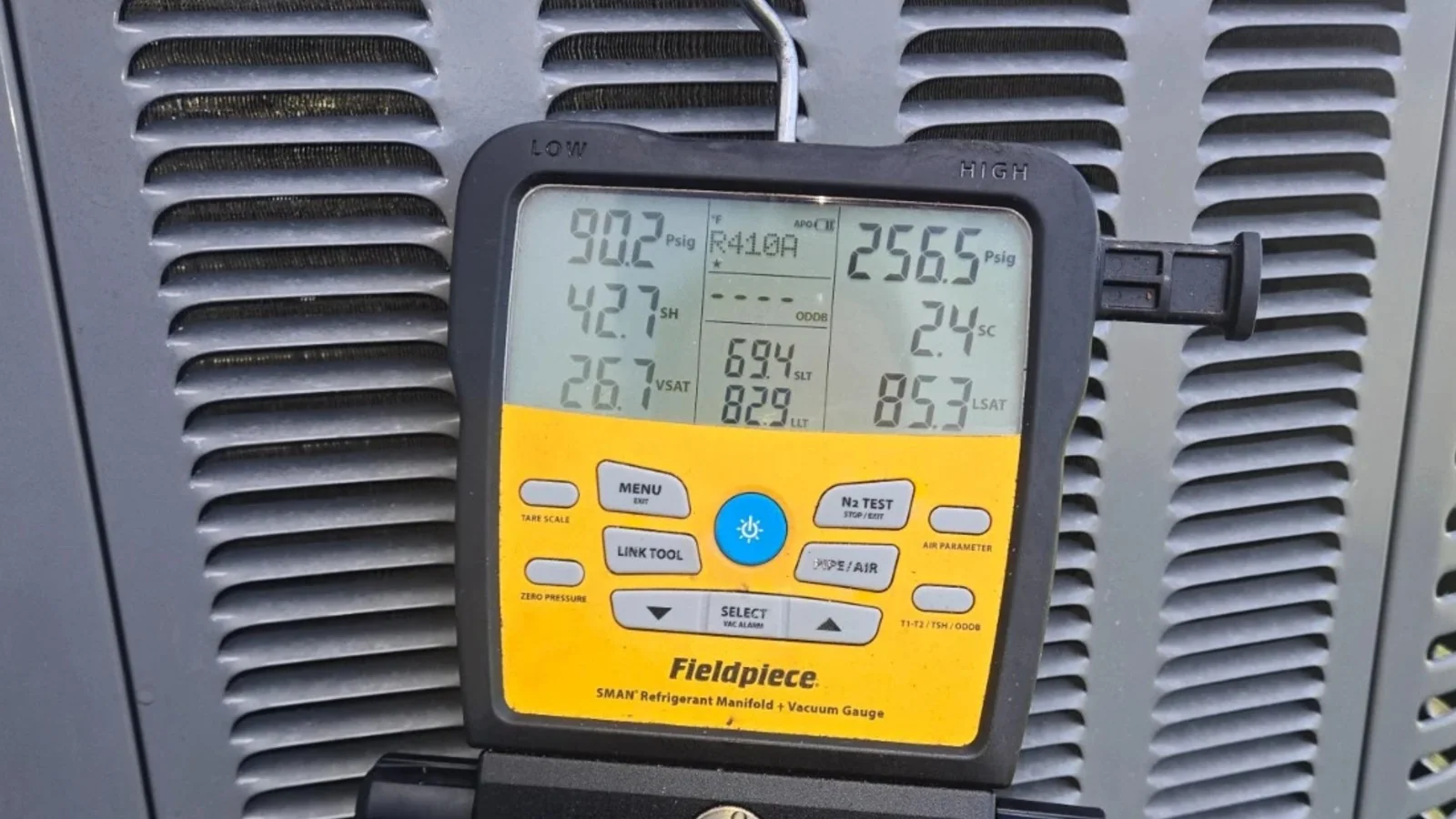
Refrigerant does not get used up. If the level is low, there is a leak. Low pressure makes the coil colder than normal, and ice follows. Adding refrigerant without finding the leak only delays the next freeze.
5. A blower problem
A failing blower motor, a weak capacitor or a dirty blower wheel moves less air than the system needs.
6. A clogged drain line or a very low thermostat setting
Standing water near the coil can freeze and spread. Setting the thermostat far below what the system can reach makes it run without rest, which adds to the risk when airflow is already marginal.
What You Can Do Before You Call
- Turn the cooling off. Do not keep running a frozen system. Liquid refrigerant can reach the compressor and damage it.
- Set the fan to ON. Let it run until the ice is gone. This can take a few hours.
- Replace the filter if you cannot see light through it.
- Open every supply vent and clear anything covering the return grille.
- Put towels down near the air handler. Melting ice can overflow the drain pan.
- Restart the cooling once everything is dry and watch it for a day.
Do not chip or scrape the ice. The fins on the coil are thin and bend easily.
If weak airflow was the first thing you noticed, our guide on weak AC airflow in Florida covers the causes in more detail.
When to Call a Technician
Call if any of these apply:
- The ice comes back after a new filter and open vents.
- You see ice on the outdoor refrigerant line.
- You hear hissing near the indoor unit.
- The blower does not start or sounds different.
- Water has reached the ceiling, the floor or the walls.
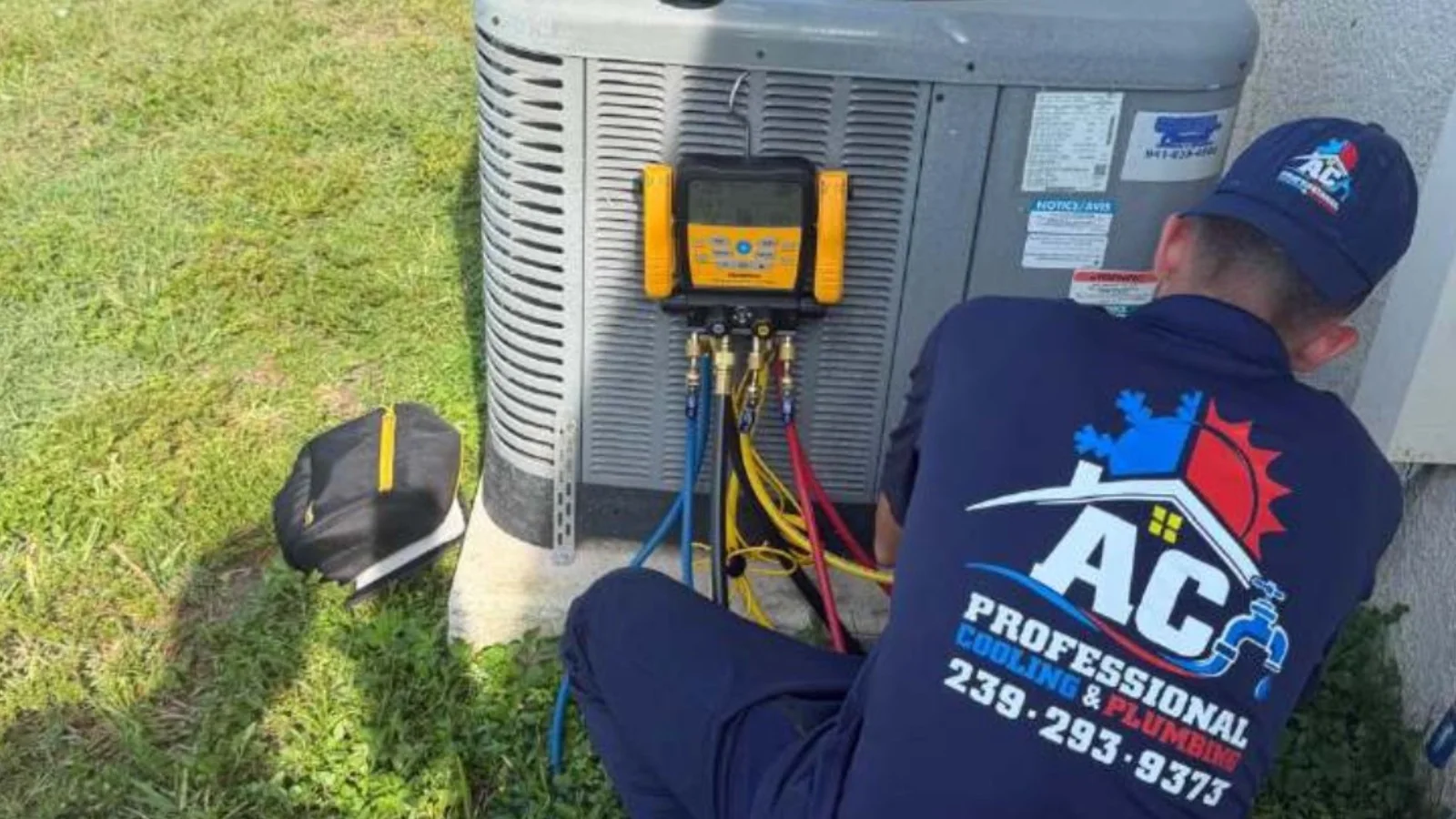
A technician checks refrigerant pressures, looks for leaks, measures airflow and inspects the coil and the blower. AC Professional Cooling & Plumbing gives you the price in writing before any work starts. You can read what a visit covers on our AC repair page.
How to Keep It from Happening Again
Most frozen coils start as an airflow problem that grew slowly. A few habits prevent it:
- Check the filter every month and change it when it looks gray.
- Keep vents open and returns clear.
- Have the coil, the blower and the drain line cleaned during regular AC maintenance.
- Pay attention to small changes: longer run times, weaker air or a higher power bill.
AC Repair in Cape Coral, Fort Myers and Naples
AC Professional Cooling & Plumbing is a licensed and insured HVAC contractor based in Cape Coral (CAC1823099), with same-day and next-day service 7 days a week and 200+ Google reviews. If your AC keeps freezing up, call (239) 293-9373 and we will find the cause and explain your options before any work starts.