An air conditioner in Southwest Florida runs most of the year, so you know what yours sounds like. When that sound changes, pay attention. An AC making noise it did not make last month is giving you an early warning, usually before it stops cooling.
This guide explains what each sound usually means, what you can check yourself and when to turn the system off.
Replace a dirty filter and clear debris from around the outdoor unit. If you hear banging, screeching or loud hissing, or the unit hums and does not start, turn the system off at the thermostat and call a technician.
What Each AC Noise Usually Means
Buzzing or humming
A steady, low hum is normal. A loud buzz from the outdoor unit is not. It often comes from an electrical part that is wearing out, such as the contactor or the capacitor, or from a fan motor that is struggling to turn. If the unit buzzes and the fan does not spin, turn it off. Our AC capacitor replacement guide covers the signs of that part failing.
Clicking
One click when the system starts and one when it stops is normal. Clicking that repeats, or a unit that clicks and never starts, points to an electrical control or to the thermostat.
Banging or clanking
A bang or a clank usually means a part has come loose or broken inside the outdoor unit or the blower. It can also be a fan blade hitting something. This is the sound that does the most damage when the system keeps running.
Squealing or screeching
A high-pitched squeal usually comes from a blower motor or a fan motor with worn bearings. A loud, metal-on-metal screech from the outdoor unit is more serious. Turn the system off and leave it off until it is inspected.
Hissing or bubbling
A soft whoosh of air at the vents is normal. A hiss or a bubbling sound near the indoor unit or along the copper lines can mean refrigerant is leaking. A hiss in the attic or behind a wall can also be air escaping from a duct that has come apart.
Rattling
Rattling is often the least serious sound. Loose panel screws, a twig or a palm frond in the outdoor unit, or a unit that has shifted on its pad can all cause it. It still deserves a look, because a loose part does not stay harmless for long.
Sounds That Are Normal
Not every sound is a problem. These are part of normal operation:
- A click at the thermostat and at the outdoor unit when a cycle starts.
- A steady hum from the outdoor unit while it runs.
- Air moving through the vents.
- Water dripping or trickling at the drain line outside. In our humidity, the system removes a lot of water from the air.
- A light ticking from the ducts as the metal cools down or warms up.
The useful question is whether the sound is new, louder than before or coming with another symptom, such as weaker air or a house that feels humid.
What You Can Check Yourself
These checks are safe for a homeowner and take a few minutes:
- Find where the sound comes from. Is it the outdoor unit, the air handler, a vent or the thermostat?
- Look at the filter. Replace it if you cannot see light through it. A clogged filter can make the system whistle and strain.
- Look at the outdoor unit with the system off. Remove leaves, branches and anything leaning against it.
- Check the panels. If you can see a loose screw on an outside panel, tighten it.
- Open the supply vents. A vent that is closed or blocked by furniture can whistle.
- Write down when it happens. At startup, during the cycle, at shutdown or all the time.
Do not open the electrical compartment and do not reach into the fan, even with the system off at the thermostat.
If the noise comes with less air from the vents, our guide to weak AC airflow in Florida explains what else to look for.
When to Turn It Off and Call
Stop running the system and call if:
- You hear banging, clanking or metal scraping.
- The outdoor unit hums or buzzes and the fan does not spin.
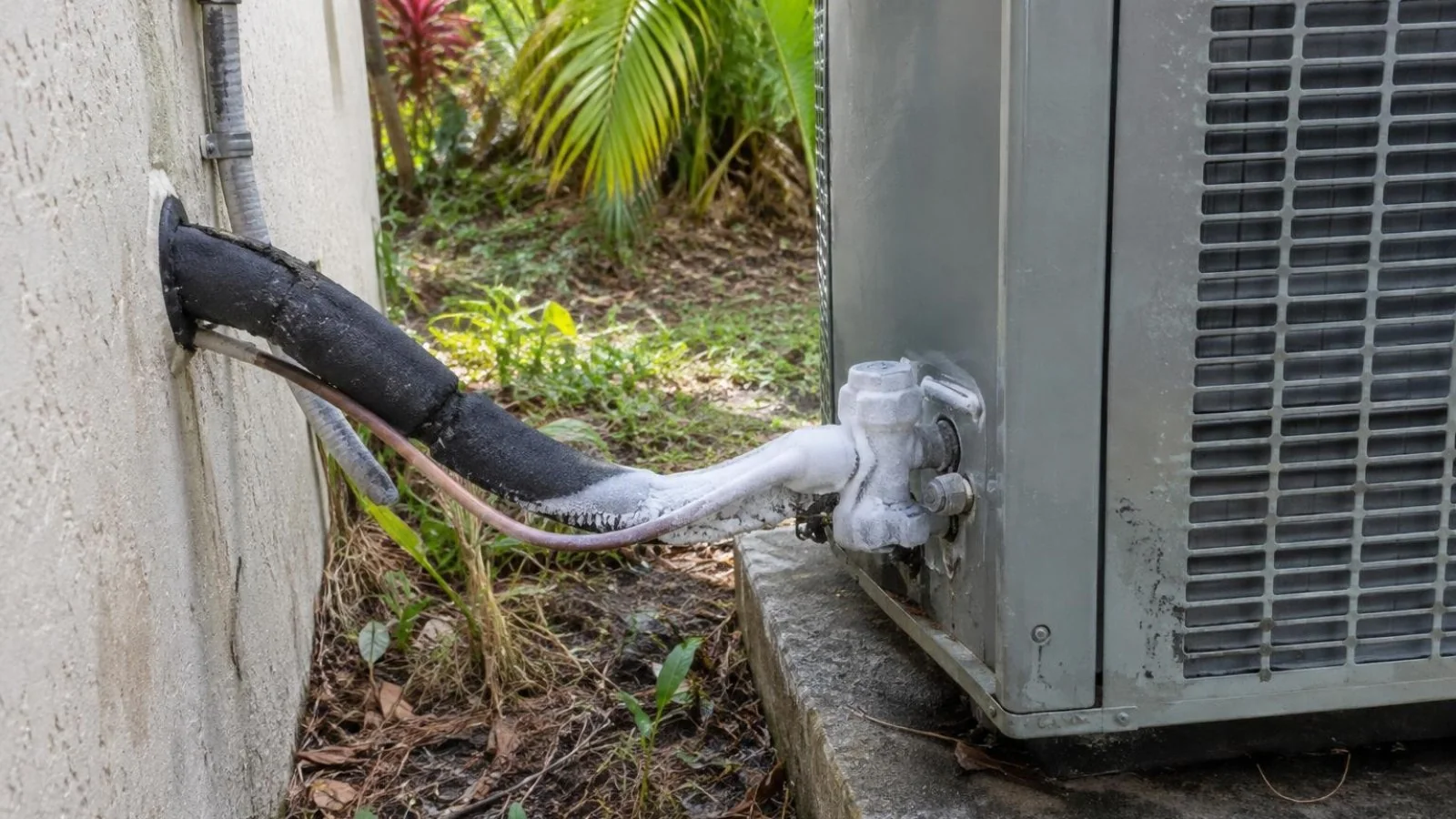
- You hear a loud hiss or see ice on the copper line.
- You smell something burning.
- The breaker trips when the system tries to start.
- The noise comes with warm air from the vents.
How a Technician Finds the Source
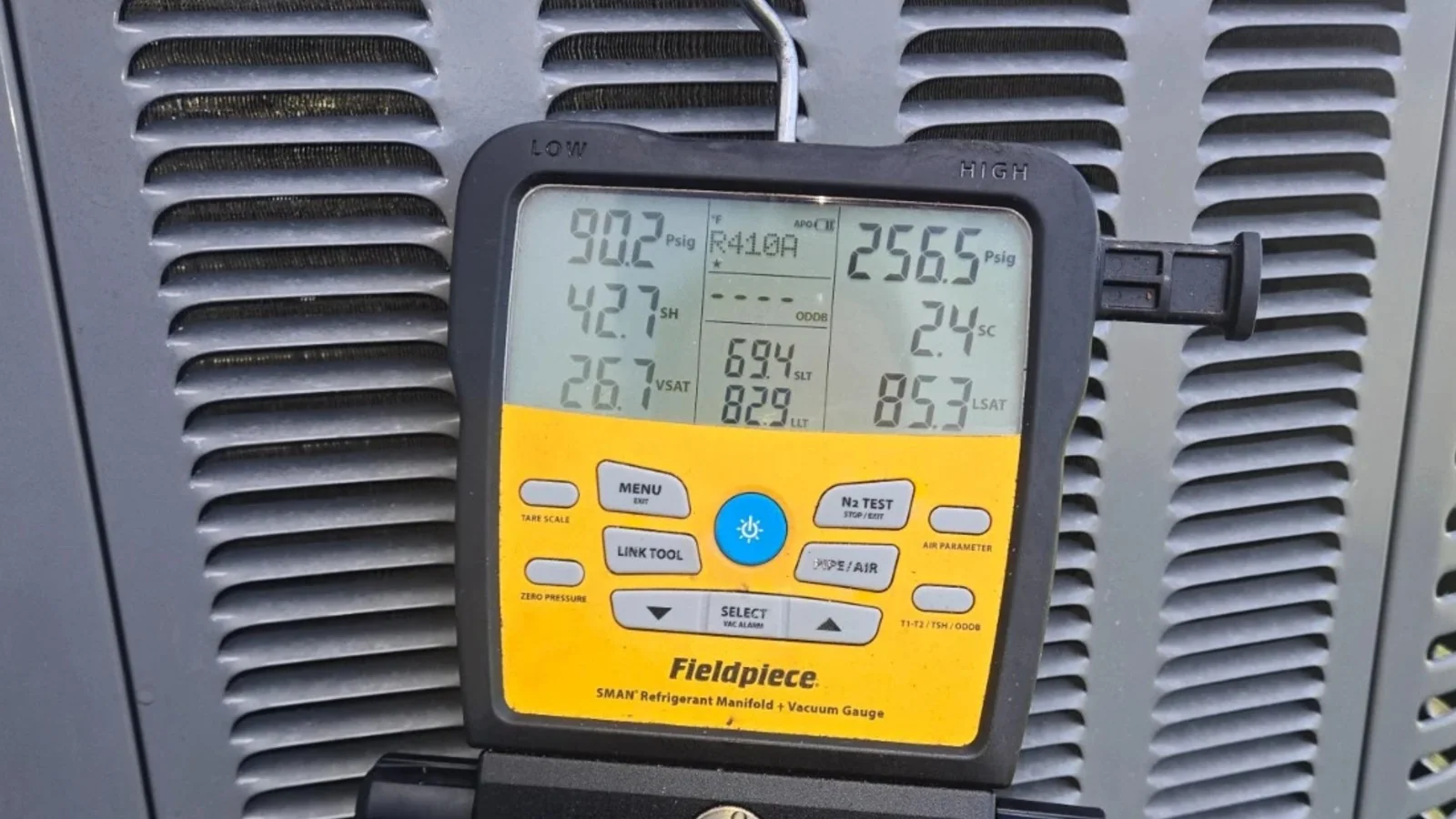
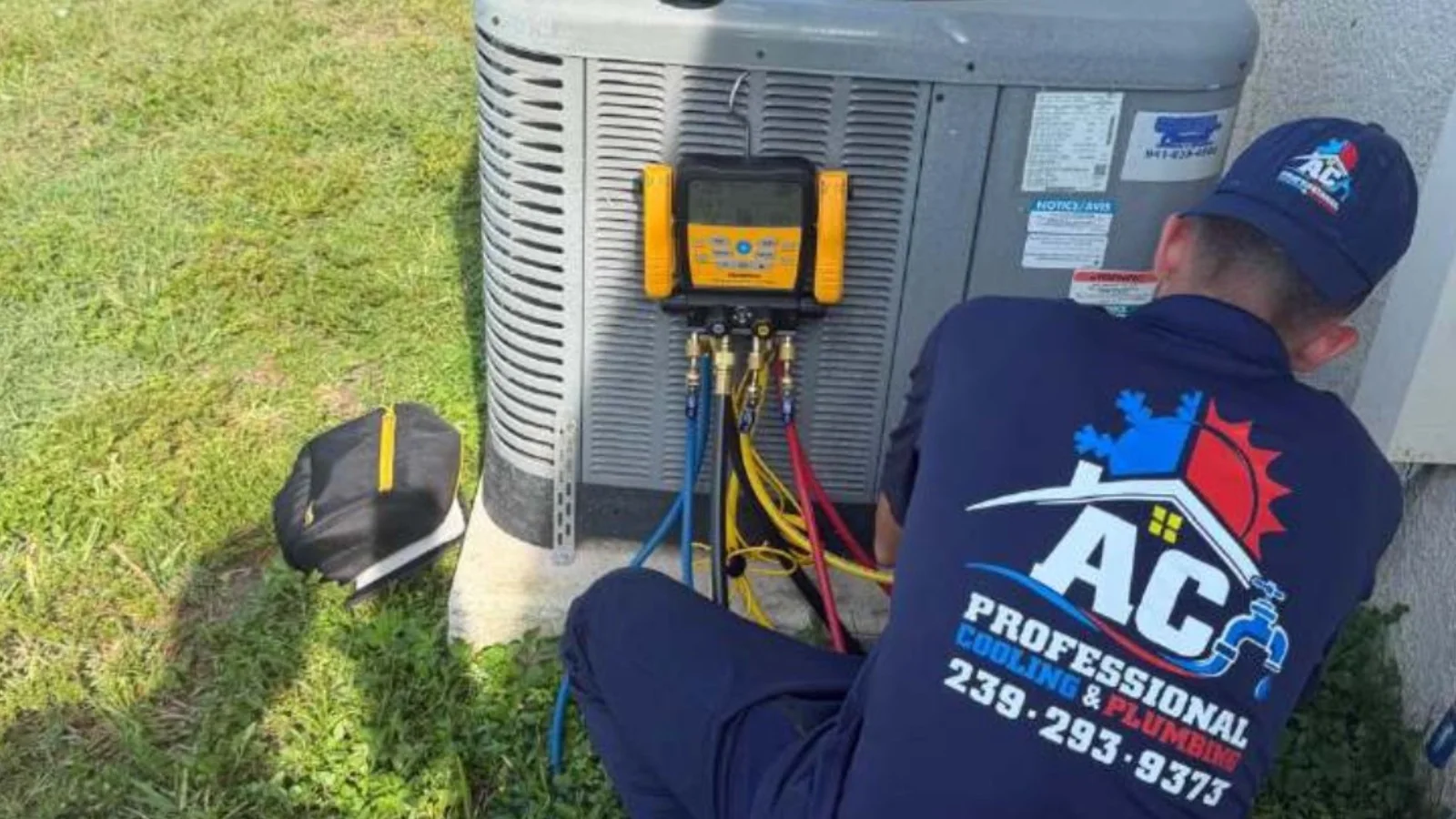
A good visit starts with listening. The technician runs the system, locates the sound and then tests the parts behind it. That means checking the capacitor and the contactor, inspecting the fan motors and blades, looking at the compressor, checking refrigerant pressures when there is a hiss and inspecting the blower and the duct connections.
AC Professional Cooling & Plumbing gives you the diagnosis and the price in writing before any repair starts. If the system does not need replacing, we tell you. You can read what a visit covers on our AC repair page.
How to Keep Small Noises from Becoming Repairs
Many noises start as a loose fastener, a dirty blower wheel or a part that is beginning to weaken. Those are found during regular AC maintenance, when the technician tightens electrical connections, cleans the coil and the blower and tests the parts that help the system start.
Between visits, change the filter on schedule and keep plants and yard debris away from the outdoor unit.
AC Repair in Cape Coral, Fort Myers and Naples
AC Professional Cooling & Plumbing is a licensed and insured HVAC contractor based in Cape Coral (CAC1823099), with same-day and next-day service 7 days a week and 200+ Google reviews. If your AC is making a noise you do not recognize, call (239) 293-9373 and tell us what you hear. We will find the cause and explain your options before any work starts.