
Common reasons include short cycling, restricted airflow, a dirty indoor coil, a condensate drain problem, duct leakage, or equipment that is not well matched to the home. A professional evaluation can separate a simple maintenance issue from a repair or sizing problem.
The EPA recommends keeping indoor relative humidity below 60%, ideally between 30% and 50%. That target is useful in Florida because it gives homeowners a number they can monitor instead of relying only on how the room feels.
Humidity, relative humidity, and dew point in plain language
Humidity means moisture in the air. Two measurements help explain how that moisture affects comfort.
Relative humidity (RH) is the percentage shown on a humidity meter. A reading of 55% means the air is holding 55% of the moisture it could hold at that temperature.
Dew point describes how much moisture is actually in the outdoor air. The higher the dew point, the muggier the air usually feels. It also means every opening, duct leak, or air leak can bring a heavier moisture load into the home.
You do not need to calculate either number. An inexpensive digital hygrometer can show indoor RH, while a weather app can show the outdoor dew point.
How your AC removes moisture
Warm indoor air passes over the cold evaporator coil. Water vapor condenses on that coil, much like water forming on the outside of a cold glass. The water drops into a drain pan and leaves through the condensate line.
This process needs enough runtime. If the system turns on, cools the room quickly, and shuts off before removing enough moisture, the thermostat may look normal while the house still feels clammy.
The ENERGY STAR guide to right-sized air conditioning explains that oversized equipment can run in short cycles and provide less effective dehumidification. Size is not the only possible cause, but it is one reason a professional load evaluation matters before replacing equipment.
Why Southwest Florida homes face a heavier moisture load
Cape Coral, Fort Myers, Naples, Bonita Springs, Estero, and nearby communities regularly experience warm air with high dew points. The National Weather Service Fort Myers dew point records show a record stretch of 13 consecutive days with dew points of at least 73°F in August 2023. In everyday terms, that is nearly two weeks of very muggy outdoor air.
This does not mean every home will have an indoor humidity problem. It means the AC, ductwork, drainage, and building envelope must manage moisture as well as temperature.
The U.S. Department of Energy notes that homes in hot-humid climates can feel cold and clammy when temperature drops but indoor moisture remains high.
Signs your AC may not be controlling humidity well
Watch for patterns rather than a single momentary reading:
- The home feels sticky even when the thermostat reaches its setting
- Indoor RH repeatedly stays above 60%
- Windows, supply vents, or cool surfaces collect condensation
- The AC starts and stops in short bursts
- Some rooms feel damp while others feel normal
- Musty odors return after cleaning
- Water, rust, or overflow appears near the air handler or drain pan
- Bedding, floors, or upholstered furniture feel damp
These signs are clues, not a diagnosis. The same symptom can come from airflow, drainage, ductwork, equipment controls, or moisture entering from outside.
Common reasons a cool home can still feel humid
Short cycling
Short cycling means the system turns on and off before completing a longer cooling and moisture-removal cycle. Thermostat issues, airflow restrictions, equipment faults, or an oversized system can contribute.
Restricted or unbalanced airflow
A clogged filter, blocked return, closed supply vents, a dirty blower, or an airflow imbalance can change how air moves across the coil and through the home.
Dirty evaporator coil
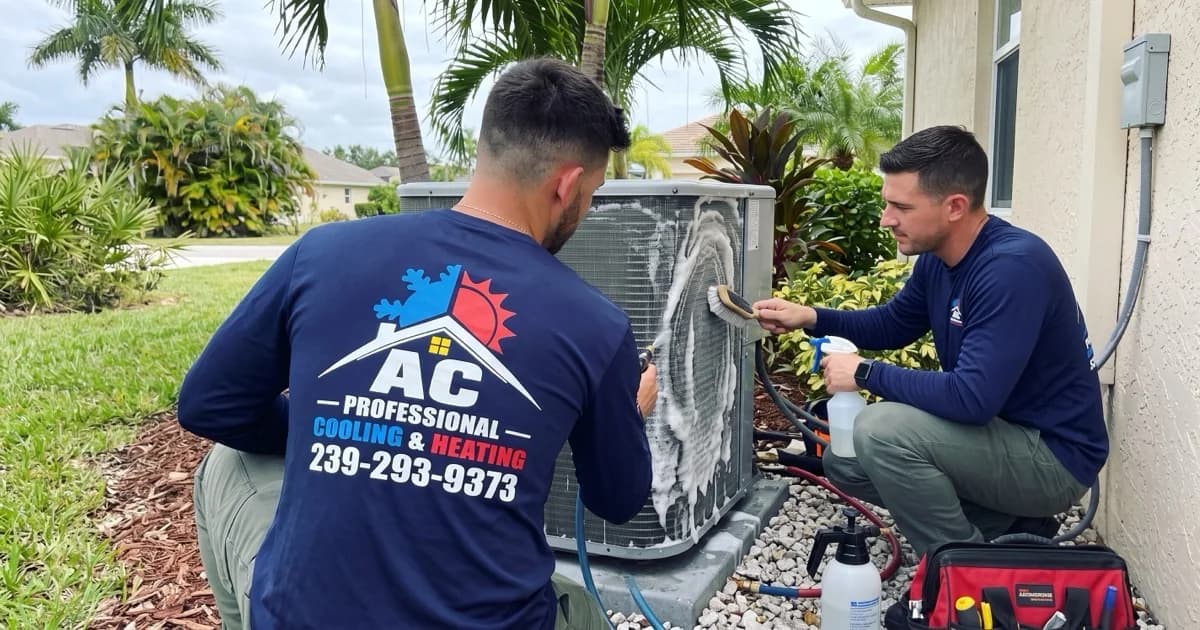
The evaporator coil is where moisture condenses. Buildup on the coil can interfere with heat transfer and airflow, making both cooling and moisture removal less effective.
Condensate drain or pan problems
The moisture collected by the coil has to leave the home. A restricted drain line, damaged pan, or incorrect drainage can create wet conditions near the system and may cause water damage.
Duct leakage
Leaky return ducts can pull hot, humid air from an attic, garage, or other unconditioned space. Leaky supply ducts can lose conditioned air before it reaches the room. Both situations make comfort and humidity control harder.
Equipment sizing or control settings
A system that is too large may cool the home quickly but run too briefly to remove enough moisture. Blower speed, thermostat behavior, and equipment staging can also affect dehumidification. Square footage alone is not enough to select the correct system.
Safe checks homeowners can do first
Check the thermostat mode
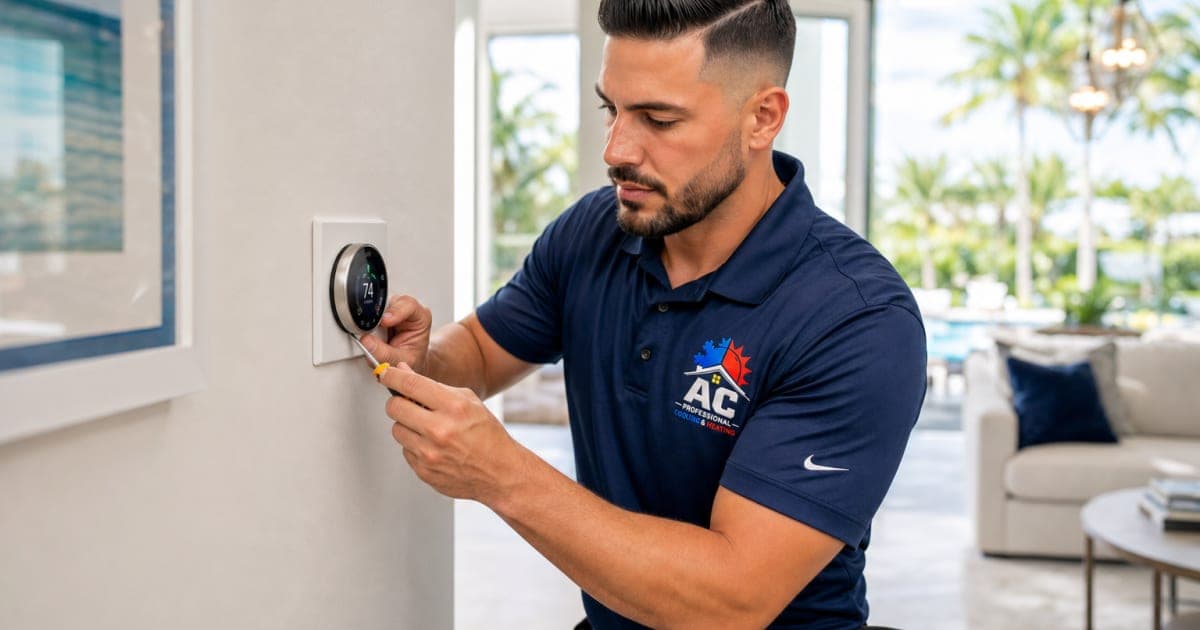
Confirm that the thermostat is set to cool. In many homes, using the fan setting AUTO instead of ON helps because the blower stops between cooling cycles. Equipment and humidity-control setups vary, so follow the manufacturer's instructions or ask your technician if you are unsure.
Check the filter
Look for a clogged or heavily loaded filter. Replace it with the correct size and type recommended for your system. Do not install a more restrictive filter without confirming that the equipment can handle it.
Measure indoor RH
Place a digital hygrometer in a living area away from a supply vent, bathroom, kitchen, or direct sunlight. Check it at different times for several days. A repeated pattern above 60% is more useful than one brief spike after cooking or showering.
Watch the runtime
Note whether the system runs for a reasonable stretch or turns on and off every few minutes. You do not need to diagnose the cause; the pattern gives a technician useful information.
Look for visible water without opening the equipment
Check the area around the air handler for standing water, staining, rust, or overflow. Do not remove panels, touch wiring, handle refrigerant lines, or clear a drain with chemicals unless a qualified professional has told you it is safe for your system.
Notice where the problem occurs
If only one room or one side of the home feels damp, note the location and time of day. That may help identify an airflow, duct, insulation, or outdoor-air issue.
Practical ways to reduce indoor moisture and mold-friendly conditions
Humidity control starts with stopping extra moisture from entering or remaining in the home.
- Repair plumbing, roof, window, and drainage leaks promptly
- Dry wet materials within 24 to 48 hours when practical
- Use bathroom and kitchen exhaust fans that vent outdoors
- Keep exterior doors and windows closed while the AC is running
- Keep supply vents and return grilles unobstructed
- Replace filters on the schedule appropriate for the home and system
- Keep the condensate system inspected and maintained
- Use a hygrometer to track trends instead of guessing
- Have recurring condensation, musty odors, or water near the AC evaluated
The Florida Department of Health mold guidance emphasizes controlling moisture, checking AC coils, drain pans, and drain lines, and keeping indoor humidity below 60%. It also notes that the source of moisture must be corrected or mold can return.
If visible mold keeps returning, the affected area is extensive, or water damage is involved, consider a qualified moisture or remediation professional. HVAC cleaning alone cannot correct an active roof, plumbing, drainage, or building-envelope leak.
What AC Professional evaluates during a humidity-focused visit
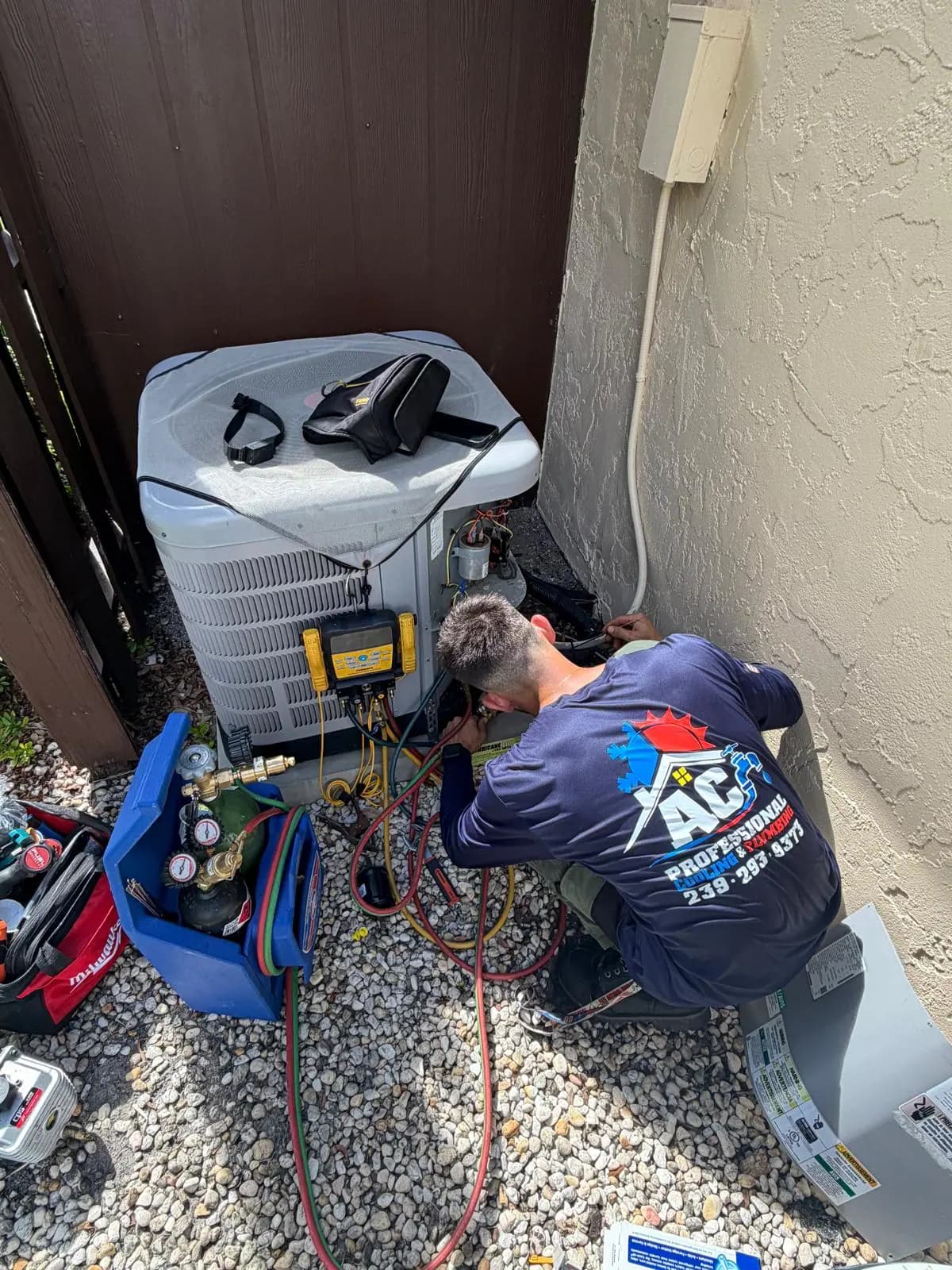
The goal is to find the reason for the moisture problem before recommending work. Depending on the symptoms and equipment, a technician may evaluate:
- Indoor temperature and relative humidity
- Cycle length and start-stop frequency
- Thermostat and fan settings
- Filter condition and airflow
- Evaporator coil condition
- Drain pan and condensate line
- Duct condition, leakage, and room-to-room balance
- Equipment capacity and the home's cooling load
- Whether maintenance, repair, duct work, or added humidity control is appropriate
This process helps avoid replacing parts or equipment based on guesswork. If buildup and airflow are part of the concern, learn about Indoor Air Quality Deep Cleaning. For seasonal inspection and condensate care, review AC Maintenance. If the system is short cycling or not cooling correctly, start with AC Repair.
When to call an HVAC professional
Schedule an evaluation when indoor RH stays above 60% for days, the system repeatedly short cycles, water appears near the equipment, condensation returns, or a musty odor persists. Call promptly if the AC stops cooling, a safety switch shuts the system down, or water is spreading beyond the drain area.
A technician can measure conditions and explain whether the next step is maintenance, a repair, duct correction, or a broader system evaluation. If replacement is eventually considered, proper sizing and humidity performance should be part of the decision, not just the equipment's cooling capacity.
Frequently asked questions
Why does my house feel humid when the AC is running?
The system may be lowering temperature faster than it removes moisture. Short cycling, restricted airflow, a dirty coil, drainage problems, duct leakage, or equipment sizing can all contribute.
What indoor humidity level should I aim for?
EPA guidance recommends below 60%, with 30% to 50% as the ideal range. In Southwest Florida, staying near the upper part of that ideal range may be more realistic during very humid weather, but repeated readings above 60% deserve attention.
Can a dirty filter cause humidity problems?
A clogged filter can restrict airflow and affect how the system cools and removes moisture. Replace it with the correct filter, then monitor whether comfort and runtime improve.
Does lowering the thermostat remove more humidity?
Not necessarily. A lower setting may increase runtime, but it does not correct dirty coils, drainage problems, duct leaks, airflow issues, or incorrect sizing. Continually lowering the temperature can leave the home cold without solving the moisture source.
Do I need a whole-home dehumidifier?
Not every humid home needs one. The AC and duct system should be evaluated first. A dehumidifier may be appropriate in some homes, but it should be selected after the underlying cause and moisture load are understood.
Can AC cleaning prevent mold?
Cleaning can address buildup inside the HVAC system, but mold prevention depends on controlling moisture. Active leaks, wet materials, drainage problems, and high indoor humidity must also be corrected.
Official sources
- U.S. EPA: Moisture control and indoor humidity
- U.S. EPA: Mold, moisture, and your home
- Florida Department of Health: Mold and moisture guidance
- U.S. Department of Energy: Humidity control in hot-humid climates
- ENERGY STAR: Right-sized air conditioning
- National Weather Service: Fort Myers dew point statistics
A clear next step
If your Southwest Florida home feels sticky, damp, or uncomfortable even with the AC running, record the indoor RH and the system's cycle pattern for a few days. Those observations can help a technician find the cause faster.
AC Professional serves Cape Coral, Fort Myers, and nearby communities. Contact the team for an evaluation or call (239) 293-9373. If the visit shows that replacement or a larger project is worth considering, you can request a free estimate before deciding.