

If you are comparing Trane AC systems Southwest Florida homeowners often ask about, the right question is not just whether Trane is a good brand. The better question is whether a specific Trane model, installed the right way, fits your home’s cooling load, humidity needs, and long-term comfort goals.
In Southwest Florida, that matters more than a simple brand name. Long cooling seasons, heavy humidity, and salt exposure can all affect how an air conditioner performs over time. A system that looks great on paper can still disappoint if it is oversized, undersized, poorly matched to the thermostat, or installed without attention to ductwork and airflow.
For most homeowners, the decision should start with a proper load calculation, then move to model comparison, humidity control, sound, thermostat compatibility, warranty terms, and the full installed scope. If you want help evaluating those details for your home, AC Professional can provide a free estimate and explain the options clearly.
Why the model matters more than the brand
Two Trane systems can perform very differently in the same house. One may be a basic single-stage setup, while another may offer different operating stages, quieter operation, or better control over indoor comfort. The brand alone does not tell you how the system will feel in your home.
That is why homeowners in Cape Coral, Fort Myers, and nearby areas should compare the exact model being proposed. Ask what the system is designed to do, how it matches your home’s size, and what changes may be needed to the ductwork, thermostat, or electrical setup.
A good installer should explain the tradeoffs in plain language. If the answer is only “this is the best one,” that is not enough detail to make a confident decision.
Start with the home, not the equipment brochure
Before choosing a Trane unit, the home needs to be evaluated. A proper assessment should consider square footage, insulation, window exposure, duct condition, ceiling height, and how the house actually holds heat and humidity.
That evaluation helps determine whether the system can cool evenly without short cycling or running longer than necessary. In Southwest Florida, those issues can affect comfort fast. A system that is not matched correctly may leave some rooms sticky, noisy, or harder to keep comfortable.
What a homeowner can safely notice
You do not need to open equipment panels to spot signs that a replacement may need careful planning. Look for uneven temperatures, frequent repairs, rising humidity indoors, weak airflow, or a system that seems to run constantly without making the home comfortable.
Those signs do not prove the equipment is failing, but they do suggest the home should be evaluated before replacement. The issue may be the system size, the ductwork, the thermostat, or a combination of factors.
How to compare Trane AC models for your home
When comparing Trane AC replacement options, focus on how each model supports the way you live. Some homeowners care most about quiet operation. Others want better humidity control. Others want a simpler system with fewer features and straightforward operation.
Here are the main comparison points that matter most:
- Cooling performance: Ask how the system handles your home’s load, not just the brand name.
- Humidity control: In Southwest Florida, comfort is not only about temperature. Indoor moisture control matters too.
- Sound: Ask how the unit is expected to sound during normal operation and where it will be installed.
- Thermostat compatibility: Make sure the thermostat and system controls are matched correctly.
- Parts and service access: Ask how common parts are handled and what service support looks like after installation.
- Installation requirements: Some systems need more than a simple swap, especially if ductwork, electrical components, or the thermostat must be updated.
- Written warranty terms: Review the exact written terms for the specific equipment being proposed.
The goal is not to chase the most advanced model. The goal is to choose the model that fits the house, the budget for the project scope, and the comfort level you want day to day.
Humidity control is a major comfort factor in Southwest Florida
A home can be cool and still feel uncomfortable if the air is too damp. That is why humidity control should be part of every AC replacement conversation in this region.
If a system cools the house quickly but does not manage moisture well, the home may feel clammy or uneven. On the other hand, a system that is matched correctly and installed with the right airflow can help the home feel more balanced.
This is one reason installation quality matters so much. The equipment has to work with the ducts, thermostat, and home layout. If those pieces are not aligned, even a strong system can underperform.
Sound, placement, and neighborhood comfort
Sound is often overlooked until the new system is running. For some homes, the outdoor unit is close to a patio, bedroom, or neighbor’s property line, so noise becomes part of the decision.
Ask where the unit will sit, how vibration will be managed, and whether the selected model is a good fit for the location. A quieter system can improve daily comfort, but only if the installation supports it.
Placement also matters in Southwest Florida because of heat, moisture, and salt exposure. The outdoor unit should be installed with enough care to support airflow and service access, not squeezed into a tight spot that makes maintenance harder.
Thermostat compatibility and controls
A new AC system should work cleanly with the thermostat and controls you plan to use. That sounds simple, but mismatched controls can create comfort problems or limit how the system operates.
Before installation, ask whether your current thermostat is compatible with the proposed Trane system. If not, ask what changes are needed and why. The answer should be tied to the equipment, not just a sales preference.
If you want more precise temperature control or better scheduling, discuss that early. The right thermostat setup can make a noticeable difference in comfort and day-to-day convenience.
What a technician should evaluate before recommending replacement
A professional recommendation should include more than a quick look at the old unit. The technician should evaluate the home and the existing system as a whole.
A solid replacement assessment usually includes:
- A load calculation for the home
- Ductwork condition and airflow concerns
- Electrical compatibility
- Thermostat and control compatibility
- Indoor and outdoor unit matching
- Drainage and condensate considerations
- Space and access for installation and future service
If any of those items need changes, the final project scope may be different from a simple equipment swap. That is normal. It is better to know upfront than to discover problems after the old system is removed.
How to compare total installed scope, not just equipment
When homeowners compare AC replacement options, they sometimes focus only on the unit itself. But the total installed scope is what determines how the system will actually perform.
For example, one proposal may include only the equipment swap. Another may require duct adjustments, thermostat changes, electrical updates, or additional work to support proper airflow. Those differences affect the project, so they should be explained clearly in writing.
Ask each contractor to spell out what is included and what is not. That makes it easier to compare proposals fairly and avoid surprises later.
A safe homeowner checklist before you request estimates
You can gather useful information without opening equipment panels or handling electrical parts. Keep the checklist simple and safe.
- Note any comfort problems, such as hot rooms, humidity, or noisy operation.
- Check whether the system runs longer than it used to.
- Look at the thermostat settings and whether the home reaches them consistently.
- Make a list of rooms that feel different from the rest of the house.
- Write down the age and service history if you know it.
- Take photos of the indoor and outdoor units from a distance if helpful.
- Avoid touching wiring, refrigerant lines, or access panels.
If the system is not cooling properly, do not force it to keep running for long periods while you wait. That can make the problem worse. If you smell something unusual, hear loud electrical sounds, or see ice on the system, stop and call for professional help.
When repair makes more sense than replacement
Not every Trane-related question ends with a new system. Sometimes a repair or maintenance visit is the better next step, especially if the equipment is otherwise a good match for the home.
A technician can help compare repair versus replacement based on the system’s condition, the type of issue, and whether the home would benefit from a different size or configuration. If the problem is isolated, repair may be the right move. If the system is struggling because it was never matched well to the home, replacement may be the smarter long-term decision.
If you are unsure, a professional inspection can help you compare the options without guessing. You can also review related services like HVAC Installation, AC Replacement, AC Maintenance, and AC Repair.
Why installation quality is central to the decision
Even a well-known brand will not perform as expected if the installation is rushed or incomplete. Proper sizing, airflow, refrigerant handling, drainage, and control setup all affect how the system cools and dehumidifies the home.
That is why the installer matters as much as the equipment. In Southwest Florida, where cooling demand is long and humidity is a constant factor, careful installation can make the difference between a system that merely runs and one that actually keeps the home comfortable.
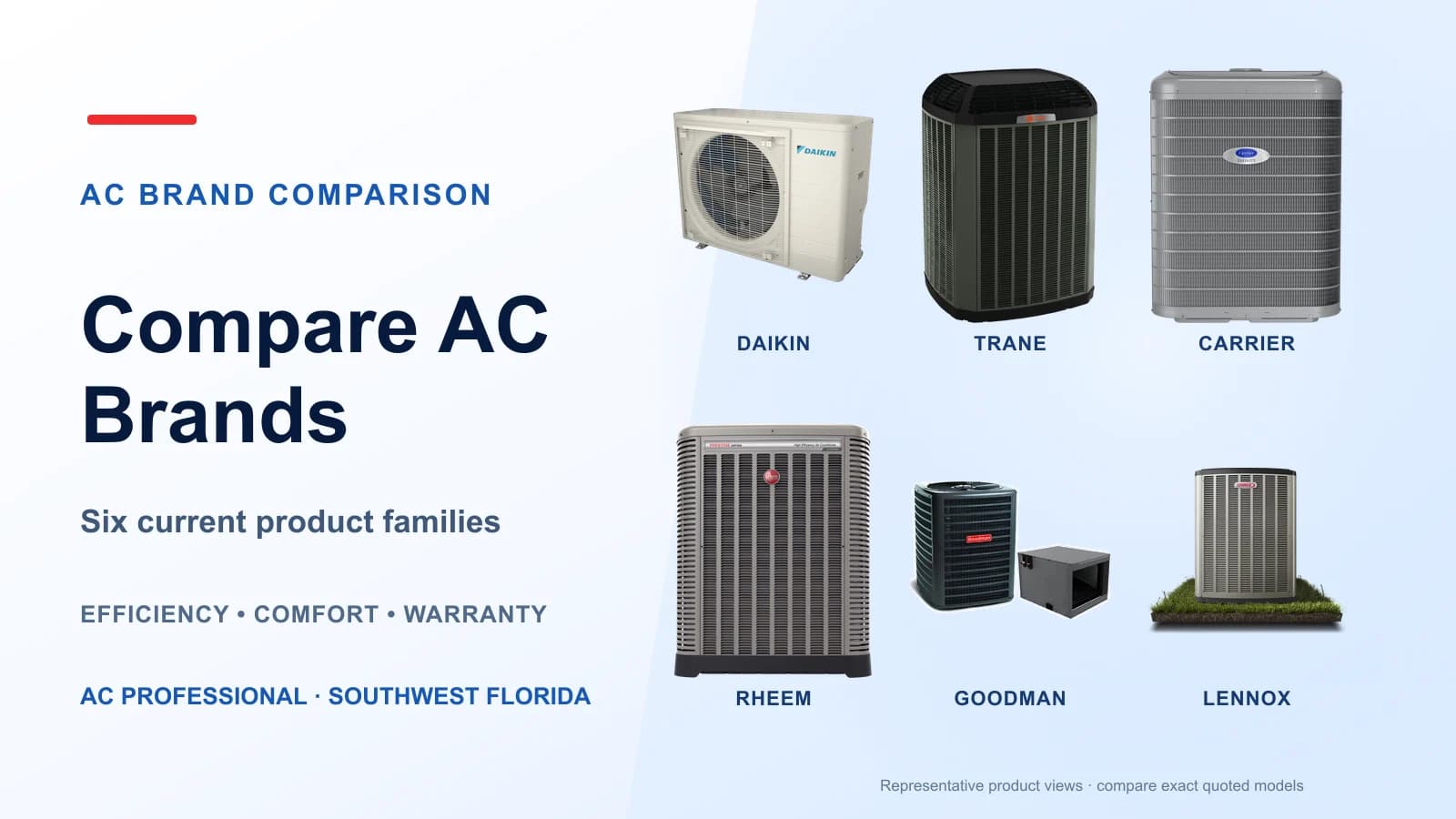
If you are comparing brands, it can also help to step back and look at the bigger picture. This guide on how AC brands compare in Southwest Florida can help you think through the decision more clearly.
How AC Professional helps homeowners decide
AC Professional Cooling & Heating, Inc helps homeowners in Cape Coral, Fort Myers, North Fort Myers, Naples, Bonita Springs, and Estero evaluate replacement options based on the home, not just the equipment label. That includes looking at the system size, installation scope, and the comfort goals you want to achieve.
If you are considering a Trane system, the best next step is a free estimate that explains the proposed model, what the installation includes, and whether any changes are needed to support proper performance. That way, you can compare your options with real information instead of assumptions.
Conclusion
A Trane system can be a strong option for a Southwest Florida home, but the right choice depends on the exact model, the home’s cooling load, and the quality of the installation. Focus on humidity control, sound, thermostat compatibility, service access, and the full installed scope before you decide.
If you are comparing Trane AC systems Southwest Florida homeowners often consider, AC Professional can help you review the details and request a free estimate for your home.
Plan the next step
Use the Cape Coral new AC cost estimator for an initial planning range, then request an in-home evaluation before choosing equipment.
What the Current Trane Lineup Adds to the Comparison
Trane’s current residential air-conditioner catalog separates choices into variable-speed, multi-speed, and single-stage families. Current listings include the Trane 20 TruComfort variable-speed, Trane 17 multi-speed, and Trane 15 single-stage lines, with available capacity and control combinations varying by model. Current products are transitioning to R-454B, so a proposal should identify the exact outdoor and indoor equipment rather than reuse assumptions from an older Trane quote.
Trane is useful to compare when the homeowner wants clearly separated operating tiers. The meaningful decision is not simply Trane versus another logo; it is single-stage versus multi-speed versus variable-speed, paired with the correct indoor unit, airflow, and control.
Product names, refrigerants, controls, availability, and certified ratings can change. Before signing, compare the exact outdoor model, indoor unit, thermostat or communicating control, AHRI-rated match when applicable, electrical work, drain work, permit scope, labor coverage, and manufacturer warranty documents.
Official Sources Checked for This Guide
Official manufacturer pages were checked on August 5, 2026. They are used to identify current product families and warranty language, not to replace an in-home load calculation or a written installation proposal.