Check These 5 Things in 5 Minutes
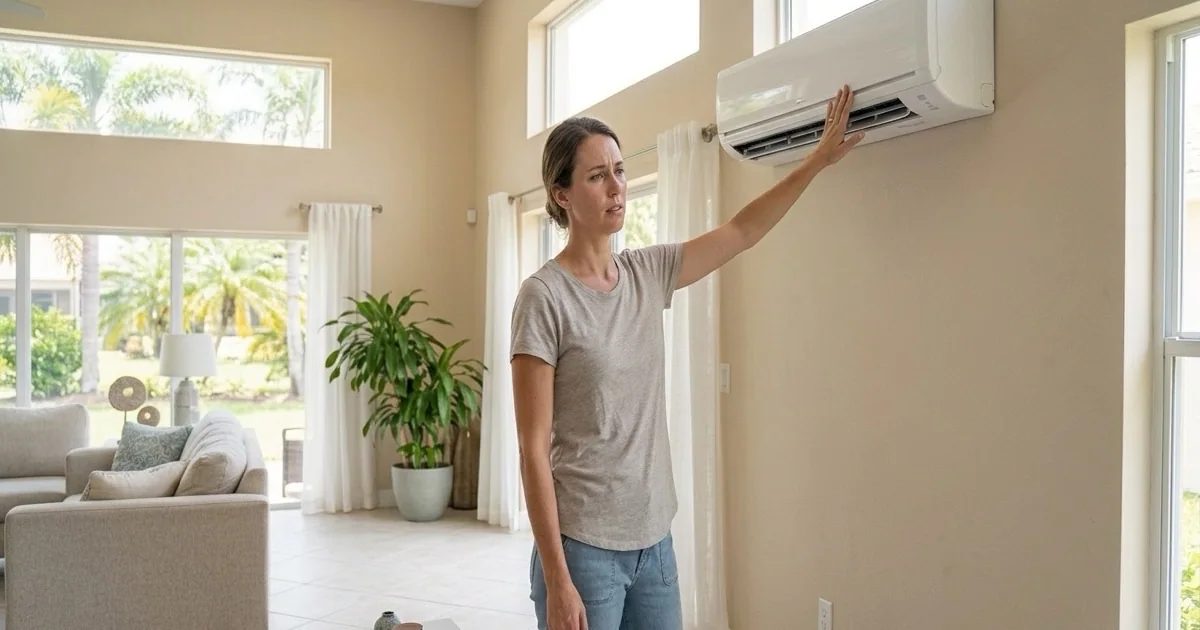
Before you call anyone, run through this quick checklist. Most weak airflow problems start with one of these five issues, and you can check all of them in under five minutes.
- Replace or check your air filter. Pull it out and hold it up to a light. If you cannot see light through it, it is restricting airflow. In Florida, filters should be changed every 1 to 3 months depending on the MERV rating and whether you have pets.
- Open all vents and clear furniture or curtains. Walk through every room and make sure supply vents are fully open and nothing is blocking them — no couches, no curtains, no boxes. Closing vents does not save energy. It increases duct pressure and forces your system to work harder.
- Check for ice on the coil or copper refrigerant line. Open the air handler panel or look at the copper line running to the outdoor unit. If you see frost or ice, turn the system off immediately and let it defrost for 2 to 4 hours.
- Confirm your thermostat is set to COOL and fan is on AUTO. If the fan is set to "ON" instead of "AUTO," the blower runs continuously — including between cooling cycles when no cold air is being produced. That can feel like weak airflow even when everything is working.
- Listen for the blower motor. Stand near the indoor unit and listen. If you hear the system click on but the blower fan does not start, you likely have a motor or capacitor issue.
Still getting weak airflow after checking all five? Call AC Professional at (239) 293-9373 for a diagnostic. Our rate is $129.
Every Vent or Just Some? How to Find the Problem
Where the airflow is weak tells you where the problem is. Walk through your home and note which vents are blowing weakly — then use this table to narrow down the cause.
| Where airflow is weak | Likely cause | Where the problem is |
|---|---|---|
| Every vent in the house | Dirty filter, frozen coil, or blower issue | Equipment (air handler) |
| Vents in one zone or wing | Disconnected or crushed duct run | Ductwork serving that zone |
| One specific vent | Closed damper, blocked vent, or flex duct problem | That vent's individual duct run |
| All vents blow but air is warm | Refrigerant issue, not an airflow problem | Outdoor unit / refrigerant system |
| Airflow was fine, then suddenly dropped | Frozen coil or blower motor failure | Equipment — turn off and check for ice |
| Airflow has slowly gotten weaker over months | Dirty coil, dirty blower wheel, or duct leaks | Equipment or ductwork — needs inspection |
8 Reasons Your AC Is Barely Blowing Air
1. Dirty Air Filter
A clogged air filter is the number-one cause of weak airflow from your AC. The filter sits between the return air duct and the evaporator coil. When it gets loaded with dust, pet hair, and pollen, it chokes the system. Your blower motor has to work harder to pull air through, and less air reaches your vents.
Signs: Weak airflow at every vent. Higher electric bills. The system runs longer cycles without reaching your set temperature.
What you can do: Replace the filter. In Southwest Florida, change it every 30 to 60 days during summer and every 60 to 90 days in winter. If you have pets, lean toward the shorter end. Use a MERV 8 to 11 rating — higher ratings like MERV 13+ can actually restrict airflow in older residential systems unless the unit was designed for them.
When to call a pro: If airflow does not improve within an hour of replacing the filter, the problem is deeper — likely a dirty coil or blower wheel.
2. Frozen Evaporator Coil
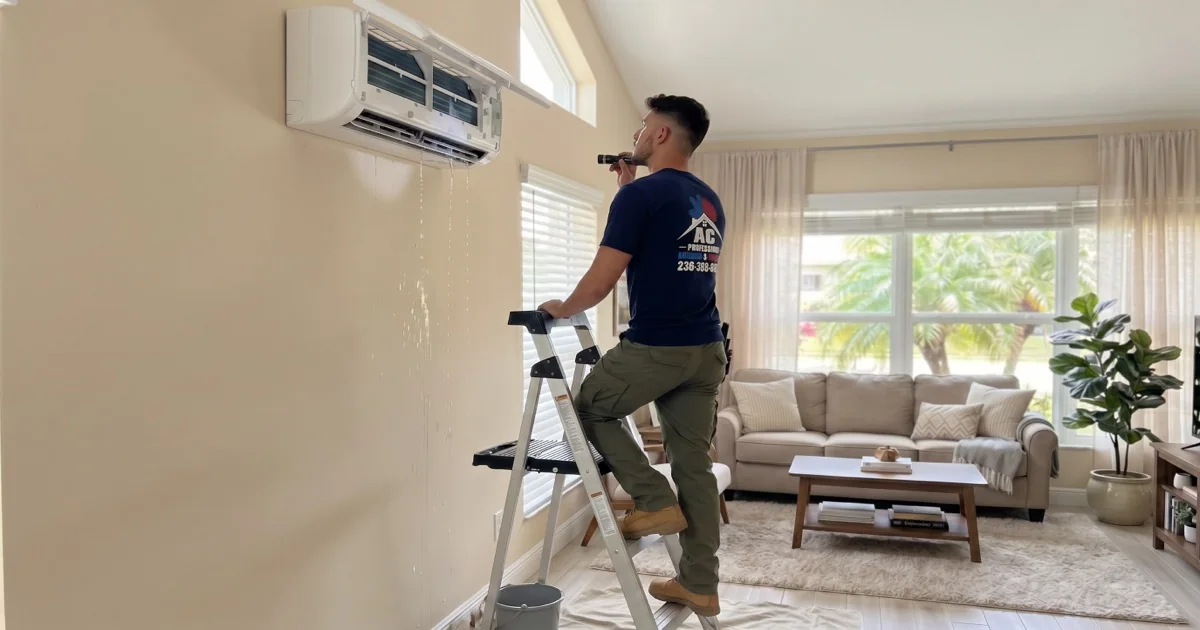
When the evaporator coil freezes, ice physically blocks the air from passing through. Your blower is still running, but air has nowhere to go. This is one of the most common causes of sudden weak airflow in Florida homes.
Signs: Ice visible on the copper refrigerant line or on the coil itself. Water pooling around the air handler when the ice melts. Airflow that was fine yesterday but dropped suddenly.
What you can do: Turn the AC off at the thermostat. Switch the fan to "ON" (not "AUTO") to circulate warm air over the coil and speed up defrosting. Wait 2 to 4 hours until all ice has melted. Replace the air filter if it is dirty. Then restart the system.
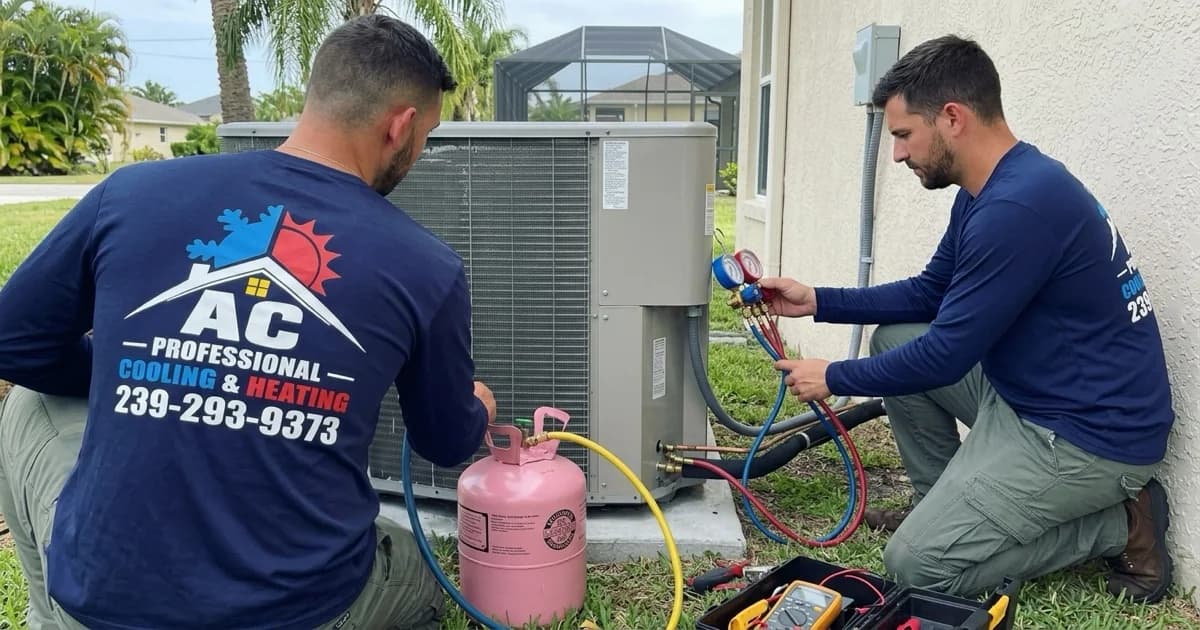
When to call a pro: If the coil freezes again after defrosting with a clean filter, you likely have a refrigerant leak. Running the system with low refrigerant damages the compressor — a repair that costs $2,000 to $3,500. Call (239) 293-9373. Learn more about AC refrigerant recharge costs in Southwest Florida.
3. Dirty Evaporator Coil
Even with regular filter changes, dust and particulates gradually coat the evaporator coil over time. A dirty coil reduces heat transfer and restricts the airflow path. In Florida, high humidity makes this worse because moisture traps dirt against the coil fins, forming a layer of grime that a filter change cannot fix.
Signs: Gradual decline in airflow over weeks or months. The system runs longer but keeps the house less comfortable. Higher energy bills without an obvious cause.
What you can do: You can visually inspect the coil by opening the air handler panel, but cleaning it requires specialized coil cleaner and careful technique to avoid bending the delicate aluminum fins.
When to call a pro: Evaporator coil cleaning is a professional service. AC Professional includes it in every annual tune-up. Read our full guide on AC coil cleaning costs in Southwest Florida.
4. Dirty Blower Wheel
The blower wheel (also called a squirrel cage) is the fan inside your air handler that pushes conditioned air through the ductwork and out your supply vents. Over time, dust and grime build up on the blower wheel blades, reducing the amount of air it can move — measured in CFM (cubic feet per minute).
Signs: Weak airflow at every vent even with a clean filter. A humming or laboring sound from the air handler. Airflow that has gradually decreased over a long period.
What you can do: Inspecting the blower wheel requires removing the air handler panel and potentially the blower assembly. This is not a typical DIY task.
When to call a pro: If your filter is clean, your coil is not frozen, and airflow is still weak at every vent, a dirty blower wheel is a strong possibility — especially in Florida's humid climate where moisture causes dust to stick to the blades. A professional cleaning restores CFM to manufacturer specifications.
5. Failing Blower Motor or Capacitor
The blower motor drives the fan that pushes air through your system. The capacitor gives the motor the electrical boost it needs to start. When either one fails, airflow drops dramatically or stops entirely.
Signs: The AC clicks on at the thermostat but you hear no fan. A humming or buzzing sound from the air handler without airflow. The blower starts but runs at a noticeably lower speed than normal. A burning smell from the air handler.
What you can do: If you hear humming but no fan, the capacitor may have failed. This is one of the most common AC repairs in Southwest Florida — heat and humidity shorten capacitor life significantly. Do not attempt to replace it yourself. Capacitors store a dangerous electrical charge even when the power is off.
When to call a pro: Immediately. A failed capacitor is a $150 to $350 repair. A failed blower motor runs $400 to $1,200 depending on the type (PSC vs. ECM/variable speed). Running the system with a failing motor can cause the compressor to overheat. Read our full guide on AC capacitor replacement costs in Southwest Florida.
6. Leaking, Crushed, or Disconnected Ductwork
Your ductwork carries conditioned air from the air handler to every room in your home. In Southwest Florida, most ductwork runs through the attic — where summer temperatures regularly exceed 140 degrees Fahrenheit. Flex duct connections can loosen, sag, or collapse over time, and critters can chew through duct material.
Signs: Weak airflow in one room or one section of the house while other areas are fine. Hot spots in certain rooms. Higher energy bills because conditioned air is escaping into the attic instead of reaching your living spaces.
What you can do: If you have attic access, visually inspect the flex duct runs. Look for duct that has separated from the register boot, duct that is kinked or crushed, or sections where the outer insulation jacket is torn. According to ENERGY STAR, the average home loses 20 to 30 percent of conditioned air through duct leaks.
When to call a pro: Duct sealing and reconnection require mastic sealant and proper support strapping. Duct tape (ironically) is not rated for ductwork. If you find disconnected or damaged ducts, call a licensed contractor. In Cape Coral and Fort Myers, we regularly find duct damage from hurricanes and improper renovations.
7. Closed or Blocked Vents
This one sounds too simple to be a real problem, but it accounts for a surprising number of weak airflow calls. Homeowners close vents in unused rooms thinking it saves energy. It does not. Closing vents increases static pressure in the duct system, which forces the blower motor to work harder, reduces total airflow, and can cause the evaporator coil to freeze.
Signs: Weak airflow in rooms where vents are open. Some vents are fully or partially closed in other rooms. Return vents are blocked by furniture or rugs.
What you can do: Open every supply vent in your home — including guest rooms, closets, and unused spaces. Make sure return vents are unobstructed. Move furniture, curtains, and rugs away from vents. Your system was designed to distribute air to every register. Blocking any of them throws off the balance.
When to call a pro: If all vents are open and airflow is still weak, the issue is elsewhere. If you want to control temperatures room by room, ask about zoning systems rather than closing vents.
8. Undersized Ductwork or Improper Installation
If your home has had additions, room conversions, or a new AC system installed without resizing the ductwork, the ducts may be too small to carry enough air. This is common in Florida homes built in the 1980s and 1990s that have been remodeled, and in room additions where a contractor tapped into existing duct runs instead of adding properly sized new ones.
Signs: Weak airflow that has been a problem since the home was built, since a renovation, or since a new system was installed. One zone is always uncomfortable. The system is the right size (tonnage) for the home but cannot deliver enough air.
What you can do: This requires a professional load calculation and duct design assessment. ACCA Manual D is the industry standard for residential duct design, and Florida Building Code requires proper duct sizing for permitted HVAC installations.
When to call a pro: If weak airflow has been a chronic issue — especially after a remodel or system replacement — undersized ductwork is a strong possibility. AC Professional performs full duct assessments. Call (239) 293-9373.
Could It Be Normal?
If you have a newer system with a variable-speed or two-stage blower motor, softer airflow at the vents may be completely normal. Variable-speed systems are designed to run at lower speeds most of the time, ramping up only when demand is high. The airflow feels gentler, but the system moves the same total volume of air over a longer period.
How to tell: If your home reaches and holds the set temperature, humidity stays between 40 and 60 percent, and you are comfortable — the airflow is fine. Variable-speed systems are quieter and more efficient than single-speed units. The difference in airflow feel is by design, not a malfunction.
My AC Blows Cold Air But Not Hard Enough
This is one of the most common searches from Florida homeowners, and the answer depends on what you mean by "not hard enough."
If the air coming from your vents is cold but the volume is low, the problem is airflow — not cooling. Your refrigerant is working, your compressor is working, but something is preventing enough air from getting through the system and into your rooms. Start at the top of this article and work through the 8 causes.
If the air is barely cool and barely blowing, you may have two problems: an airflow restriction (dirty filter, frozen coil) plus a cooling issue (low refrigerant, failing compressor). In that case, a professional diagnostic is the fastest path to an answer.
What You Can Fix vs. What Needs a Technician
| Issue | DIY or Pro? | Estimated Cost |
|---|---|---|
| Replace air filter | DIY | $10–$30 (filter cost) |
| Open blocked vents | DIY | $0 |
| Defrost frozen coil (if filter-related) | DIY | $0 (replace filter) |
| Clear furniture from return vents | DIY | $0 |
| Evaporator coil cleaning | Professional | $150–$400 |
| Blower wheel cleaning | Professional | $150–$300 |
| Capacitor replacement | Professional | $150–$350 |
| Blower motor replacement | Professional | $400–$1,200 |
| Duct sealing or reconnection | Professional | $300–$1,000 |
| Duct redesign or resizing | Professional | $1,500–$5,000+ |
| Refrigerant leak detection + recharge | Professional | $200–$650 |
How Much Does It Cost to Fix Weak AC Airflow in Southwest Florida?
Most weak airflow problems are affordable to fix. Here are typical costs in the Southwest Florida market as of 2026.
| Repair | Typical Cost (SWFL 2026) | Notes |
|---|---|---|
| Diagnostic visit | $129 | AC Professional's standard rate |
| Air filter replacement | $10–$30 | DIY — buy at any hardware store |
| Evaporator coil cleaning | $150–$400 | Included in annual tune-up at some companies |
| Blower wheel cleaning | $150–$300 | Often done during a tune-up |
| Capacitor replacement | $150–$350 | One of the most common AC repairs in Florida |
| Blower motor replacement | $400–$1,200 | PSC motors cost less; ECM/variable speed cost more |
| Duct sealing | $300–$1,000 | Depends on number of leaks and attic access |
| Duct replacement or resizing | $1,500–$5,000+ | Major project, often tied to remodels |
| Refrigerant leak repair + recharge | $200–$650 | Depends on leak location and refrigerant type |
| Annual tune-up | $189 | AC Professional's current rate |
| Protection Plan | $19.99/month | Includes priority scheduling, discounted diagnostics, drain line cleaning |
Prices sourced from Angi and HomeGuide for Southwest Florida. AC Professional pricing from acprofessionalswfl.com/pricing.
How to Maintain Good Airflow in a Florida Home
Preventing weak airflow is easier and cheaper than fixing it. These six habits keep your system performing at full capacity.
- Change your air filter every 30 to 60 days during the cooling season (March through November in Southwest Florida). Set a phone reminder. Write the install date on the filter with a marker.
- Keep all supply and return vents open and unobstructed. Never close vents to "save energy." Keep furniture at least 6 inches away from return vents to allow proper air circulation.
- Schedule professional maintenance twice a year. A spring tune-up before cooling season and a fall check before snowbird season. AC Professional's $189 tune-up includes coil cleaning, blower inspection, refrigerant check, and drain line flush. If you want that recurring, the $19.99/month Protection Plan covers it.
- Inspect your attic ductwork annually. Look for sagging flex duct, disconnected joints, and torn insulation. Florida attics are brutal on ductwork — the heat and humidity degrade connections and insulation faster than in cooler climates. If you are preparing your home for the off-season, review our snowbird AC checklist.
- Do not ignore gradual changes in airflow. If your system used to blow strong and now feels weaker, something has changed. A dirty coil, a failing motor, or duct damage does not fix itself — it gets worse over time.
- Know the age of your system. AC systems in Florida typically last 10 to 15 years. As they age, blower motors weaken, coils get dirtier faster, and ductwork deteriorates. If your system is over 12 years old and airflow is declining, it may be approaching end of life.
Frequently Asked Questions
Why is my AC barely blowing air? The most common cause is a dirty air filter. In Florida, filters clog faster due to high humidity, pollen, and dust. Replace the filter first. If airflow is still weak, the problem may be a frozen coil, dirty blower wheel, or failing blower motor.
Why is my AC blowing cold air but not hard? The cooling system is working — refrigerant and compressor are fine — but something is restricting the airflow. Check the filter, look for ice on the coil, and make sure all vents are open. If none of that fixes it, a dirty blower wheel or coil is the likely cause.
Can a dirty filter cause weak airflow? Yes. A dirty filter is the single most common cause of weak AC airflow. It restricts the air your blower can pull through the system. In Florida, replace your filter every 30 to 60 days during the cooling season.
How do I know if my blower motor is going bad? Signs include weak airflow at every vent, a humming or buzzing sound from the air handler without the fan running, the fan running at an unusually slow speed, or a burning smell. Capacitor failure is the most common blower-related repair and is much cheaper than replacing the motor itself.
Why is airflow weak in only one room? The duct run serving that room is likely disconnected, kinked, crushed, or blocked. In Southwest Florida attics, flex duct connections loosen over time from heat expansion and contractor foot traffic. A duct inspection can identify and fix the problem.
Does closing vents in unused rooms save energy? No. Closing vents increases static pressure inside the duct system, which forces the blower to work harder, reduces total airflow, and can cause the evaporator coil to freeze. Keep all vents open. If you want room-by-room temperature control, ask about a zoning system.
How much does it cost to fix weak AC airflow? It depends on the cause. A new filter costs $10 to $30 (DIY). A capacitor replacement runs $150 to $350. A blower motor replacement costs $400 to $1,200. Duct sealing is $300 to $1,000. AC Professional's diagnostic is $129.
Still Getting Weak Airflow?
Weak airflow is not just uncomfortable — it forces your system to run longer, drives up your electric bill, and shortens the life of your AC. In Southwest Florida, where your system runs 8 to 10 months a year, ignoring the problem costs more than fixing it.
Call AC Professional at [(239) 293-9373](/ac-repair/) or book a diagnostic online. $129 diagnostic. Licensed (CAC1823099) and insured. We serve Cape Coral, Fort Myers, Naples, Bonita Springs, Estero, and Marco Island.
By Kenia V. · Updated October 2026
Sources: [ASHRAE](https://www.ashrae.org/), [EPA Section 608](https://www.epa.gov/section608), [ENERGY STAR Duct Sealing](https://www.energystar.gov/campaign/heating_cooling/duct_sealing), [Florida Building Code](https://floridabuilding.org/), [ACCA Manual D](https://www.acca.org/standards/manuals/manual-d), [Angi](https://www.angi.com/articles/ac-repair-cost.htm), [HomeGuide](https://homeguide.com/costs/ac-repair-cost). AC Professional pricing from [acprofessionalswfl.com/pricing](/pricing/).