
For a homeowner, the goal is a comfortable house that can be maintained. For an investor or property manager, it is a system that can be understood and serviced between occupancies. For the contractor and developer, it is a defined scope with the support, power and drainage decisions resolved before final installation.
Start with elevation, access and the site plan
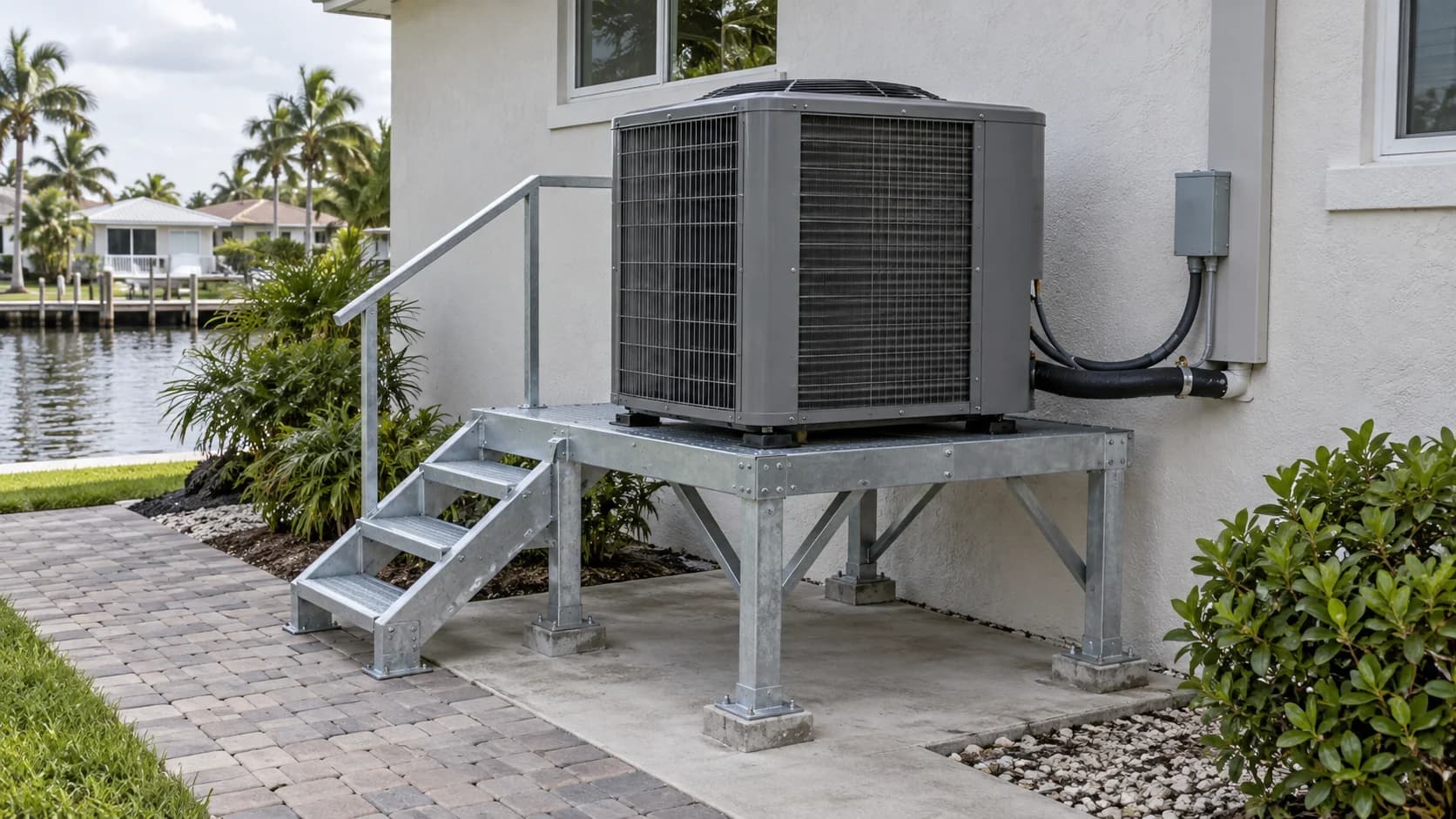
Do not select a condenser location solely because it is convenient to the indoor unit. Have the designer and reviewing authority establish the applicable flood and placement requirements for the parcel. Then coordinate the platform or support, electrical route, refrigerant route and a safe means of service access.
Marco Island's published mechanical permit application includes an equipment-elevation requirement. The linked form is dated 2022; verify the current application and required elevation with the city for your project. It is not a universal height that can be copied from one house to another.
An elevated installation also needs a workable maintenance approach. Ask who designs and installs the support, who verifies the applicable anchorage details and how a technician will reach service panels. Landscaping and architectural screening should be reviewed against the selected unit's clearance requirements. Put responsibility for structural work in writing.
Evaluate coastal protection by the actual model
Salt exposure should be part of the equipment conversation for a coastal property. Ask the contractor to compare the proposed equipment's materials, available coastal options, maintenance instructions and written warranty terms. A brand name or the word “coastal” is not enough information to evaluate the specific system.
For example, Carrier describes a coastal heat-pump model with protection intended for salt-air exposure. That illustrates why model-specific documentation matters; it is not a recommendation that every Marco Island property should use that unit.
Confirm any coating or protection option against the manufacturer's instructions and warranty. Agree on a maintenance approach suited to the installation, including who performs it and how access will be arranged. Avoid promises that any equipment is corrosion-proof or that a protective option guarantees a particular service life.
Coordinate the indoor system with the exterior decisions
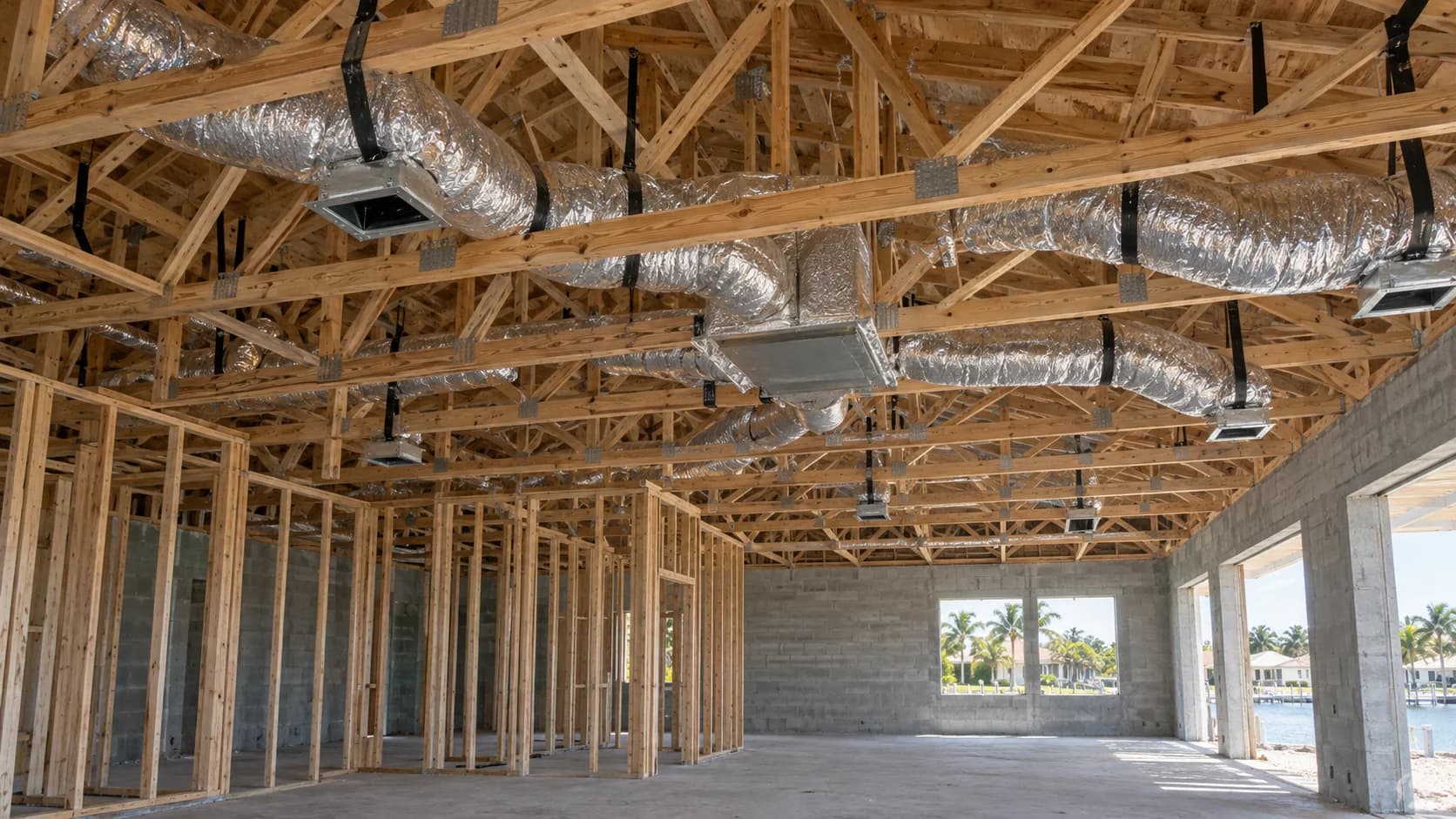
An elevated outdoor unit can affect the route back to the air handler. Before rough-in, the HVAC team should review the refrigerant-line design against the selected equipment and coordinate penetrations with the other trades. Include duct supply and return paths, controls and access to filters in the same review.
ACCA's Manual S addresses selecting residential equipment for the home's load and conditions. Discuss the complete indoor/outdoor combination rather than choosing an outdoor unit first and assuming the rest will fit.
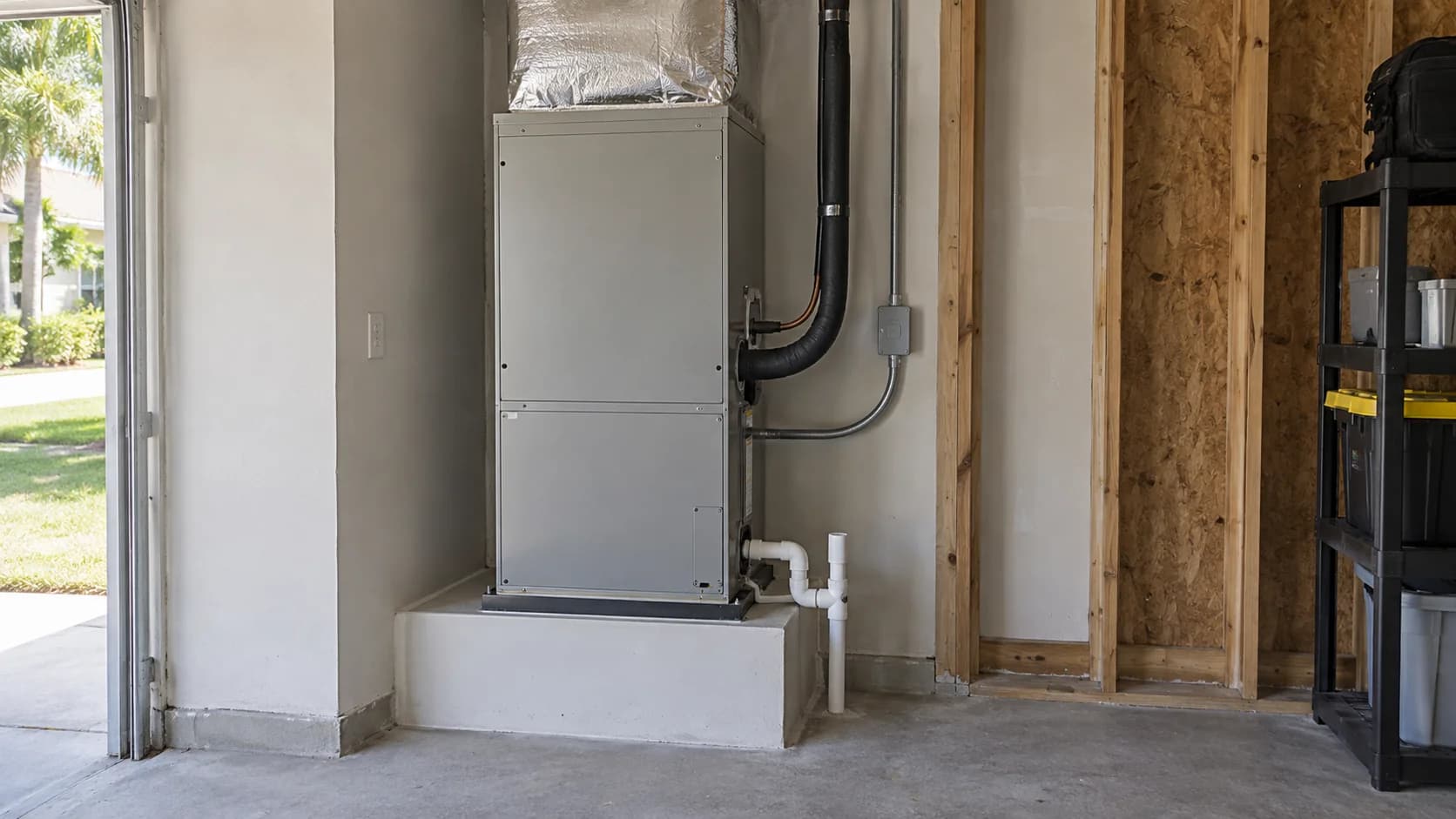
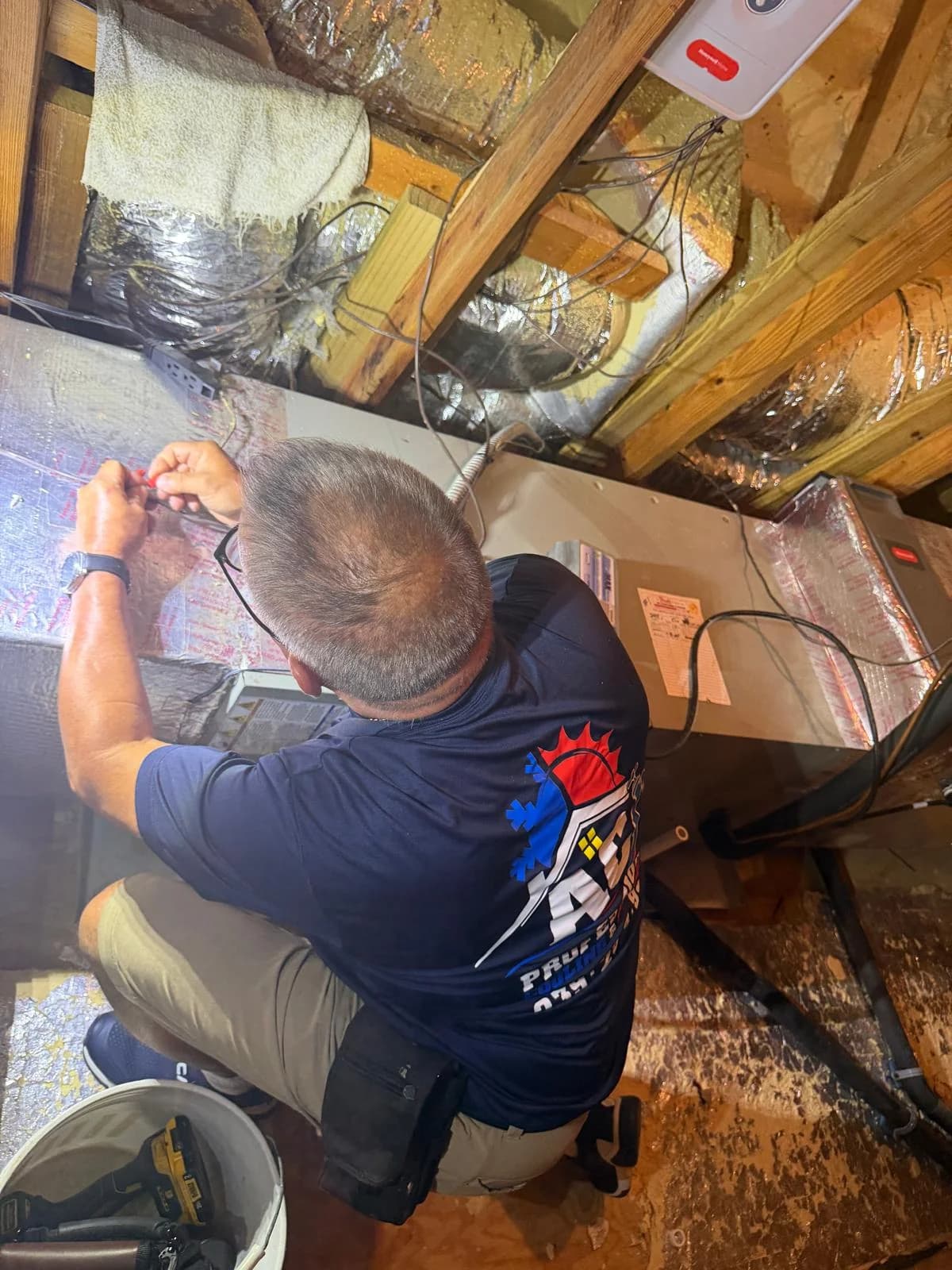
The condensate plan should identify its destination, cleaning access and overflow protection. Electrical coordination should identify equipment requirements, disconnects, controls and the responsibility for any upgrade outside the base scope. AC Professional brings the associated electrical and plumbing work into the written HVAC proposal so those connections can be coordinated with the general contractor.
Plan for occupancy changes before the first handover
If the home will be used seasonally or rented where permitted, explain the intended pattern to the HVAC team. A house occupied by its owner, a vacant investment property and a home with changing occupants need clear operating instructions and a named person responsible for service.
For the property manager, agree on the filter schedule, drain checks, thermostat access and the response to an alert or loss of cooling. If remote features are included, confirm account ownership and permissions. Monitoring depends on the actual equipment, connection and service arrangement; it should not be assumed from a thermostat photo.
An illustrative handover issue is a locked equipment area whose key is held by someone off island. Address access before an urgent service call, not during it. Keep maintenance instructions with the property's operating file so responsibilities survive a change of owner or manager.
Ask for a complete coastal installation scope
| Proposal item | What to verify |
|---|---|
| Equipment | Exact matched models, design basis and any specified coastal protection |
| Location and support | Approved placement, elevation coordination, access and structural responsibility |
| Air distribution | Duct layout, returns, insulation and scope of testing |
| Electrical | Included supply connections, disconnects, controls and separately scoped upgrades |
| Plumbing | Condensate route, discharge, cleaning access and protective measures |
| Turnover | Startup record, applicable permit closeout, warranties and owner/manager instructions |
Keep price comparisons tied to this scope. A proposal that excludes the support, electrical connection or drain work is not directly comparable with one that includes them. Ask the bidder to identify assumptions and how a change will be priced before work proceeds.
For realtors, an organized equipment and permit record supports an accurate description of the property. It does not establish an insurance discount, a guaranteed resale premium or hurricane-proof performance. For investors, maintenance access and scope clarity are practical inputs to ownership planning.
Send the parcel details with the floor plan
Contact AC Professional for a Marco Island project review with the address, floor plan, available elevation information, proposed equipment location and construction schedule. Include intended occupancy and the contact responsible for ongoing property access.
Review our new construction HVAC service and AC installation service for the work to discuss. Our Cape Coral and Fort Myers construction guide explains the broader rough-in and startup sequence.
Call (239) 293-9373 to request a coordinated proposal. Equipment, ductwork, electrical work and condensate plumbing should support one installation plan that the builder can execute and the owner can maintain.